Get Full Government Meeting Transcripts, Videos, & Alerts Forever!
Get email alerts on the Hb1142 Long Term Care Training topic
No spam. Unsubscribe anytime.
Bill would standardize training hours for family caregivers under WA Cares; advocates urge delay on continuing-education mandate
Summary
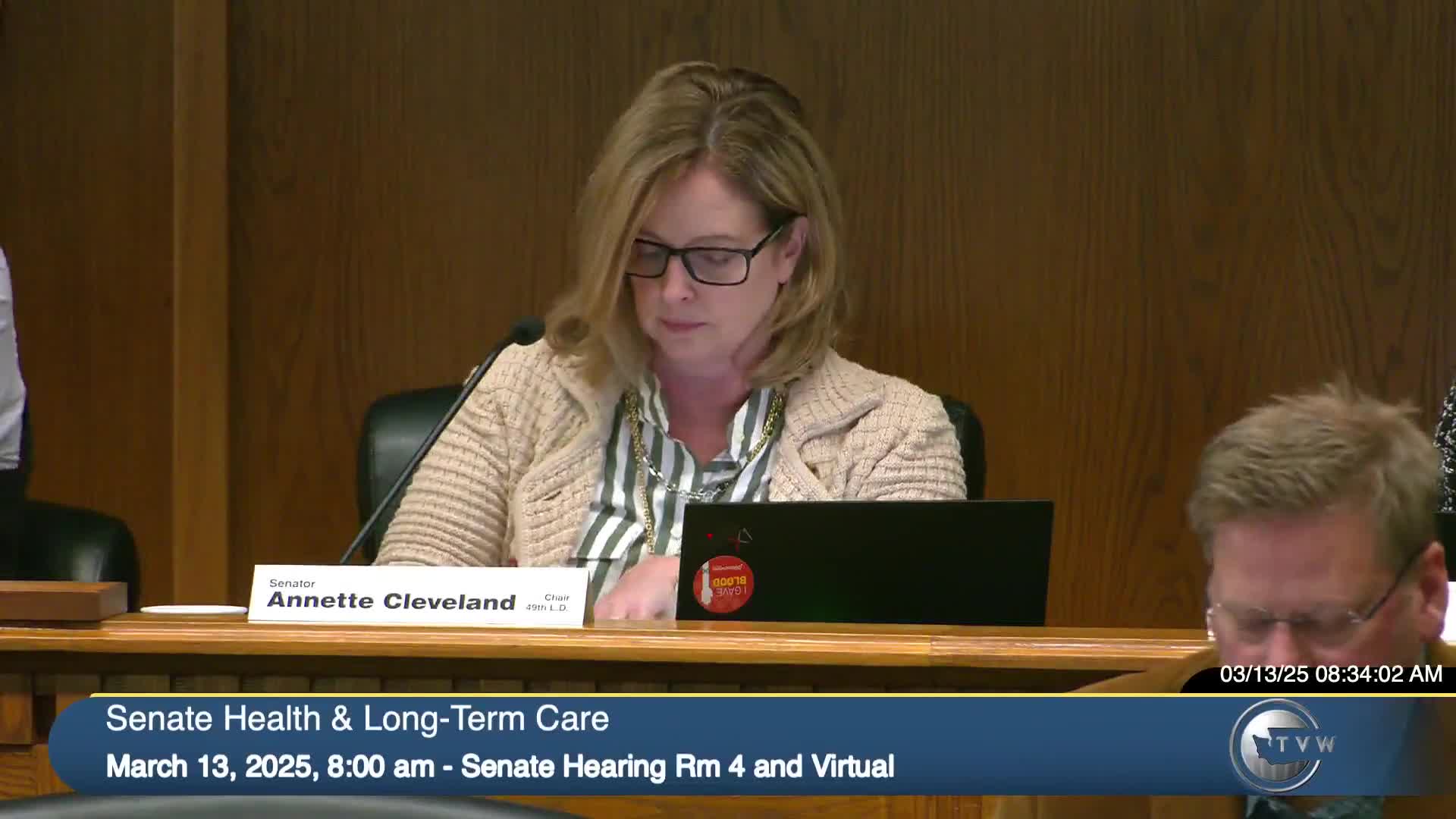
Substitute House Bill 1142 would align training requirements for family caregivers providing in-home long-term care and reduce certain VA-funded spouse/provider training from 35 to 21 hours beginning July 1, 2026, the Senate Health and Long Term Care Committee heard March 13.
Substitute House Bill 1142 would standardize basic training and certification requirements for long-term care workers who provide in-home care to family members, the Senate Health and Long Term Care Committee heard March 13.
Julie Tran, committee staff, said the bill replaces references to "individual provider" with "long term care worker providing in home care" across state law and aligns training and certification requirements among in-home provider types. The bill passed the House by a vote of 88-8, staff said. "Beginning 07/01/2026, a long term care worker providing approved services for a spouse or registered domestic partner, and is funded through the U.S. Department of Veterans Affairs, is required to complete at least 21 hours of training," Tran said. Until that date, caregiver training remains 35 hours.
Bea Rechter, assistant secretary for DSHS’s Aging and Long Term Support Administration, testified in support and said the bill is necessary to implement WA Cares, the state’s long-term care insurance program. Rechter said the change will reduce administrative burdens for family members who will be paid to provide care under WA Cares and noted the law already allows consumer-directed employment, home care agencies and a prospective third option.
Family caregivers and advocates who testified praised efforts to standardize training but asked the committee to delay mandatory continuing-education requirements for family providers. Diana Winterrose, who said she is an individual provider and represents the Benton-Franklin Parent Coalition and the Arc of Tri-Cities, asked lawmakers to postpone annual continuing-education requirements for family providers by 18 months. Winterrose said course offerings in the SEIU learning library currently do not provide enough specialized content for caregivers of people with intellectual and developmental disabilities and that courses cannot be repeated to meet yearly continuing-education obligations.
DSHS explained training availability varies: the 35-hour training can be completed fully virtually, in person or in hybrid formats; community instructors and training partnerships provide courses statewide and in multiple languages, the department said. DSHS said family members who would be paid under WA Cares would not need to become certified long-term care workers under the bill, which Rechter described as reducing a barrier for family caregivers who opt to be paid providers.
Committee testimony recorded multiple proponents and opponents; the committee closed the hearing without taking immediate action. The committee recorded the bill’s House passage tally and invited further consideration in later committee business.