Get Full Government Meeting Transcripts, Videos, & Alerts Forever!
Get email alerts on the Consumer Protection topic
No spam. Unsubscribe anytime.
Committee hears bill to require hotels and short-term rentals to include mandatory fees in advertised price
Summary
A substitute of House Bill 1080 would align state law with a new Federal Trade Commission rule by requiring lodging providers to include mandatory fees in advertised prices and allow civil enforcement with penalties up to $10,000 per violation.
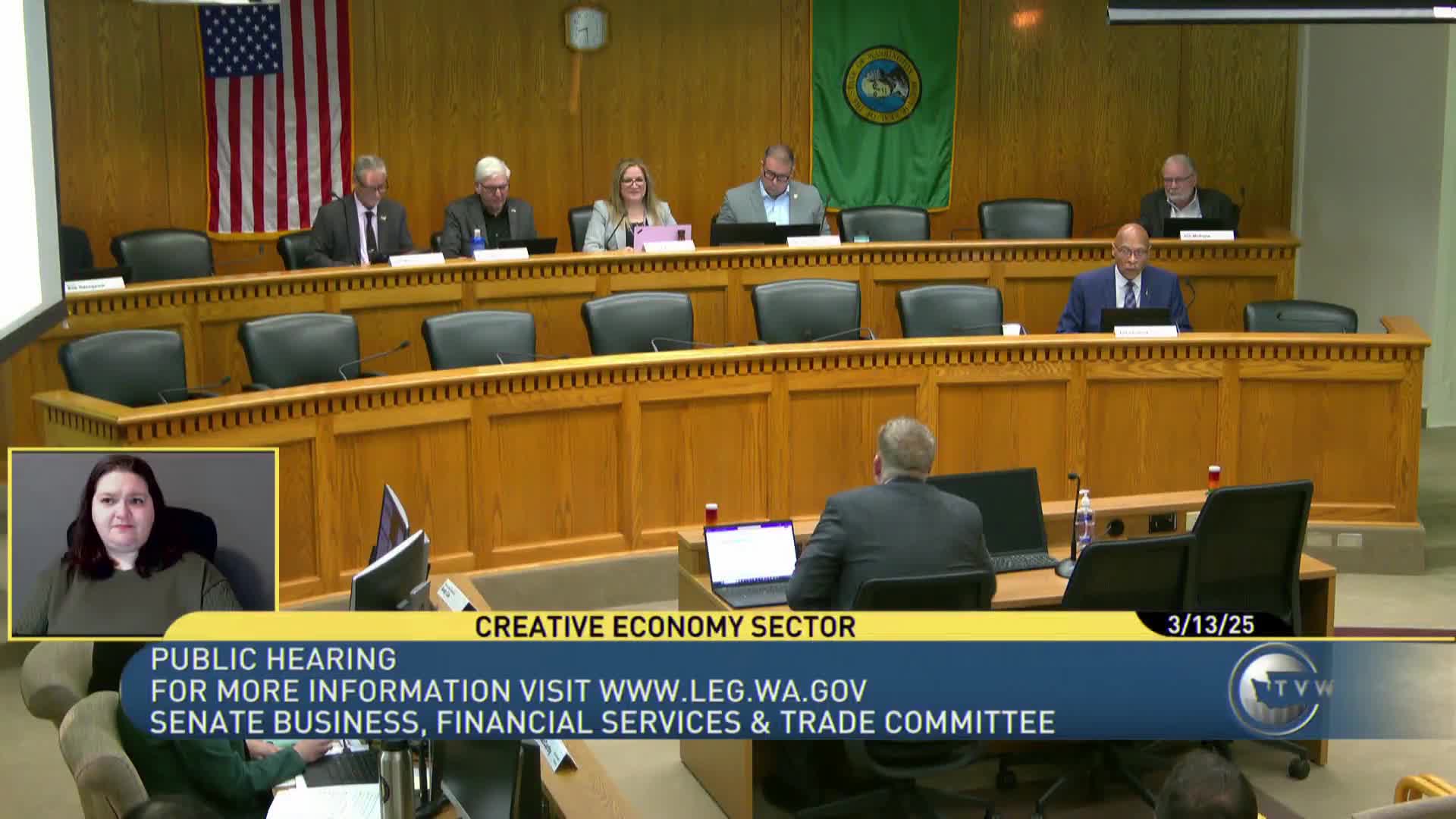
Clint McCarthy, staff to the Senate Business, Financial Services, Gaming & Trade Committee, briefed substitute House Bill 1080 to committee members on March 13. The bill would require hotels and short-term rental providers to disclose all mandatory fees in advertised or displayed rates, conforming state law to a new Federal Trade Commission (FTC) trade regulation rule on unfair and deceptive fees effective May 12, 2025.
The bill directs that advertised prices must include all fees and charges except taxes and fees imposed by governments or government-created special-district assessments. Enforcement authority in the bill includes city attorneys, county prosecuting attorneys and the state Attorney General; civil penalties are capped at $10,000 per violation.
Representative Brandy Donke (recorded as state representative, 40th Legislative District) said she introduced the bill and explained that it is intended to ensure Washington consumers are protected in case federal protections change. She told the committee that larger travel sites generally already disclose fees, while some short-term rental listings do not consistently do so.
Committee members asked whether the $10,000-per-violation cap could be excessive for small, individual short-term rental operators and whether enforcement might fall disproportionately on smaller competitors. Staff responded that the $10,000 figure is a maximum sometimes used in state consumer-protection statutes and that enforcement can be pursued against platforms that advertise fees as well as individual property owners. Committee members also clarified that the bill applies to advertised displays and offers (including online listings), not just in-person receipts.
Clint McCarthy reported the bill passed the House by a vote of 58 to 39 and noted there was no Senate companion heard previously in the committee. Several senators discussed possible amendments to fine structures and the role of local jurisdictions in enforcement. Representative Donke said the bill’s maximum penalty is discretionary and that jurisdictions or courts could impose lower amounts when appropriate.
Public testimony on House Bill 1080 was closed during the meeting, and staff noted that no one had signed in to testify at the committee’s public hearing for that bill.