Get Full Government Meeting Transcripts, Videos, & Alerts Forever!
Get email alerts on the Fire Safety topic
No spam. Unsubscribe anytime.
Van Zandt County adopts revised fire marshal fee schedule; fire marshal to expand public education on outdoor burning
Summary
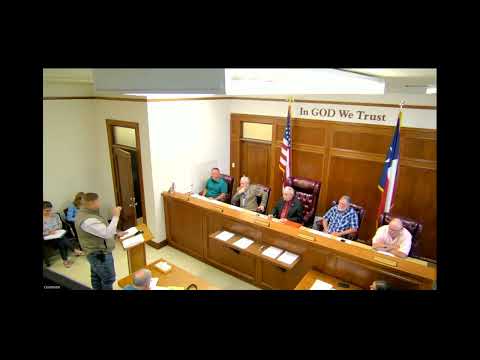
Van Zandt County Commissioners on March 6 adopted a revised fire marshal fee schedule and heard a presentation from Fire Marshal Kevin Palmer about expanded public education on outdoor burning.
Van Zandt County Commissioners on March 6 adopted a revised fire marshal fee schedule and heard a presentation from Fire Marshal Kevin Palmer about an outreach campaign on outdoor burning.
Palmer told the court the revised schedule renames the former "covered buildings" fee to a "new construction permit" to make clear it covers commercial projects ranging from new buildings to solar installations, and adds a formal fee for on-site sewage facility (OSSF) modifications and a $200 reinspect fee for failed final inspections. Palmer said the reinspect fee is charged to the installer, not the homeowner, and that a $30 administrative charge will be used during an initial, county-directed compliance period before late monthly maintenance fees are assessed.
Palmer said the fee amounts come from guidance issued by the state fire marshal's office and by comparing fees charged by similar counties. He described the county's plan to publicize the changes through local newspapers, mailings to known contract holders, social media and his office's Facebook page to reduce claims of ignorance.
On outdoor burning, Palmer reviewed county response data from Jan. 1 to March 6 showing numerous grass and brush fires and said at least two incidents were recorded as structure fires after burning piles got out of control. He summarized state guidance on outdoor burning, including the TCEQ field guide, and noted that the size of an allowable warming fire is small (Palmer referenced roughly a six-foot diameter guideline during discussion). Palmer said the county must follow state rules, and he favored an education-first approach before expanded enforcement.
Commissioners discussed staffing constraints, enforcement capacity and the need for a workshop to brief the public and commissioners on the changes. One commissioner said the fee schedule itself largely reflects fees the court had already adopted and that the immediate question is enforcement. The court voted to adopt the revised fee schedule by voice vote; specific vote tallies were not recorded in the transcript.
Palmer said he will move to a phased approach: first education and voluntary compliance, then, if necessary, stricter enforcement and late fees. He also explained criminal and civil enforcement options for fires that damage others' property—ranging from class C misdemeanor illegal burning citations to criminal mischief or arson charges depending on damage and intent—but said he prefers education as the first step.
The court asked Palmer to return for further discussion and indicated support for holding a workshop to inform residents and contractors of the changes and expectations.
The county distributed Palmer's submitted materials (Texas Administrative Code excerpts, TCEQ's Outdoor Burning in Texas field operations guide, and a short do's-and-don'ts handout) and authorized Palmer to publish those documents on the county website and his office social channels as part of the outreach effort.
Ending: The court approved the fee schedule and directed continued public education; commissioners signaled they will revisit enforcement, staffing and budget implications during the budget process.