Get Full Government Meeting Transcripts, Videos, & Alerts Forever!
Get email alerts on the Dairy Processing topic
No spam. Unsubscribe anytime.
House Agriculture Committee hears bill to offer up-to-$10 million incentive for large milk processing plant
Summary
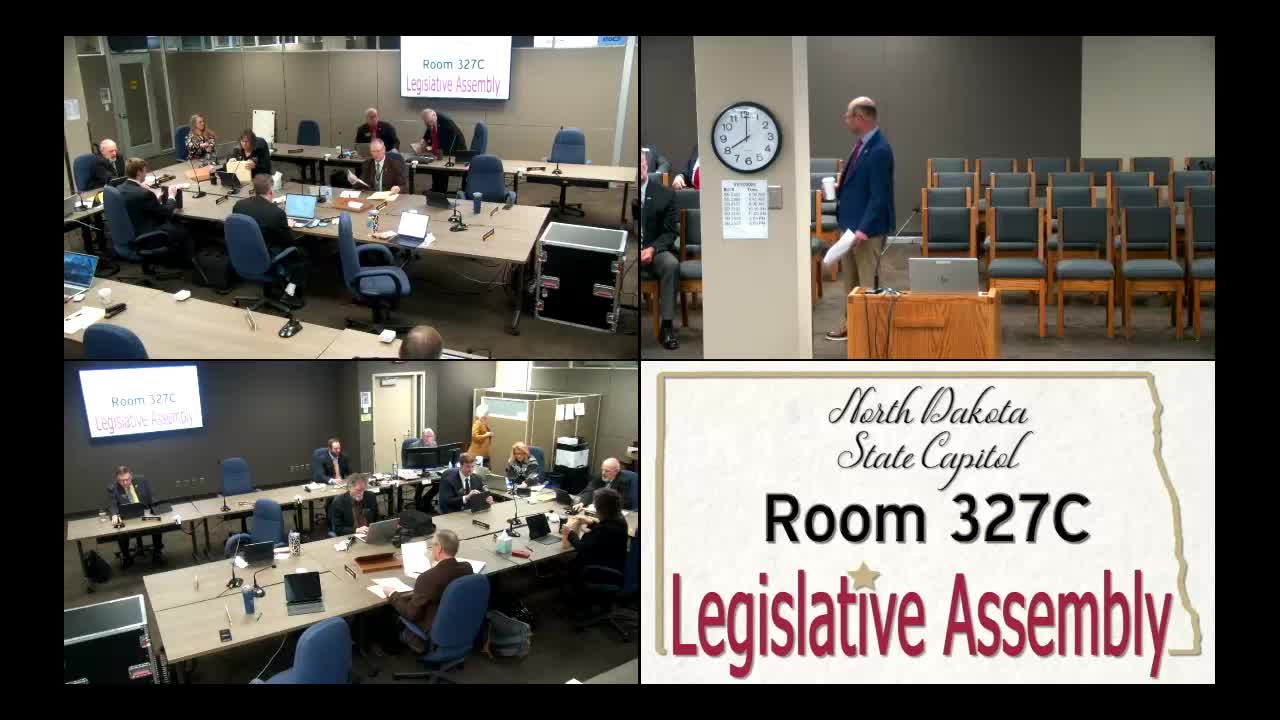
Senate Bill 2,342, which would create a state incentive for value‑added milk processing facilities, drew testimony Wednesday in the House Agriculture Committee after sponsors said the program is intended to attract processing capacity back to North Dakota.
Senate Bill 2,342, which would create a state incentive for a value‑added milk processing facility, drew bipartisan discussion Wednesday in the House Agriculture Committee as members weighed how to define eligible projects and whether the program would favor large operations.
Supporters said the bill would put North Dakota on the market for milk processors after recent closures reduced in‑state processing capacity. "This money is yours," Senator Paul Thomas said of the proposed $10 million maximum benefit, adding the proposal is structured so the plant must be built and operating before grant funds are paid.
Committee members heard that the bill would authorize a grant equal to 5% of project costs or up to $10,000,000, and that the sponsor intends the program to be housed in the AD (Agriculture Development) Fund rather than as a separate appropriation. Thomas told the panel the bill language currently links the plant size to a capacity threshold and that he will ask for an amendment to change the text from "year" to "day" when describing required processing capacity. "If this project gets built before 2027, there is money there," Thomas said, describing a planned arrangement in which the Bank of North Dakota would provide a bridge loan and the Legislature would reimburse that loan in the next biennium.
Why it matters: Committee members and agency witnesses described the proposal as a policy effort to restore local processing capacity that supporters say is necessary for dairy farms to remain viable. Witnesses said the Bismarck facility closing and the aging Fargo plant have left parts of the state shipping milk to Minnesota or South Dakota; proponents said processing capacity attracts dairies as much as dairies attract processors.
What lawmakers asked: Representatives pressed for guardrails to prevent a state subsidy flowing to a closed system that takes only a single cooperative's milk. Representative Olson asked whether grant recipients could be required to accept milk from all producers; Thomas and other supporters warned that a hard requirement could unintentionally bar existing cooperatives from participating. Committee members also asked how the Bank of North Dakota and the Department of Agriculture would administer the bridge financing, and whether the threshold that sponsors described—"about the scale" of processing that requires handling roughly 3,000,000 pounds of milk per day—would exclude smaller family operations.
Agency and stakeholder views: Tom Bodine, deputy agriculture commissioner, testified that North Dakota currently licenses about 22 dairy farms and that state estimates put in‑state dairy cow counts at roughly 8,700; he said a plant that met the bill’s threshold would be supported by tens of thousands of cows and could prompt new herd growth over time. Pete Hanover of North Dakota Farm Bureau and representatives of the North Dakota Corn Growers Association, North Dakota Farmers Union and other farm groups testified in support, describing the bill as a measured incentive and saying the program should reward completed, operating projects rather than paying for studies or partial construction.
Outcome and next steps: Committee members proposed at least one technical amendment (changing the statute to require processing capacity “per day” rather than “per year”) and discussed taking up the amendment at a future committee meeting. The committee did not adopt a final recommendation on the bill at the hearing; the sponsor and staff indicated committee consideration would continue at the next committee work session.
Clarifying details: The bill would authorize a grant equal to 5% of project costs or $10,000,000, whichever is less; sponsors described using the AD Fund and the Bank of North Dakota to bridge payment until the next biennium. The capacity threshold discussed in testimony was about 3,000,000 pounds of milk per day. Witnesses said no firm project had yet been identified to apply for the incentive.
For readers: If passed, the program would provide a conditional grant incentive to processors that build and operate qualifying dairy processing plants in North Dakota; it does not appropriate new AD Fund principal in the text but establishes authorization for the Department and Bank of North Dakota to structure bridge financing and later reimbursement.