Get Full Government Meeting Transcripts, Videos, & Alerts Forever!
Get email alerts on the Township Zoning Reacquisition topic
No spam. Unsubscribe anytime.
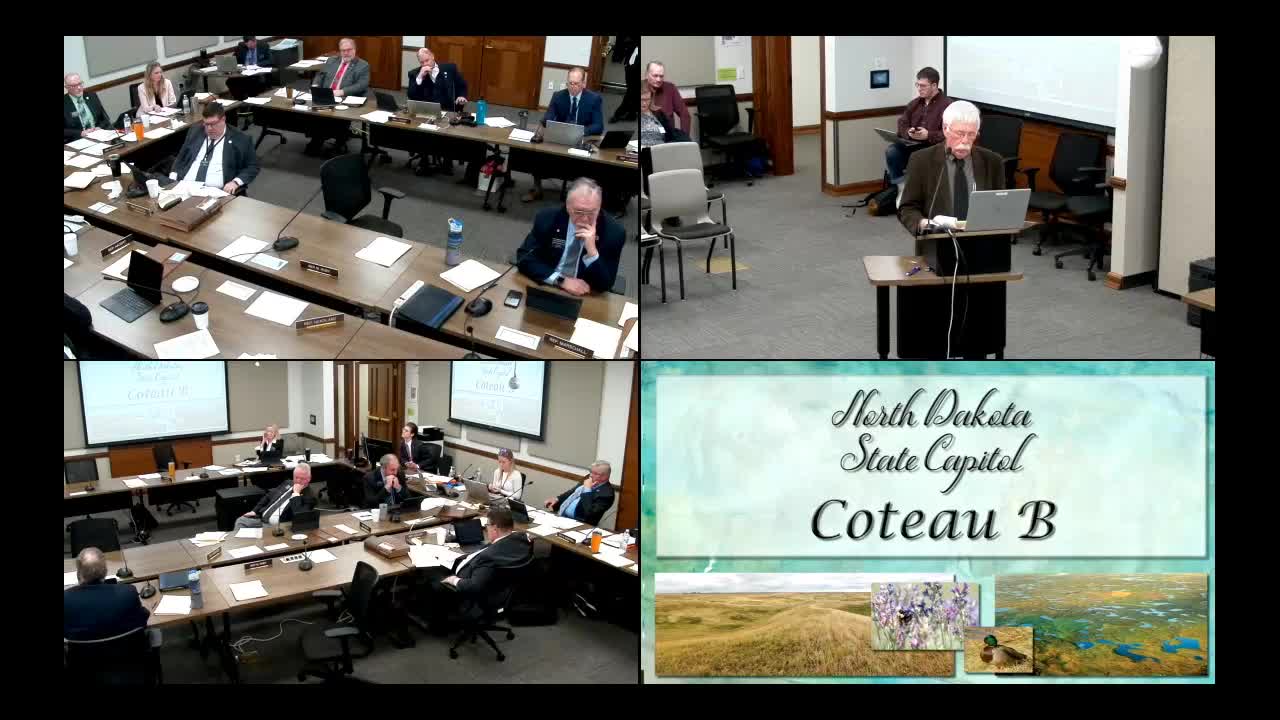
Township zoning bill draws split testimony over local control, capacity and business risk
Summary
Senate Bill 2317 would allow townships that previously relinquished zoning authority to regain it if they complete a defined set of steps, prompting sharply split testimony over local control, administrative capacity and risks to large projects.
Senate Bill 2317, sponsored in the Senate by Sen. Jeff Magram, would allow townships that unilaterally transferred zoning authority to counties to reacquire that authority after following a series of specified steps: a board resolution, a vote by qualified electors, a comprehensive plan, adoption of zoning ordinances and appointment of a zoning administrator.
Township officers, advocates and several townships' representatives testified in favor, saying local residents want a stronger voice in how adjacent rural land is used and alleging some counties have been resistant to returning zoning control. Larry Severson of the North Dakota Township Officers Association told the committee that in some cases the county "will not return the authority to the township, but will not enforce the code they do have," leaving local blight or nuisance problems unresolved.
Proponents described successful township zoning arrangements that negotiated road improvements, noise mitigation and other project concessions with developers. "We were able to have a place at the table and actually have a say in what goes on and how our community is shaped," one township officer said in testimony.
Opponents included industry groups and large project developers, notably Applied Digital. Martin Vega, director of community operations for Applied Digital, testified that unilateral transfer of zoning back to townships would create regulatory uncertainty for large capital projects and could impose unnecessary project risk. He described a case where a small township prepared a 100‑page ordinance that later required legal review to resolve contradictions and accessibility problems; he urged caution and clearer guardrails.
County planners and the Association of Counties said the work of maintaining compliant maps, updating floodplain or zoning maps, and the administrative burden of inspections and ordinance updates are significant tasks. A county planner recommended the bill specify that a reclaiming township must also assign zoning categories to every parcel and suggested a waiting period before allowing repeated transfers back and forth to avoid administrative limbo for property owners.
Committee members expressed concerns about fiscal capacity in small townships, potential tax or fee impacts to hire inspectors or administrators, and about nonresident landowners who might be affected without voting representation. Proponents countered that many townships seeking authority have active local participation and would use joint powers agreements to share services where necessary.
No final committee action was recorded in the transcript excerpted; testimony was mixed, with supporters urging a favorable recommendation and opponents asking for limitations or guardrails to reduce business and administrative risks.