Get Full Government Meeting Transcripts, Videos, & Alerts Forever!
Get email alerts on the Sanitary Sewer Infrastructure topic
No spam. Unsubscribe anytime.
Cottage Grove staff push design for sewer interceptor as Coyle South readies development
Summary
Village staff and the engineering firm Strand recommended advancing design work on a long‑planned sanitary sewer interceptor intended to relieve capacity constraints where several existing mains converge, officials said at the March 12 joint meeting of the Utility Commission and the Public Works Properties and Sustainability Committee.
Cottage Grove — Village staff and the engineering firm Strand recommended advancing design work on a long‑planned sanitary sewer interceptor intended to relieve capacity constraints where several existing mains converge, officials said at the March 12 joint meeting of the Utility Commission and the Public Works Properties and Sustainability Committee.
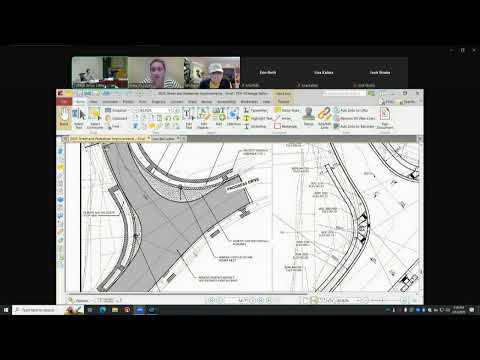
The discussion centered on development of the Coyle South parcel and adjacent parcels in Tax Increment District 8 (TID 8), where staff said recent interest from developers and the pending Amazon employment center mean growth could arrive faster than previously anticipated. "If we let Coyle do it, you're putting in redundant mains," said a committee member. "I do not want pipe in the ground that's not gonna get used." Staff and Strand described options to upsize pipe now so new development can discharge by gravity to a southward interceptor instead of routing flows temporarily back to Cottage Grove Road.
Why it matters: Village staff said the village’s 2022 utility master plan identified a future capacity pinch at a hinge point that funnels multiple service areas into a 15‑inch main that eventually discharges to the Vilas lift station. Flow monitoring conducted for the master plan showed roughly two‑thirds (about 66%) of current capacity in that main; staff said Amazon and other near‑term projects have not yet been fully measured and could increase load. Installing an interceptor now would shift flows away from the constrained segment and delay or avoid a later, larger upsizing project that would require digging up roadways.
Staff and engineers described technical and financial tradeoffs. An interceptor sized to serve the purple and future development areas might require upsizing to roughly 24–30 inches at the hinge point, the engineering presentation said. If the village waits and allows Coyle South to install only a developer‑sized main (an interim 8‑inch line), the village could end up maintaining two parallel mains — one interim and one final — or the village would ask the developer to upsize their pipe and contribute to the difference. "If we ask the developer to upsize it, ... the difference ... ends up being a cost of the utility," a staff member said, adding that impact fees and the TID 8 project plan are possible sources to offset costs.
Committee members pressed staff for a timeline and for a firm response from the owner of the southern parcel (referred to in the meeting as the Tierneys). Strand and village staff recommended a near‑term design push: staff estimated 60–90 days for conceptual design, roughly 90 days to finalize and bid, and then about five months to construct if the village proceeds this year. That schedule is intended to allow Coyle South to obtain sanitary service without installing a temporary doubled‑up routing that would later be removed. "We don't have a year to do this if we're going to utilize this pipe to drain that development," one staff member said.
What the committee directed: There was no formal motion or vote on the interceptor. Committee members agreed that staff should proceed with design work, pursue an easement discussion with the Tierneys for the straight‑line alignment already on file, and return with an update in April. One committee member proposed providing the southern property owner a limited window (discussed as 30–90 days during the meeting) to propose alignment changes, otherwise the village will proceed with the straight‑line alignment and require the owner to pay any future relocation costs.
Other details and concerns: Committee members repeatedly emphasized not wanting to spend taxpayer dollars to install pipe twice. Staff noted prior investments in the system — including an 18‑inch section on Vilas previously installed for future buildout — and said the village has used developer contributions and TID financing on similar projects. Staff also said a metering program (flow monitoring) every two to three years would clarify when capacity truly becomes critical.
Next steps: Staff and Strand will continue design work and approach the Tierneys about easement alignment; village staff said they will provide a status update to the commissions in April.