Get Full Government Meeting Transcripts, Videos, & Alerts Forever!
Get email alerts on the Public Health Narcan topic
No spam. Unsubscribe anytime.
Kern County Office of Education outlines Narcan training, emergency cabinets; student group urges Narcan in every classroom
Summary
Kern County Office of Education officials described expanded fentanyl-response training, central naloxone supplies and plans to install overdose emergency cabinets next to AEDs; Ridgeview High School students asked districts to place Narcan kits in every classroom.
Kern County Office of Education officials described expanded fentanyl and opioid-response training, unlimited site access to naloxone and plans to install overdose emergency cabinets next to AEDs at county program campuses, saying the steps are meant to speed life‑saving treatment in school settings.
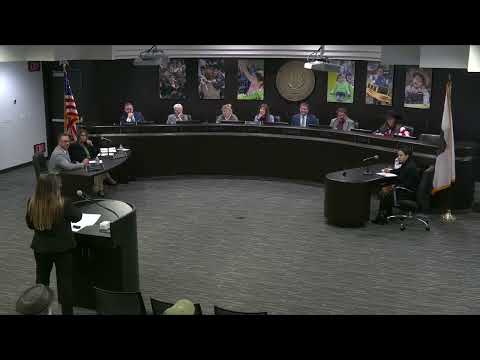
At a March meeting, Michelle Taylor Langham, director of internal special education for Kern County Office of Education, said KCSOS has provided naloxone training since 2022 in partnership with Kern Behavioral Health and Recovery Services, Drug Free Kern and the California Department of Education. She described intranasal naloxone (Narcan) as safe and effective, noted trainers supply kits with two doses and said each KCSOS program campus stores central doses for emergency use.
Taylor Langham said programs serving students in the office’s Blanton Education Center campus currently have 15 volunteered, trained educational staff, one Bakersfield Police Department school resource officer and eight Kern County probation staff trained to carry naloxone, for a total of 24 trained responders covering 18 classrooms at that site. She said she was aware of two or three overdoses in the programs this school year and that naloxone was effective in each case.
Student members of the CARE internship program at Ridgeview High School presented results of a teacher survey and a policy request. Kuljit Kaur, CARE advisor with Jakara Movement, said students asked the Kern High School District to place naloxone kits in every classroom, citing rising opioid overdoses and the potential for faster response times if kits were immediately accessible.
The student survey — 49 anonymous responses from 92 Ridgeview teachers and staff — found most respondents did not know where naloxone was located on campus and that a majority were not certified to administer it; about 70% said they would volunteer for training if it were offered. Survey comments reflected mixed concerns, including fear of liability and worry about stigma, and several respondents said availability was “better than a death occurring.” The students noted California’s Good Samaritan provisions and SB 10 (sometimes called “Melanie’s Law”) as legal context that supports training and school response to fentanyl.
Board members and staff asked about training frequency, community outreach and supply levels. Taylor Langham said staff training is offered at least annually and that community outreach events at Blanton and elsewhere typically occur about twice a year; she said KCSOS receives naloxone from Drug Free Kern and state distribution projects and estimates a given campus may hold roughly 40–50 doses in multiple locations (individual responder kits with two doses plus central office supplies and emergency cabinets).
Taylor Langham described operational details: trained volunteers receive a personal two‑dose kit, each campus keeps centrally located backup doses, and KCSOS coordinates with probation and local law enforcement to ensure additional trained responders. She said KCSOS is installing overdose emergency cabinets next to AED cabinets across program sites so responders can access naloxone and AED equipment together during emergencies.
CARE students described outreach events (Red Ribbon Week, World Mental Health Day, campus town halls), youth certification in naloxone administration, and a request that districts expand classroom access. Ridgeview students said Narcan is available on campus but generally not placed inside individual classrooms; that can delay access because campuses are large. Kaur and student presenters asked the Kern High School District to consider classroom placement of naloxone kits so staff and students can respond immediately.
Superintendent Dr. Minneborough and KCSOS staff said the county office can partner with CARE, provide outreach and include the students’ work in community education efforts. Taylor Langham said KCSOS will continue annual trainings by licensed health care professionals, update staff on current street drugs and trends with partner agencies, and make overdose‑response resources available on request.
No binding policy change was approved at the meeting; trustees expressed support for outreach and training and asked staff to continue coordinating with districts and community partners. The presentation and the student request will be used to guide further outreach and training planning.