Get Full Government Meeting Transcripts, Videos, & Alerts Forever!
Get email alerts on the Marriage Definition Resolution topic
No spam. Unsubscribe anytime.
Senate rejects resolution urging Supreme Court to restore marriage definition
Summary
The North Dakota Senate voted 31-16 to defeat House Concurrent Resolution 30 13, which would have urged the U.S. Supreme Court to restore a definition of marriage limited to one man and one woman. Senators debated constitutional history, recent federal laws and public concern before the recorded vote.
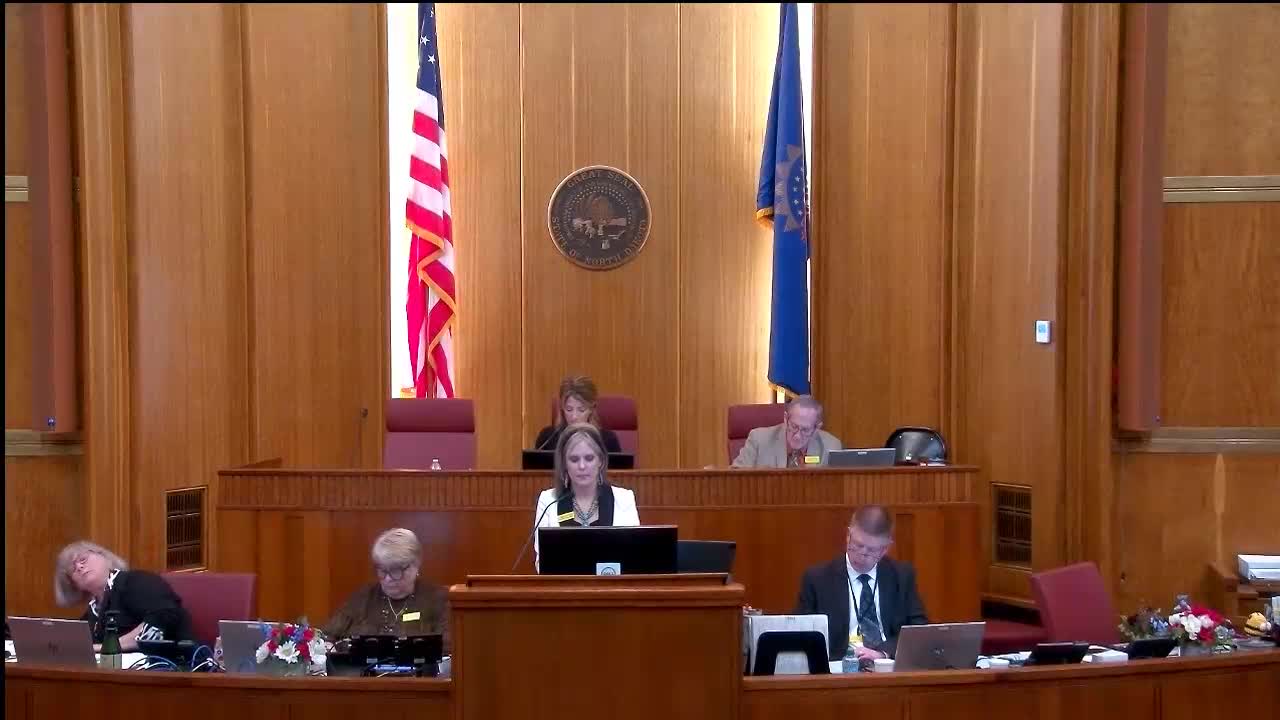
The North Dakota Senate on March 13 defeated House Concurrent Resolution 30 13, a measure urging the United States Supreme Court to restore the definition of marriage to "a union between 1 man and 1 woman." The final roll-call tally was 16 ayes and 31 nays, and the resolution failed.
Senator Ray Larson introduced HCR 30 13 on the floor and asked for a verification vote after committee consideration. The measure prompted an extended debate about legal history, federal rulings and the practical effect of a nonbinding resolution.
Senator Mary Baucher, speaking against the resolution on the floor, framed the issue in the context of Supreme Court precedents and subsequent federal legislation. "It used to be before 1967 that people of different races were not able to be married," Baucher said, citing Loving v. Virginia and then referencing Obergefell v. Hodges and the federal Respect for Marriage Act. She noted committee testimony and public responses: "In fact, yesterday, we received a letter that had the signatories of over a thousand North Dakotans. Well, over 360 North Dakotans spoke in opposition to this through formal testimony as part of the committee process."
Senator Clemens defended the resolution on constitutional and state-sovereignty grounds, saying the North Dakota Constitution explicitly references marriage and asserting his oath to uphold it. Senator Cleary said he was "disappointed" the chamber would not have a roll-call vote on the resolution initially and urged colleagues to record their positions; a verification roll call was later ordered by the presiding officer and executed.
Floor procedure included a request for eight senators to rise in support of a motion, which the presiding officer denied during debate. The secretary then conducted a roll-call verification vote; the tally read 16 ayes and 31 nays and the resolution failed.
The measure was nonbinding; supporters argued it would express state-level preference and dissent from federal jurisprudence, while opponents said it would send a hurtful signal to gay and lesbian North Dakotans and risk unnecessary attention and division. Several senators emphasized that HCR 30 13, if adopted, would not change existing law or invalidate marriages currently recognized in the state.
The chamber moved on to other business after the vote.