Get Full Government Meeting Transcripts, Videos, & Alerts Forever!
Get email alerts on the School Policy Transgender Athletes topic
No spam. Unsubscribe anytime.
Othello board debates regional response after Moses Lake moves on transgender athlete policies
Summary
Board members discussed a recent Moses Lake School District action on transgender athletes, heard a detailed presentation from Superintendent Pete Perez about legal and student-wellbeing implications, and agreed to solicit public input; no policy or vote was taken.
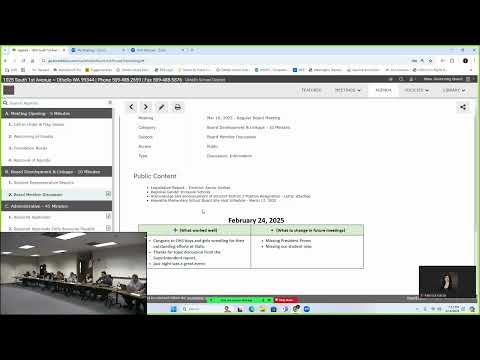
Othello School District board members spent more than an hour discussing a recent action by the Moses Lake School District that would restrict transgender athletes’ participation in girls’ sports, but they took no formal action and asked for more public input.
Superintendent Pete Perez told the board the Moses Lake decision, reported in local media, had prompted regional conversation and raised legal and student-safety questions for Othello. He asked directors to consider three areas before adopting any policy: employee rights, student well-being and the message the district’s words and actions send to vulnerable students. “Thirty percent of all kids report a sense of sadness or hopelessness at school. Sixty percent of transgender students do,” Perez said, citing the Washington Healthy Youth Survey and warning that changes could increase harm for already marginalized students.
The discussion framed the issue as both local and part of broader state and federal debates. Several directors said they sympathize with concerns about safety and fair competition for female athletes and praised Moses Lake for taking action, while others urged caution because state law and guidance from the Office of the Superintendent of Public Instruction (OSPI) and pending Western Washington Interscholastic Activities Association (WIAA) amendments complicate the legal picture. Board members repeatedly said they want to hear from district residents before deciding on a course of action.
Directors and the superintendent discussed implementation risks if the board directed staff to follow a policy that conflicts with Washington state law. Perez said staff and coaches could face civil-rights lawsuits or professional-license consequences if asked to implement measures that violate state law. He also noted the national political context, including a presidential executive order referenced during the meeting, and urged the board to weigh fiscal and legal costs of any deliberate challenge to state rules.
Board members also raised procedural questions about how local athletics governance interacts with conference and WIAA processes. Perez told the board WIAA amendments on transgender-athlete policy were scheduled for a vote on March 26 and that athletic directors’ advisory votes to WIAA are often a group counseling process rather than individual unilateral decisions. He said some districts are abstaining from advisory votes out of concern for potential legal backlash.
No motion or directive to adopt a new policy was proposed or voted on. Board members asked the superintendent and staff to gather more information, coordinate with legal counsel and invite community comment before taking any formal steps.
The board’s conversation included references to regional coordination: Moses Lake’s action came up at a recent Moses Lake board meeting, and directors framed the topic as a Columbia Basin regional concern. Several directors asked the public to contact the board to help shape local policy direction.
The board closed the segment without a decision, saying the district will continue to monitor developments at WIAA and OSPI and solicit community input on next steps.