Get Full Government Meeting Transcripts, Videos, & Alerts Forever!
Get email alerts on the Impact Fees topic
No spam. Unsubscribe anytime.
Grand Junction council advances amended impact-fee ordinance after public hearing and months of study
Summary
City council voted 5-1 to publish an amended Title 21 ordinance on impact fees for a first reading, directing staff to use older lane-mile standards for transportation fees, set institutional fees on a church baseline, and phase in new rates over three years. The measure remains subject to final passage April 2 and further refinements.
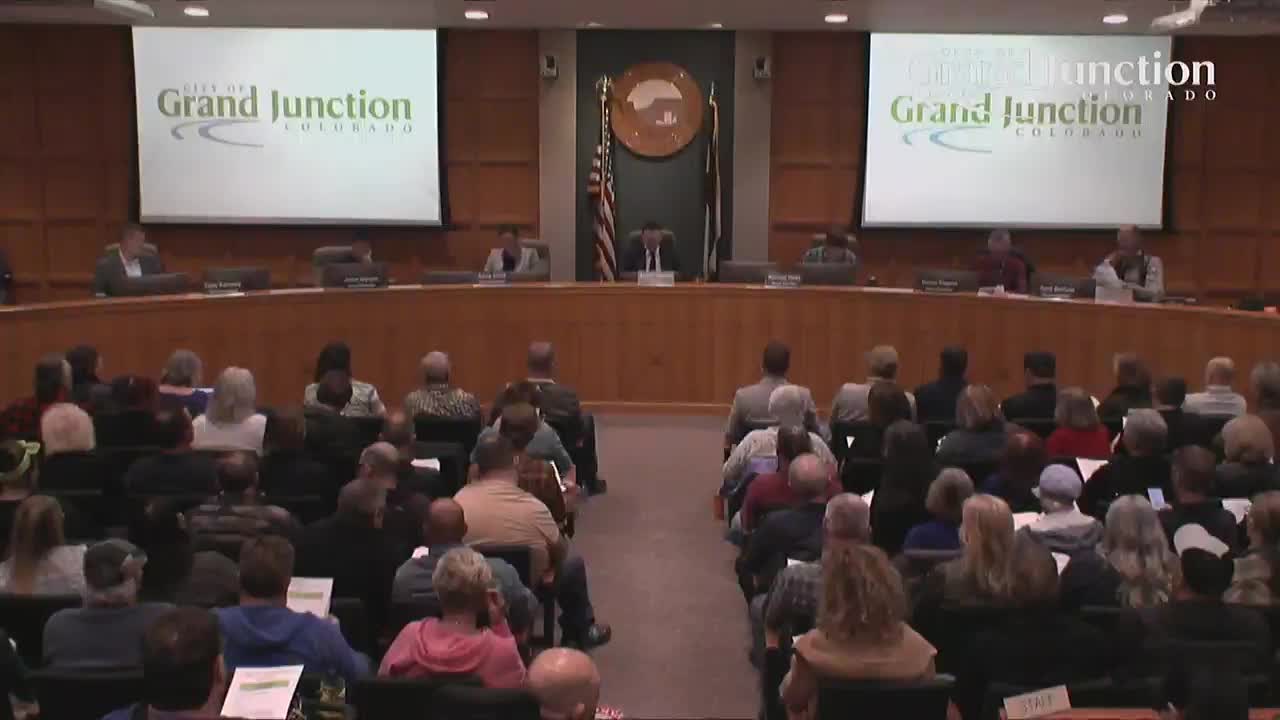
City Council moved forward March 5 on revised rules for development impact fees that would raise charges for new residential and some nonresidential construction but phase increases in to ease the cost to builders and homebuyers.
Tamara Allen, the city’s community development director, presented the updated nexus study and draft ordinance, describing impact fees as “one time payments for growth related infrastructure. They're not a tax, but a contractual arrangement to build growth related infrastructure, and they must meet 3 kind of areas of law.” The council voted to publish the ordinance with staff-recommended changes and additional council direction, setting a second hearing for April 2.
Why it matters: the proposed changes would alter how Grand Junction recovers the cost of parks, police, fire and transportation improvements from new development. Staff and consultants said the updated calculations reflect current development patterns and construction costs; opponents said higher fees risk pricing first-time buyers and small projects out of the local market. Council adopted the changes for publication but left final approval to a future vote.
The staff recommendation retained parks, police, fire and transportation within the fee schedule but recommended not adopting municipal facilities fees or a proposed affordable housing linkage fee now. The city retained consultant Tishler Bice to prepare the nexus study, then revised the study after stakeholder meetings and a Feb. 19 council workshop. Allen said the update included two major technical shifts requested by stakeholders and staff: using the 2004 Transportation Engineering Design Standards (TEDS) lane-mile cost for the transportation calculation rather than the 2023/2024 TEDS, and treating the church use as the baseline for the grouped “institutional” land-use category (which includes day care, hospitals and places of worship) to lower the institutional fee.
Allen showed examples to help the council weigh effects on housing: a roughly 2,000-square-foot new house would pay about $8,000 in impact fees under the 2025 rates; the draft study produces higher or lower totals for different unit sizes and nonresidential uses depending on the methodology applied. Allen also presented assumptions used in the affordability analysis, noting those assumptions are conservative and have limits: for example, staff cited an assumed interest-rate figure and a 20% down payment as part of a sample buyer profile.
Council debate focused on three topics: whether to accept the staff recommendation to use the older TEDS lane-mile cost (a policy decision that reduces the transportation fee), how to set the institutional category, and the implementation schedule. Councilmembers said they supported continuing to refine the policy and to give the public time to review the revised numbers. Councilmember Kennedy said the tradeoffs are real and raised safety and design concerns, calling the TEDS choice “a significant policy change,” and added that the city must be clear which costs are being assigned to new development and which will continue to be borne by existing taxpayers.
Public comment at the hearing split along industry lines. Realtors, builders and local business groups warned that higher fees combined with rising costs for taps, materials and interest rates could reduce starts and increase home prices; several urged a longer phase-in. Developers and the Home Builders Association asked for a phased rollout and for staff to correct methodological issues. Civic and parks advocates argued new homes and businesses create direct demand for parks and circulation improvements and that new development should pay its fair share rather than shifting costs to current residents.
Council action: the council voted to introduce and publish the ordinance for first reading as amended by council direction and to set a final public hearing on April 2, 2025. The motion, as adopted for publication, directed staff to incorporate the revised nexus study that uses the 2004 TEDS lane-mile cost, apply the church baseline for institutional uses, and phase the fee increases over three years (the motion as initially offered proposed five years; the council amended that to three years during discussion). The motion passed on roll call 5–1; one council member voted no. Councilmembers and staff said additional technical refinements — particularly on park and open-space valuation and inflation indexing — could be handled between the two readings.
Next steps: staff will publish the revised ordinance and supporting materials, schedule the required public notice, and return April 2 for second reading and potential final action. Staff also noted an option to refer the text amendments to the Planning Commission for review of code language (the commission would not set the fee amounts). Council members asked staff to provide additional detail on park land valuation, the parks fee components, and the projected revenue under phased implementation prior to the April hearing.
Quotes used in this story come from the March 5 council meeting transcript and are attributed to speakers who presented at or participated in that agenda item.