Get Full Government Meeting Transcripts, Videos, & Alerts Forever!
Get email alerts on the Homelessness topic
No spam. Unsubscribe anytime.
Fort Collins police HOPE team details outreach-first approach to homelessness
Summary
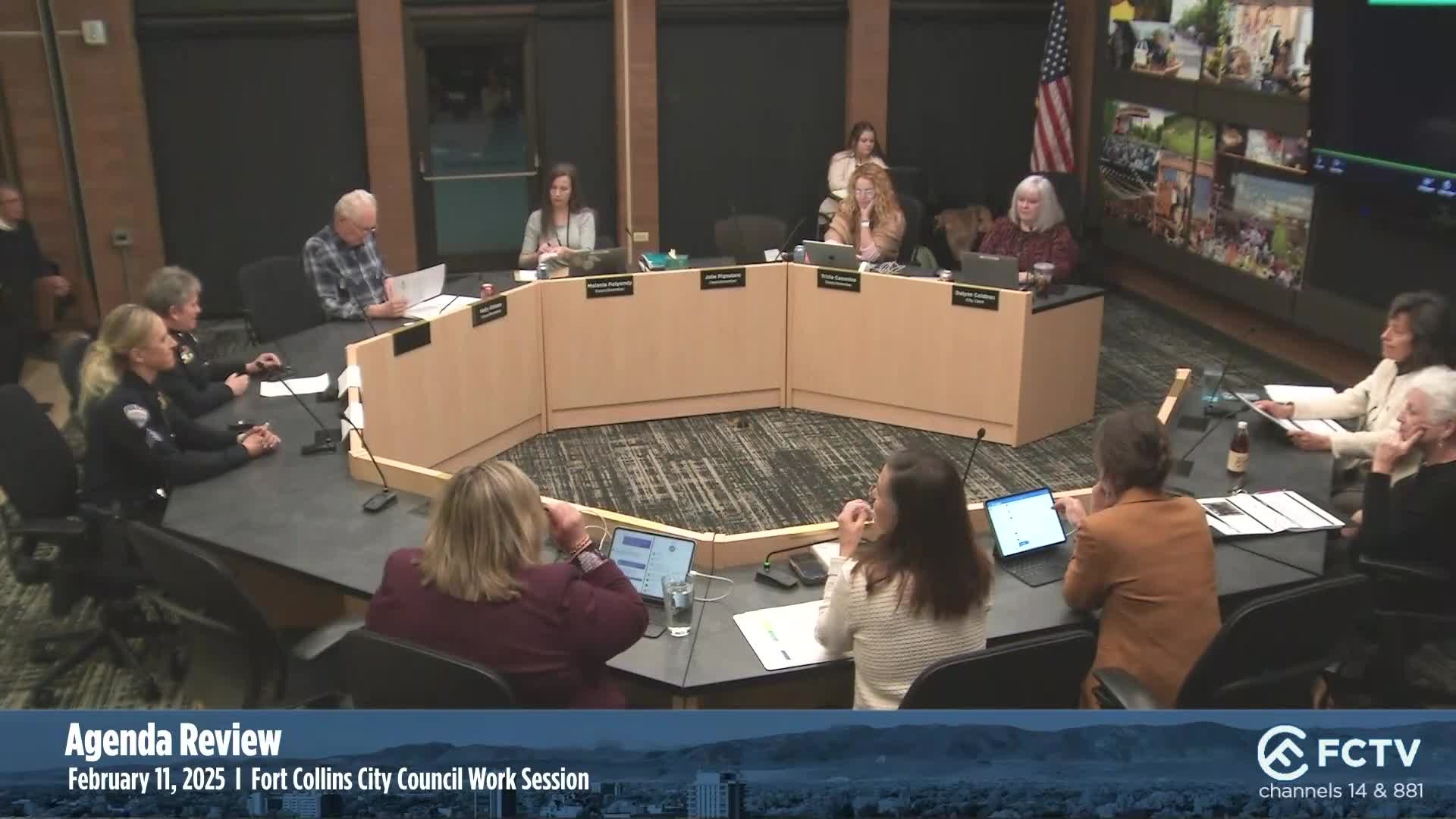
At a City Council work session, Fort Collins Police Department leaders described the Homeless Outreach and Proactive Engagement (HOPE) teamapproach, saying officers focus on building relationships, connecting people to shelter and services, and reserving enforcement for criminal conduct.
Fort Collins Assistant Police Chief Christy Voleski and Sergeant Annie Hill on Monday told the City Council that the departmentHOPE (Homeless Outreach and Proactive Engagement) team treats most contacts as opportunities to offer resources and avoid punitive measures when shelter capacity is unavailable.
The HOPE team, created as a pilot in early 2023, pairs officers trained in crisis intervention with community partners to provide a problem-oriented, relationship-based response to homelessness. The teamfocuses on voluntary compliance, referrals to shelter and social services, follow-up at repeat locations, and coordinated cleanups of long-standing camps.
"One of our goals is to really build relationships with our unhoused community members," Sergeant Annie Hill said, describing the unitapproach and partnerships with agencies such as Outreach Fort Collins, Homeward Alliance, Housing Catalyst and The Salvation Army.
Why this matters: The HOPE teamaddresses both public-safety and public-health concerns while trying to limit citations or arrests when shelter beds are unavailable. Council members asked for clarifications about camp-cleanup processes, treatment of pets during cold weather, and data trends such as a sharp decline in collected sharps in 2024.
Key details from the presentation and Q&A
- Operations and priorities: The HOPE team responds to calls with a homeless nexus, conducts targeted follow-ups at long-term "hotspots," and collaborates with Natural Areas and Parks to address camping that threatens habitat. Hill said the team tries to obtain voluntary compliance and use environmental design strategies to reduce repeat problems.
- Camp cleanups: Hill described a multi-step process before a cleanup: outreach and offers of shelter and services, posted notice and multiple contacts, a typical 16-day turnaround from tagging to actual cleanup in late 2024, and coordination with Outreach Fort Collins. In one recent large site near Lee Martinez Park, officers said there had been approximately 45 contacts over several months before seeking a search warrant.
- Shelter and enforcement: Chief Voleski said the team monitors nightly shelter capacity and will not cite people for sleeping outside if local shelters have no beds. "We are making sure that if there aren't beds available, we aren't citing people for sleeping outside," she said.
- Services and partners: Officers reported 31 recovered bicycles in the year the team tracked them and frequent coordination with the Street Dog Coalition to assist people who camp with pets; staff said the coalition arranges hotel rooms or veterinary support when shelters cannot accept animals.
- Enforcement and outcomes: Staff said citations and arrests are a very small fraction of the team's activity; where tickets are issued, officers often refer people to the municipal Right Track problem-solving court to set goals and avoid punitive fines.
Council questions and staff responses
Council members asked whether officers can compel people into shelter (they cannot), details of the outreach and notice timeline for cleanups (multiple contacts and a 16-day turnaround on average at the end of 2024), and why sharps collection numbers dropped substantially in 2024 (staff did not have a definitive answer and said they would investigate if Outreach Fort Collins' operations or other disposal behavior changed).
Next steps
Staff encouraged residents to report camps through Access Fort Collins or dispatch (and request HOPE follow-up) and said they will continue to provide information to Council about trends, shelter capacity monitoring, and coordination with outreach partners.