
Administration proposes short-term municipal grants as compromise for ending winter hotel-motel GA program March 31
Get AI-powered insights, summaries, and transcripts
Subscribe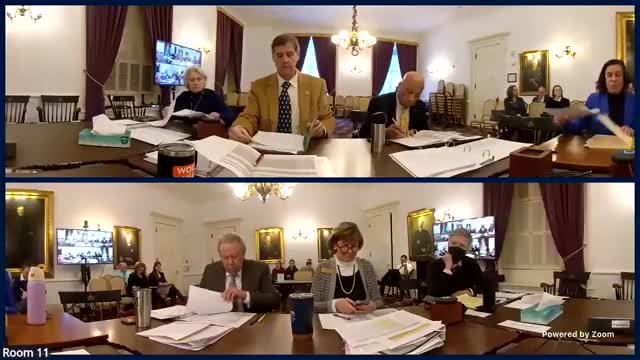
Summary
Sarah Clark, secretary of administration, told members of the House–Senate conference committee on H.141 on Feb. 28 that the administration proposes to end the cold‑weather portion of the state’s General Assistance Emergency Housing hotel–motel program on March 31 and to offer roughly $2.1 million in grants to municipalities to help households as they exit state‑run hotel placements.
Sarah Clark, secretary of administration, told members of the House–Senate conference committee on H.141 on Feb. 28 that the administration proposes to end the cold‑weather portion of the state’s General Assistance (GA) Emergency Housing hotel–motel program on March 31 and to offer roughly $2.1 million in grants to municipalities to help households as they exit state‑run hotel placements.
The compromise would replace a previously considered $1.8 million allocation to extend hotel–motel stays through June 30. Under the administration’s proposal, funds would be distributed to municipalities based on hotel‑room usage by Agency of Human Services (AHS) district office caseloads (AHS uses 12 district offices), and grants would include a $50,000 minimum to ensure small communities receive usable amounts. Clark said the grants could be used at local discretion — for continuing hotel payments, partnering with nonprofits to expand shelter capacity, or relocation assistance — but would not be integrated into the state GA program once municipal funds were used.
Why it matters: The committee heard from municipal leaders and the Vermont League of Cities and Towns (VLCT) that local governments are already stretched and that short notice would make accepting and administering state funds impractical. Samantha Sheehan, VLCT municipal policy and advocacy specialist, told the committee that municipalities lack the existing authorities, insurance coverage and staff capacity to take on responsibility for hotel or shelter administration on short notice and that the delivery of emergency shelter is currently a state responsibility.
Clark framed the proposal as a three‑month bridge to July 1, when the GA Emergency Housing program “resets” under the parameters the committee approved last year. She said the administration is continuing work to expand state‑run emergency shelter capacity — noting shelters stood up in Williston and Waterbury in late fall — and that the state would try to minimize administrative burdens on towns and allow grant funds to cover administrative costs.
Key details from the conference record - End of cold‑weather program: March 31. Clark said the March 31 date is “consistent with historical practice.” - Program restart/reset: July 1, when households that meet state criteria could re‑enter the GA Emergency Housing program. - Proposed grant pool: roughly $2,100,000 (administration’s estimate), larger than the $1,800,000 amount referenced earlier to extend hotel–motel stays to June 30. - Allocation method: by hotel rooms used per AHS district office (12 district offices), with a $50,000 minimum grant for small communities. - Administrative allowance: municipalities may use grant dollars for administrative support. - Local shelter capacity: the administration cited state‑run shelters in Williston and Waterbury; no statewide capacity estimate was provided beyond remarks that roughly 466 children could be affected if current placements change. - 80‑day rule: committee members discussed an existing 80‑day cap on state GA hotel placements; Clark said households paid for locally would not be subject to the state 80‑day counting while outside the state program and could reapply on July 1 if they meet state criteria.
What lawmakers and municipal leaders said Clark argued the administration favors ending the winter exception and using the grant approach to give municipalities flexibility while the state stands up more shelter capacity. “It is really important to myself and to the administration that we, maintain the program that we agreed to last year,” Clark said, adding the compromise is intended to “get us through these 3 months until July 1 when our General Assistance Emergency Housing Program resets.”
Several conference members raised timing, liability and workload concerns. A lawmaker said: “I am concerned about the timeline of getting this done and stood up in basically less than a month,” and another said the plan risks “sending a message to communities that this is your problem.” Senator Brock and Representative Loomley (as recorded in committee discussion) both stressed municipalities have been shouldering shelter responsibilities for years and that rapid handoffs could create confusion over who is responsible for clients’ ongoing services.
Samantha Sheehan, municipal policy and advocacy specialist for the Vermont League of Cities and Towns, testified that municipalities statewide are not prepared to accept state responsibilities without longer planning and statutory changes. “The delivery of human services, and in particular shelter for vulnerable Vermonters, is the responsibility and the authority of state government, not municipal government,” Sheehan said, adding that municipalities lack the authority to administer state services across municipal boundaries and that short notice around town meeting week made the proposal impractical.
Conference committee action and next steps The committee recorded agreement on most budget sections but left effective dates unresolved. Earlier in the meeting conferees said they would “agree with your proposal to transfer the $133,700,000 to the Other Infrastructure, Essential Investments and Reserves Fund as proposed by the Senate.” The committee did not adopt the administration’s municipal grant proposal into the conference report during the session; members said the idea had merit for future consideration but raised too many operational and timing concerns to include as written for immediate execution.
Clark said the administration would begin outreach to municipalities if the committee signaled support and also noted the state would work during the upcoming town‑meeting break to develop grant agreements and address operational questions if the committee moved forward. Committee members asked fiscal staff for the final bill and spreadsheet and scheduled a brief recess to review paperwork before returning to sign the conference report.
Taper: The committee did not finalize effective dates during the Feb. 28 session. Members said they will review documents provided by joint fiscal staff, consider municipal feedback the administration gathers during the coming week, and reconvene to sign the conference report. The administration warned it will not support extending the winter conditions program to June 30; instead, it proposed the municipal grant approach as described.