Get Full Government Meeting Transcripts, Videos, & Alerts Forever!
Get email alerts on the School Budget topic
No spam. Unsubscribe anytime.
Concord School District previews budget with projected local revenue gains, trust-fund transfers and state-aid uncertainty
Summary
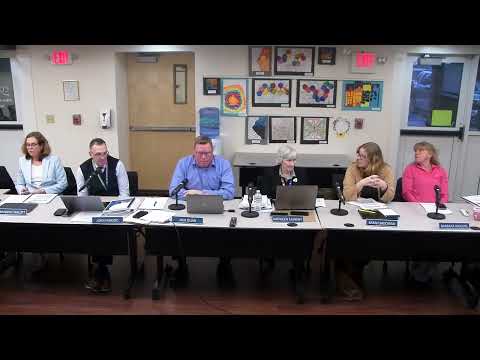
At a March 3 budget working session, district staff outlined projected increases in local tax revenue and one-time trust fund transfers totaling $2.45 million, flagged risks if those one-time monies are used to balance the operating budget, and described uncertainty about state special-education funding and federal reimbursements.
Concord School District officials on March 3 presented a preliminary revenue and transfer plan for fiscal 2026, showing a projected increase in local tax receipts, proposed one-time transfers from trust funds and continuing uncertainty about how much additional state special-education aid the district will receive.
In a presentation to the board, staff described a $3.7 million increase in current appropriations tied to local taxes and noted a planned $2,450,000 transfer from trust funds into the general fund described in the proposed budget as "one-shot money." "This transfers out our 1 time revenues to the general fund," the presenter said, and recommended the board review those transfers and make adjustments if necessary.
The presentation covered several revenue lines and contingencies. Staff identified a small additional payment-in-lieu-of-taxes (PILOT) amount (listed in the materials as 7,650) and flagged tuition-related revenues: a Project SEARCH placement the packet lists as 10 students (two adults) and an associated tuition amount that was not fully specified in the presentation materials. Staff also said that the CRTC summer enrichment program will not run because the high school will be closed for an HVAC upgrade: "We will not be running that enrichment program for CRTC because the school will be closed for the HVAC upgrade," the presenter said.
The district is budgeting more conservative revenue from vocational tuition and tuition charged to sending districts. The presenter described the vocational program split as a 75/25 arrangement and said the sending schools were not covering the full 75 portion; specific percentages in the presentation were unclear. Staff said the district is not budgeting any student bus fees for the coming year and expects a modest increase in interest income after stronger investment returns this year.
On state aid, staff outlined changes in the state education tax, the equitable education grant, and the Education Funding Act (EFA) phase-out. The packet shows a projected $69,000 reduction in equitable aid and a $37,745 increase from the state education tax line. Staff also projected receiving $55,000 more in special-education aid than in the prior year but emphasized that state allocations remain uncertain. Board member discussion referenced a recently published House Bill 2 and raised questions about whether the governor’s proposal to increase special-education spending would affect the district’s allotment; staff said there was no concrete guidance yet and that the district is ensuring its monthly special-education billing is complete so it can pursue any additional funds when the state announces distribution mechanisms.
John (staff member, Concord School District) described the district’s Medicaid billing process and recordkeeping for medically related school services: "All of our providers throughout the day log and track their services for all of our students. And then we were able to take that, put it into a system, bill for it, and then we receive checks to the district, periodically throughout the year." Staff said the district is being meticulous about logs and submissions so it can claim any increased Medicaid reimbursements if state or federal policy changes provide more funding.
On federal revenue, staff built an assumption for federal entitlements at $650,000 as a middle estimate; the presentation noted the district historically received between 37% and 98% of its federal entitlements and received about 68.79% in the most recent year. The presentation also noted the eventual phase-out of the Build America bonds rebate by 2028 and a potential modest increase (about $150,000) in Medicaid reimbursements compared with the current year.
Staff warned of budget risk if one-time trust-fund transfers are relied on to balance operating costs. "If it doesn't, this snow pile gets a lot bigger next year. I know. That's what I'm worried about," the presenter said, urging the board to review the proposed transfers. The work session schedule was set to allow the board to post a draft budget on March 5 and to hold public hearings as required by charter and state timelines.
Votes at a glance
• Motion to adjourn the budget working session — Moved by Miss Bache; seconded by Miss Robinson. Vote: unanimous (Aye); outcome: approved.
The board asked staff to prepare a side-by-side list of proposed additions and cuts with dollar amounts for the next meeting and requested a breakdown of state education aid by category (base aid, adequacy, special-education) for the Wednesday meeting. Staff said they would provide the requested breakdowns and additional detail on staffing, debt service, and the potential financial impact of different health-insurance scenarios.
The session lasted approximately 22 minutes for the working-session portion, focused primarily on revenue assumptions and built-in budget risks rather than final votes on appropriations. The board recessed and reconvened seven minutes later for its monthly meeting.