Get Full Government Meeting Transcripts, Videos, & Alerts Forever!
Get email alerts on the Career Technical Education topic
No spam. Unsubscribe anytime.
High school CRTC students describe internships and CRTC Plus third‑year option
Summary
Concord High School and the Concord Regional Technical Center (CRTC) staff and students described work‑based learning, industry credentials, and the CRTC Plus third‑year model that lets students continue applied learning and earn college credit or credentials.
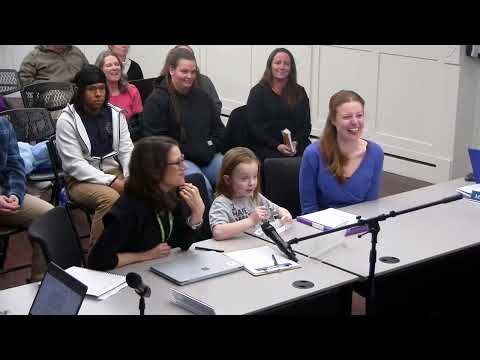
The Concord School District board heard a multi‑speaker presentation about the Concord Regional Technical Center’s (CRTC) work‑based learning programs and a CRTC Plus option that lets students continue a third year of applied learning while remaining enrolled in high school.
Principal Anne Fowler told the board that CRTC programs must offer three elements to qualify for federal Perkins funding: college credit, industry‑recognized credentials, and work‑based learning. Kate Amaral, who oversees work‑based learning at the CRTC, said business partnerships in the Concord area return year after year to host students in internships and apprenticeships.
Several students described their internships and outcomes. Laura Lorenz, who is in the construction trades program, said she interviewed with North Branch Construction and spent time both on job sites and in the office; the experience changed her career thinking and led her to consider roles such as project engineer. Marcus Day and Cody Haskell, juniors in criminal justice, described internships and planned semester placements with the Concord Police Department and classroom work as teacher assistants. Senior Eviana Ramo described internships with state courts and shifting her senior year toward emergency services to earn an EMT credential.
Fowler and Kate Amaral told the board the CRTC Plus program keeps sophomores who enter the program connected to school for a purposeful senior year through credit‑bearing extended learning opportunities (ELOs), professional skills rubrics and sustained employer partnerships. Amaral said the district tracks employer feedback with midpoint and final surveys and that the CRTC’s “professional skills” rubric accounts for 40 percent of many students’ grades; employers report particular satisfaction with professional skills (communication, collaboration, self‑direction, inventiveness) that students bring to internships.
Board members asked about barriers including scheduling, the number of sophomores admitted versus juniors, and whether employers wanted students to increase time spent on internships. Amaral and students said increased internship time was a common request from students and employers. District staff reported 15 students were participating in CRTC Plus for 2024–25; officials said priority is usually given to juniors because most full programs require two years to complete.
No formal vote followed; the item was presented as an informational report and as a recognition of student experiences.