Get Full Government Meeting Transcripts, Videos, & Alerts Forever!
Get email alerts on the Financial Aid Fafsa topic
No spam. Unsubscribe anytime.
File the FAFSA early, PHEAA access partner says during Financial Aid Awareness Month
Summary
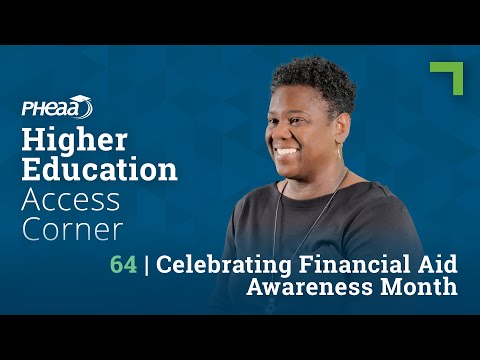
Tiffany DeVann, host of the Higher Education Access Corner and a Pennsylvania Higher Education Assistance Agency access partner, advised students and families to complete the Free Application for Federal Student Aid (FAFSA) promptly, explained types of aid, and listed resources and deadlines for the 2025–26 award year.
Tiffany DeVann, host of the Higher Education Access Corner and an access partner with the Pennsylvania Higher Education Assistance Agency (PHEAA), urged students and families to complete the Free Application for Federal Student Aid, known as the FAFSA, as soon as possible so they can be considered for federal, state and institutional aid.
"The biggest thing in the first step is to complete the free application for federal student aid or FAFSA form," DeVann said, stressing that the FAFSA is the gateway to need-based aid from federal, state and school sources.
The FAFSA determines eligibility for three broad types of financial aid in this order of priority: grants and scholarships (gift aid that does not require repayment), work-study positions, and student loans, which must be repaid and should be a last resort. DeVann advised applicants to seek gift aid first, consider work-study if they can balance employment and coursework, and borrow only what is necessary if loans are required.
Why it matters: FAFSA data are shared with the schools listed on the application and are used to calculate awards. DeVann warned that if a student does not complete the FAFSA, "you will not receive any form of need based financial aid if you, in fact, do not apply for financial aid." She noted that schools may have widely varying price points — giving a hypothetical example of a semester bill of $2,000 at one institution versus $50,000 at another — so completing aid paperwork can materially reduce out-of-pocket cost.
Key steps and deadlines DeVann outlined: - Create a studentaid.gov account for the student and any contributor (parent or spouse). She recommended creating the account three to four days before starting the FAFSA to allow verification with the Social Security Administration. - For the 2025–26 FAFSA (covering enrollment from 07/01/2025 to 06/30/2026), the application collects 2023 income information. DeVann reminded listeners to use the correct tax-year data for the specific FAFSA cycle. - Students may list up to 20 schools on the FAFSA; schools do not need to have accepted the student to receive the results. - PHEAA will send follow-up emails to first-time applicants instructing them to activate a PHEAA state grant account and complete Pennsylvania-specific forms. DeVann gave PHEAA deadlines of 05/01/2025 and 08/01/2025 for state grant-related filings but advised applicants not to wait until those dates.
Resources and assistance DeVann recommended: studentaid.gov and the Federal Student Aid Information Center (FSA) for federal guidance and tools; PHEAA.org for Pennsylvania state grant information and access partner events; and other planning and borrowing resources she named on the program (educationplanner.org, YoucanDealWithIt dot com, and a PHEAA borrowing tool she described as a "my smart borrowing Org" resource). She also encouraged students to contact high school counselors and college financial aid offices for local FAFSA workshops and one-on-one help.
Process cautions and follow-up: DeVann described FAFSA as an annual application and recommended following up on emails from federal or state aid offices, correcting errors, and providing any requested documentation. She also noted that some FAFSA questions use skip logic and that the application includes help features such as chat and email with FSA.
The program framed Financial Aid Awareness Month as an opportunity to remind families to start early, check multiple aid sources, and use available tools and workshops so students can reduce borrowing and identify affordable college options.
DeVann closed by directing listeners to PHEAA’s access partners and online resources for additional support and workshops.