Get Full Government Meeting Transcripts, Videos, & Alerts Forever!
Get email alerts on the Forestry Management topic
No spam. Unsubscribe anytime.
Flagler County forestry supervisor says prescribed burns, species surveys reduced wildfire risk and revealed rare populations
Summary
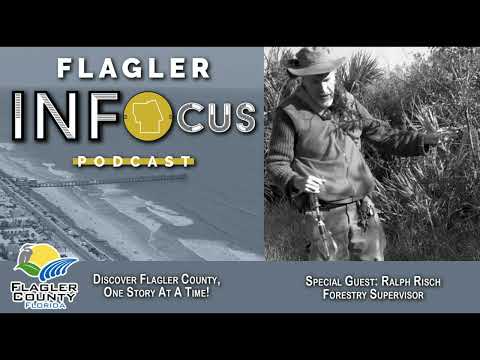
Ralph Risch, Flagler County forestry supervisor, described the county's use of prescribed fire to reduce fuel loads and restore fire‑dependent habitats, and recounted recent vouchering that identified dozens of previously undocumented plants and several striped newt breeding ponds across county preserves.
Ralph Risch, Flagler County forestry supervisor, said prescribed burns and on‑the‑ground surveys have reduced fuel loads near neighborhoods and uncovered previously undocumented populations of plants and amphibians on county lands.
“Most Florida upland habitats are fire dependent, not just fire prone,” Risch said, explaining that regular, planned burns keep fuel levels low and maintain the ecological conditions required by many native species.
Risch told Flagler in Focus listeners that Flagler County manages roughly 10,000–11,000 acres of natural lands directly or under management agreements, and that some parcels are owned by other entities and leased or managed by the county. He noted Grama Swamp as an example of a large tract (about 3,400 acres) owned by the St. Johns River Water Management District but managed by Flagler County staff.
Why burns matter: Risch described how long intervals without fire allow needle cast, palmetto fronds and other fuel to build up so a wildfire, when it occurs, burns hotter and longer and threatens nearby homes. He said prescribed fire both restores species that need fire to reproduce (for example, wiregrass and other seed‑bank species) and reduces wildfire risk to adjacent neighborhoods.
Risch illustrated ecological recovery with an example from his prior work: after oak reduction and a series of prescribed burns at a 20‑acre site on the Lake Wales Ridge, surveys found that a rare plant (the transcript name: clasping warrior amplexifolia) increased from roughly a hundred plants in 2003 to “over 8,900 of them had germinated” by a 2016 survey.
Vouchering and new records: Risch said his surveys in Flagler County have documented species that previously lacked formal records for the county. He reported about 30–32 plant species he had newly vouchered for Flagler County and seven herpetofauna (reptile/amphibian) records. He described leading repeated pond dipping and voucher efforts at Princess Place Preserve and an adjacent preserve (combined about 2,000 acres) that identified breeding habitat for the threatened striped newt (Notophthalmus perstriatus).
Risch said those efforts found about 10 striped newt breeding ponds at Princess Place Preserve alone and, combined with the neighboring preserve, 16 striped newt breeding ponds — a total he described as making Flagler County the third‑most populous striped newt area known after much larger public forests in Florida.
Invasive species and management: Risch addressed invasive plants and animals. He said Brazilian pepper is widespread along the coast and can reduce native diversity; management includes mechanical cutting and targeted stump treatment with a herbicide (Garlon) applied per label instructions. He emphasized training and protective procedures — for example, wearing protective gloves and following label directions — to limit non‑target impacts.
Public engagement and outreach: Risch described the county’s monthly “Walk in the Woods” outings (limited to eight participants for safety) and encouraged residents to check Flagler County’s parks and recreation listings and social media for schedules. He also noted volunteer support, including groups assisting with invasive plant removal at local parks.
What was not decided: The podcast is an interview and contains no formal motions or county decisions. Risch described ongoing practices, monitoring results and outreach efforts rather than new or changed county policies.
Risch said monitoring and follow‑up work continue: vouchered specimens are sent to university herbaria or museums for curation, and survey work will continue to map species distributions and inform future management.