Get Full Government Meeting Transcripts, Videos, & Alerts Forever!
Get email alerts on the Student Device Policy topic
No spam. Unsubscribe anytime.
Concord-Carlisle committee to open policy subcommittee after surge of parent emails on student phone use
Summary
The school committee reported receiving about 25–30 emails about cell phone use and scheduled a policy subcommittee meeting to frame questions and gather evidence before considering a district‑level policy. Committee members said schools currently use building‑level practices, not a committee policy.
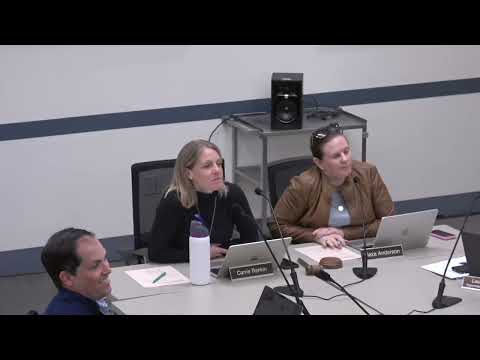
The Concord-Carlisle Regional School Committee on March 11 said it will begin a formal, data-driven discussion of student cell phone use after the district received an unusually large volume of parent correspondence.
Committee member Carrie reported receiving roughly 25–30 emails from families about phones in school and said the committee will open the issue in its policy subcommittee to consider options, gather evidence from teachers and parents, and decide whether to propose a district-level policy.
Committee members agreed the topic requires careful study. The subcommittee meeting will be the first forum for outlining questions, collecting teacher and parent feedback, and determining what policy language — if any — to bring back to the full committee. Members asked the subcommittee to include time for public comment and to publicize the meeting widely.
District officials noted there are no district-wide school committee policies on cell phone use at present. Practices vary by school: the K–8 handbook disallows phones during school, and individual schools have different in-building practices, while the high school uses school-level practices rather than a committee policy. Committee members said they have received advisory material from the Attorney General’s office and that the Massachusetts Association of School Committees has not issued a definitive model policy; state legislation on the subject is still active but not settled.
Members emphasized they do not want the responsibility to fall entirely on classroom teachers and flagged a need to hear from staff about operational impacts. The committee instructed the policy subcommittee to compile available practices, legal guidance, and teacher and parent feedback and to return recommendations to the full committee for possible public hearings.
No motion or vote on a formal policy was taken at the March 11 meeting; committee members set process steps for the subcommittee as the next action.