Get Full Government Meeting Transcripts, Videos, & Alerts Forever!
Get email alerts on the Land Use Zoning topic
No spam. Unsubscribe anytime.
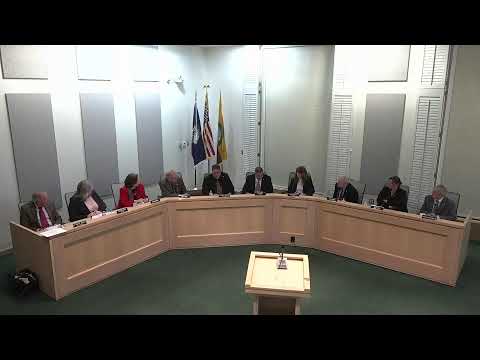
Pecosin council tightens standards for Planned Open Space Conservation developments
Summary
Council adopted amendments to Article 8.1 that set a minimum lot size for Planned Open Space Conservation (POC) developments, raised setbacks and altered open-space and wetlands accounting.
Pecosin City Council on Feb. 25 adopted changes to Article 8.1 of Appendix A (zoning) that alter dimensional and design requirements for developments in the Planned Open Space Conservation (POC) District, city staff said.
The most significant changes set a minimum lot size of 11,000 square feet for lots in POC subdivisions, increased side yard setbacks from 10 feet to 15 feet, raised certain building setback lines to 35 feet from streets and revised open‑space accounting so a minimum of 50% of a development’s gross land area must be devoted to open space. In addition, up to 50% of non‑tidal wetlands (rather than 100% under the prior text) may be counted toward the required open space; the ordinance requires the remainder of wetlands remain in a predevelopment state and prohibits tidal wetlands from being used to achieve open‑space requirements.
"What we have found in looking over the last several years is some definite avenues...to make [planned open space developments] more palatable in terms of blending in with the neighborhoods that they're in," Wiley Horton, the city’s director of community development, told council during the work session presentation. "By putting a lot‑size floor on this, it ensures that no lot is going to be less than 11,000 square feet."
Horton explained that the previous standard used a density formula (about 2.5 dwelling units per allowable acre) that could produce lots substantially smaller than surrounding neighborhoods; the new minimum is roughly one quarter of an acre. He also said increasing side‑yard setbacks and the building setback from streets was intended to prevent homes from appearing ‘‘built on top of each other’’ and to improve compatibility with preexisting surrounding lots.
Councilors asked clarifying questions during the work session about how wetlands and resource protection areas would be counted and where buildable areas would remain on representative diagrams. Horton said non‑tidal wetlands would remain undisturbed in their predevelopment state when not counted for open space and that minor trail elements might be permitted with federal or other applicable approvals but that the ordinance aims to minimize disturbance.
The council approved the ordinance on first and final reading (recorded vote 7–0). Staff will codify the amended text in Appendix A and publish guidance for developers and applicants.
Clarifying details
- Minimum lot size for POC developments: 11,000 square feet (quarter acre). - Side yard setbacks increased from 10 ft to 15 ft. - Minimum building setback line from street increased to 35 ft. - Open space requirement: minimum of 50% of gross land area devoted to open space; up to 50% of non‑tidal wetlands may count toward that total; tidal wetlands may not be used to achieve required open space. - Previously used density: approximately 2.5 dwelling units per allowable acre (staff referenced that prior computation).
What happens next: The Community Development Department will update the zoning code, incorporate the changes into application review, and require submitted home‑design information when the zoning administrator determines it is necessary to ensure compatibility with the surrounding neighborhood, the ordinance states.