Get Full Government Meeting Transcripts, Videos, & Alerts Forever!
Get email alerts on the Traffic Safety topic
No spam. Unsubscribe anytime.
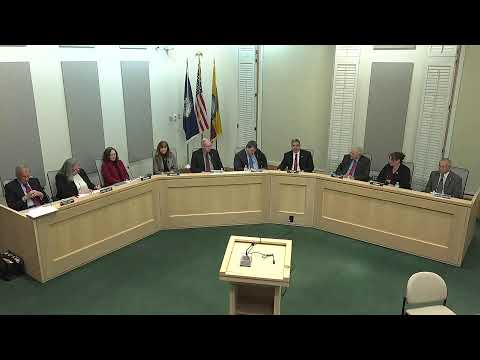
Poquoson Council directs staff to pursue traffic data service, add speed signs and start studies
Summary
At a council work session, Poquoson City Council gave staff consensus direction to return in February with a demonstration and cost estimate for a commercial traffic-data product (Urban SDK), to acquire two permanent solar speed display signs, and to run traffic studies on Ridge, Pasture and Rens roads after mobile sign equipment is restored.
Poquoson City Council at a work session directed city staff to bring back a proposal in February to subscribe to a commercial traffic-data service and to acquire two permanent solar speed-display signs, and to begin speed studies on three residential roads identified by council.
Council members said the measures are intended to back up enforcement with data and to target speed-deterrent signs where they will be most effective.
City Manager Randy Wheeler and Police Chief Cates presented the council with steps the city has taken so far and new tools under consideration. Chief Cates said the police department has increased patrol presence and enforcement in response to citizen complaints and has seen the most notable increase in citations on Hudgins Road and Wythe Creek Road. Cates said the department has purchased an unmarked patrol vehicle intended primarily for traffic enforcement; the vehicle is awaiting installation of emergency equipment and will be operational in roughly two to three weeks once the equipment is installed.
Wheeler described a commercial product called Urban SDK that draws anonymized GPS and traffic data to provide average speeds, 85th-percentile speeds, and vehicle volumes by road segment and time of day. Wheeler told council the vendor quoted about $45,000 for a three-year agreement. He said the city would get access to the previous 90 days of data on day one and that data would accumulate going forward. Wheeler said a pair of permanent solar speed-display signs would cost roughly $7,000.
Council members asked staff to verify how the Urban SDK speed assumptions match the city’s posted limits and whether the school transportation office could use the data. Wheeler said the vendor’s sample had used some default speed-limit assumptions that would need to be adjusted to the city’s values. He said staff would return in February with a demonstration and a client list of other Virginia users.
Council reached consensus to direct the manager to: (1) return in February with a demonstration and cost estimate for Urban SDK and for two permanent solar speed-display signs; and (2) begin traffic studies on Ridge Road, Pasture Road and Rens Road as the initial three segments for timed speed deployments once the city’s mobile signs are operating. Wheeler said the city can perform the state-required traffic surveys in-house using its portable equipment; when the portable signs are functional staff can deploy up to two sign units concurrently and typically run a one-week data collection for each deployment.
Public commenters urged broader use of enforcement and signs beyond the main corridors. Resident Bonnie Wilgus said, “Pasture Road is a disaster… I walk my dog every day, and every day is people speeding past us.” Resident Debbie Dryden said Rens Road recorded about 17,589 vehicles in a seven-day period with 8,685 exceeding the posted limit (not all exceeding by 10 mph) and asked that enforcement be extended beyond Wythe Creek and Hudgins. Resident Charles Southall, who lives on Pecosin Avenue, asked council to identify measures of success and timelines for evaluating the changes.
Wheeler and Cates said the portable signs also collect data for follow-up analysis and that the permanent signs are primarily informational and intended for deterrence and validation against the Urban SDK data. Wheeler noted the city has already acquired an unmarked enforcement vehicle and that the total investment under consideration — the unmarked car and equipment, Urban SDK, and two solar signs — would be on the order of six figures when added together; he later cited the unmarked vehicle and related equipment at about $75,000 during the regular meeting portion.
Next steps: staff will schedule a February demonstration of Urban SDK, provide a client list and parity checks versus the city’s sign data, return cost estimates for the three-year subscription and the two solar signs, and proceed with the agreed initial traffic studies once the city’s portable units are operational.