Get Full Government Meeting Transcripts, Videos, & Alerts Forever!
Get email alerts on the Short Term Rentals topic
No spam. Unsubscribe anytime.
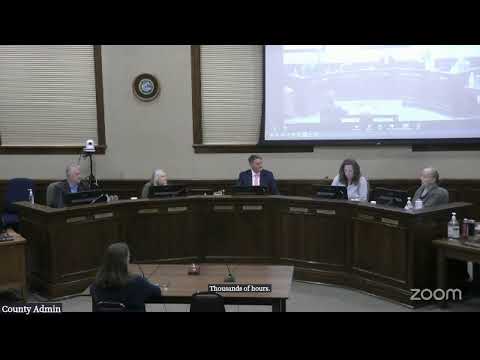
Commissioners table proposed short‑term rental fee increase; ordinance hearing continued
Summary
After months of discussion, commissioners voted to delay a proposed increase in the county’s short‑term rental permit fee to allow additional analysis, and they continued a public hearing on proposed permit caps to a later meeting.
Clatsop County commissioners voted to table a proposed increase to the county’s short‑term rental (STR) permit fee and continued the public hearing on a separate ordinance that would set caps on STR permits in certain geographies.
The Community Development Department had proposed raising the two‑year STR permit fee from $550 to $1,500 to align permit revenue with staff costs and to distribute fees to departments that carry enforcement and compliance workloads. Staff told the board that their cost accounting shows actual per‑permit costs are substantially higher than the current fee and that, based on 172 permits, a $1,500 two‑year fee would yield about $258,000 over two years.
Why this matters: The county has been reconciling the cost of monitoring and enforcing STR rules with public concerns about neighborhood livability and the workload placed on code enforcement, assessments staff and legal counsel. Fee design choices affect small, owner‑occupied operators as well as larger commercial hosts.
Discussion and votes Community Development Director Gail Henriksen presented a cost breakdown and explained the $1,500 two‑year charge proposed by staff. Henriksen said the board previously directed staff to bring a proposal to recover full administrative costs and to consider distributing funds to undercompensated departments.
Commissioners questioned the hotline service used for after‑hours complaints, the possibility of using third‑party ad‑monitoring services, and whether a tiered fee structure (for example: smaller owner‑occupied units vs. larger multi‑bedroom properties or high‑use units) would be fairer. Commissioner Wakulya, who disclosed he manages an STR in the county and confirmed counsel advised there was no conflict under the state ethics rules, urged consideration of tiered approaches and asked for more time.
The board voted to table the STR‑fee proposal to allow staff to research alternatives and to give the new commissioner time to consult with staff. The motion to table was seconded and carried on a roll‑call vote recorded as: Commissioner Thompson — aye; Chair Quila — aye; Vice Chair Banks — aye; Commissioner Anthony Wakulya — aye; Commissioner Webb — nay (4–1). The matter was rescheduled for the board’s February 26, 2025 meeting for further consideration.
Separately, the board opened a public hearing on Ordinance 20‑419 (listed in the packet as an ordinance to amend Clatsop County Code Title 5 to cap STR permits and revise standards). Staff reported land‑use counsel recommended revisions and that the draft now allows permit transferability based on counsel’s advice. The board continued the first public hearing and scheduled the second reading for January 22, 2025.
What’s next Staff will research tiered fee structures, alternative complaint‑hotline vendors and the staffing cost implications of any new fee design. Commissioners asked that staff include an estimate of the staff time needed to implement alternative fee models so the board can weigh fiscal and operational tradeoffs.
Ending: The board paused final action on both items to gather additional data and asked staff to return with comparative jurisdiction research and implementation-cost estimates ahead of the February 26 meeting.