Get Full Government Meeting Transcripts, Videos, & Alerts Forever!
Get email alerts on the Labor Staff Compensation topic
No spam. Unsubscribe anytime.
Staff, union representatives press NEIU board on wages, HR issues and stalled bargaining
Summary
Multiple campus staff and union representatives used public comment at the Feb. 13 board meeting to call attention to alleged HR system problems, bargaining frustrations and pay gaps; AFSCME and UPI stewards presented wage comparisons and said negotiations have not advanced.
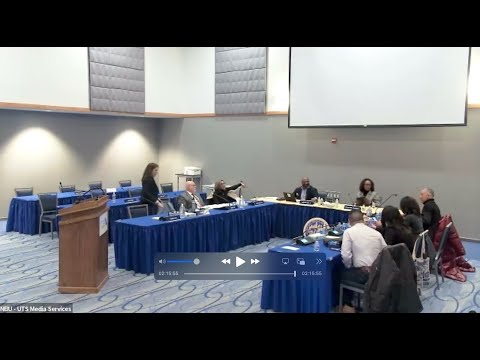
At the public-comment portion of the Feb. 13 Northeastern Illinois University Board of Trustees meeting, multiple staff members and union representatives urged the board to address human-resources problems, stalled bargaining and what they described as wages below peer institutions.
Franchesca Morgan, secretary of the university chapter of the University Professionals of Illinois (UPI), told trustees that HR remains over-reliant on the Workday platform and under-resourced, and she urged the board to address staffing and support for HR personnel who are managing heavy workloads.
Several AFSCME Local 1989 representatives and stewards raised the issue of pay. Rebecca Fichette, lab manager and AFSCME chief steward, presented a wage analysis the union said compared NEIU negotiated civil-service titles to the same titles at 13 Illinois public higher-education institutions. She said the analysis showed an average gap of $4.07 per hour (about $8,000 per year) between NEIU and peer institutions for the 78 negotiated civil-service titles covered by their contract. Fichette said the union FOIAed payroll data from peer institutions to construct the comparison and that the union’s initial bargaining proposal (filed September 2024) is grounded in that analysis.
Mary Serio, president of AFSCME Local 1989 (speaking as a representative), and other commenters said that bargaining — which they said began discussions last spring and continued through multiple meetings — has produced little progress and that staff are increasingly stressed by slow responses and turnover in labor-relations roles.
Heather Carper, a staff member, said workers have kept the university operating through the pandemic and called for investments in staff pay and working conditions rather than only front-facing recruitment and marketing.
Board chair Phillips acknowledged the comments, said the trustees take input seriously and noted that the board typically does not engage in extended back-and-forth during public comment. Trustees and administration later discussed budgetary constraints, the FY26 gap and the need to balance investments across staff, facilities and academic programs.
Why this matters
Public and union comment focused on pay and HR capacity at a time when the university is confronting budget shortfalls and is considering tuition and fee changes. Union presentations included a quantified wage gap that, if validated and addressed, could have both personnel and budget implications.
Details from speakers
- Franchesca Morgan (UPI chapter secretary): cited HR staffing and Workday dependence. - Rebecca Fichette (AFSCME chief steward): presented a wage gap of $4.07 per hour—derived from FOIAed payroll data across 13 Illinois public institutions covering 5,654 employees in the compared titles. - Mary Serio (AFSCME representative): described extended bargaining without progress since meetings beginning in May/June 2024.
Board response and next steps
Trustees thanked speakers and said the board heard their concerns; trustees and administration discussed budget pressures and committed to further internal review. The board did not take formal action on bargaining demands at the meeting; bargaining remains a matter between the unions and the NEIU administration.
Ending
Union leaders and staff used public comment to give the board a formal, recorded summary of bargaining status, comparative wage data and HR concerns. Trustees asked administration to note the input and said the issues would factor into budget and staffing discussions already underway.