Get Full Government Meeting Transcripts, Videos, & Alerts Forever!
Get email alerts on the Tuition And Fees topic
No spam. Unsubscribe anytime.
Board approves FY26 graduate tuition differentials and $15 student fee increase; trustees require spending reports
Summary
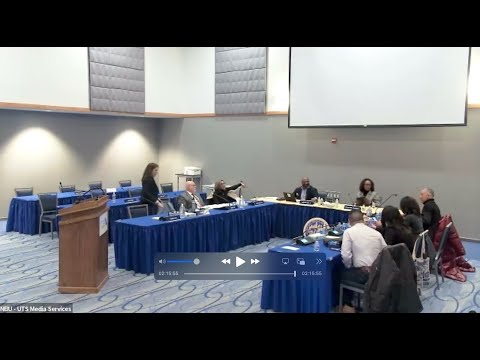
The Northeastern Illinois University Board of Trustees on Feb. 13 approved a FY26 tuition-and-fee package that leaves undergraduate base tuition unchanged but creates graduate tuition differentials for selected programs and raises mandatory student fees; trustees required administration to track and report how differential revenue is spent.
The Northeastern Illinois University Board of Trustees on Feb. 13 approved a FY26 tuition and fee package that keeps undergraduate base tuition flat but adds graduate tuition differentials for selected master's programs and raises mandatory student fees from $85 to $100 per semester (a $15-per-credit-hour increase was discussed and modeled during committee presentations).
The board approved the measure after an extended presentation from university finance and academic leaders about how differential tuition would be used at the college and program level and how the proposed fee increase would affect students across income bands. Trustees required the administration to track differential revenue and report back to the board on actual spending and student impacts.
Board chair Phillips said the package aimed to protect undergraduate affordability while targeting additional resources to graduate programs that require higher instructional costs and professional training. President Bell Jordan and finance staff said the change is intended to funnel differential revenue to colleges and programs to support faculty, assistantships and program development.
The board and administration framed the decision in the context of a projected institutional gap for FY26 and efforts to avoid deeper cuts. Administration presented a range of strategies to close a roughly $9.6 million gap for FY26, including modest enrollment gains, program growth, increased state funding (IBHE had recommended a 2% operating increase systemwide), targeted differentials and course-fee reviews, plus potential debt refinancing and foundation support.
Public commenters during the meeting raised concerns directly tied to the tuition proposal: a BSW/MSW student urged trustees to reject or mitigate a proposed MSW tuition increase, saying higher graduate tuition would reduce access for marginalized students. Board members and administrators acknowledged those concerns and pointed to planned reporting and program-level stewardship of any new revenue.
Votes at a glance
- FY26 tuition and fee package (undergraduate tuition flat; graduate differentials for specified programs; increase in mandatory fees to $100): approved (roll call recorded: Florimond Yes; Garcia Yes; Linares Yes; Leon Yes; Maricidis Yes; Morales Yes; Phillips Yes; Wolf absent; motion carried).
- Delegation to CFO to designate certain expenses as financeable (administrative authorization to declare expenses financeable, with board approval required for financing terms): approved (roll call reflected same voting pattern; motion carried).
- Amended 2025 internal auditing charter and 2025–26 detailed audit plan (to reflect new IIA standards and adjusted hours): approved (committee recommendation accepted; motion carried by board vote).
- Approval of prior open and closed minutes and maintenance of confidentiality for specified closed minutes: approved.
Why this matters
Board members said the package balances short-term fiscal pressure with targeted academic investments. Trustees repeatedly emphasized the requirement that differential revenues be tracked and reported so the board — and the campus community — can see whether funds are being used to support students, faculty hiring and program quality.
Supporting details and administration notes
- Administration presented modeling showing the effect of the changes on a range of student need categories. For a highest-need undergraduate example (24 credit hours/year), projected average financial aid would still leave a refund for living expenses but that refund would be reduced under the proposed package; trustees discussed that reduction and asked for clearer communications to students about net impact and available aid.
- The proposal expects modest enrollment growth assumptions (presented as a 1–3% range) and other revenue actions; administration said additional steps (program growth, targeted fundraising, course-fee revisions and potential debt refinancing) would be pursued to close the remaining gap.
- Trustees asked for annual reporting on how differential funds are allocated and for visible safeguards that differential revenue tied to a program or college is used primarily to benefit that program’s students and academic quality.
Board direction and next steps
Trustees approved the resolution while attaching the expectation that academic affairs and finance will provide periodic reports on differential revenue, detailed accounting of expenditures by program/college, and analysis of enrollment and student-aid impacts. The administration said it will present more refined financial modeling after the governor’s state budget address and during the March/April budget cycle.
Ending
Trustees said they approved the package to preserve undergraduate affordability while creating a mechanism to invest in high-cost graduate programs, with the explicit caveat that administration report back on expenditures and student impact. The board will review those follow-up reports in coming committee meetings.