Get Full Government Meeting Transcripts, Videos, & Alerts Forever!
Get email alerts on the Staffing And Instruction topic
No spam. Unsubscribe anytime.
District 200 outlines staffing reorganization: instructional coaching cut, special education and CTE roles added
Summary
Administrators presented a draft staffing plan for 2025-26 that reallocates 2.4 FTE districtwide, eliminates the instructional coaching program, creates new special education positions, and proposes splitting the fine and applied arts division into separate fine-and-performing-arts and career and technical education divisions.
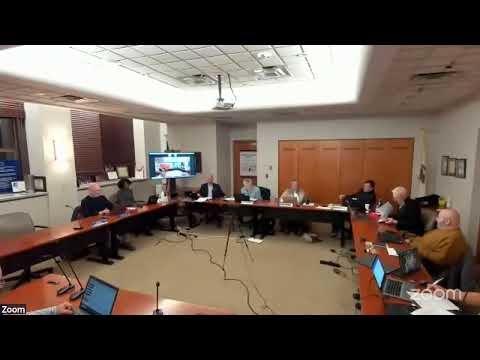
District 200 administrators presented staffing recommendations at the committee of the whole meeting Thursday that would reshuffle existing full-time-equivalent (FTE) positions for the 2025-26 school year without increasing the district's total FTE or producing additional net ongoing cost.
Administrators said the district's instructional FTE for the current year stands at 228.8 and that the proposed plan results in a net districtwide reduction of about 2.4 FTE overall. The proposal would eliminate the district's instructional coaching program (a reduction of about 2.8 FTE in the instructional support category) after a multi-year review of outcomes, create a special education science teacher position, split a single special education program-and-site program chair into two separate program-chair positions, and reallocate other FTE into program needs.
"The data does not show us that we are obtaining the things that we wanted to see," said Dr. Florenza, summarizing a multi-year review of the instructional coaching program and the decision to discontinue it in its current form. Administrators told the board they reviewed three years of data and found the district lacked consistent student-outcome measures tied to the coaching program, even though coaches provided professional development and curriculum support.
Administrators proposed moving certain duties from the director of instructional technology and innovation into other divisions; the current director role would be reconfigured into a coordinator-level position that would not evaluate certified teachers. The proposal also requests splitting the existing division head for fine and applied arts into two separate division-head positions: one for fine and performing arts (music, theater, visual arts, speech) and one for career and technical education (CTE) to expand pathways, industry partnerships and apprenticeship opportunities.
Special education programming changes were presented as a response to enrollment and eligibility trends. The district is relocating its SAID transition program to a new site and said growing need for transition services (including extended services through age 22 under Illinois law) requires an additional teacher and the creation of distinct program-chair roles for team and site assignments that also serve as Local Education Agency (LEA) leads during IEP meetings.
Administrators emphasized that the staffing recommendations involve reallocation rather than the creation of new FTE and said there would be no additional cost to the district's staffing budget as a result of the reorganization. For budget planning, the district reported using a standard replacement-cost assumption of $75,000 per certified position when estimating potential salary impacts.
Board members asked several questions about the likely effects on new-teacher support and retention if the instructional coaching program is discontinued. Administrators replied that new-teacher mentorship remains in place: Ms. Elaine Watson and Mr. Bill Young serve as the district's new-teacher mentor leaders and the district will expand and adjust support through those mentors and division heads.
Administrators said the staffing recommendations will be brought back to the full board for formal approval at a regular board meeting in approximately two weeks. Separately, the district held a special board meeting later the same evening that approved a personnel recommendation that included new hires, job shares, summer-school hires, resignations, leaves of absence and retirements.
No layoffs were presented at the meeting; administrators described the proposals as reallocations tied to program needs and compliance with current special-education requirements.