Get Full Government Meeting Transcripts, Videos, & Alerts Forever!
Get email alerts on the Finance Pilot Policy topic
No spam. Unsubscribe anytime.
Collins Center presents feasibility analysis for Holyoke pilot policy; recommends value‑based approach and negotiating team
Summary
The Collins Center for Public Management told the DGR Committee a formal PILOT (payment‑in‑lieu‑of‑taxes) policy is feasible for Holyoke and recommended a value‑based methodology (targeting about 25% of the tax liability) with a small negotiating team, annual assessment updates and phased‑in payments to secure agreements.
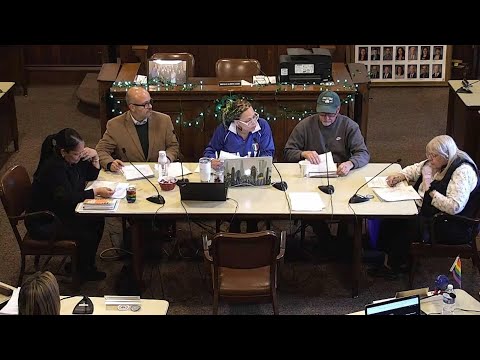
The Edward Collins Center for Public Management presented a feasibility analysis March 11 on whether the City of Holyoke can adopt a formal pilot policy seeking voluntary payments from tax‑exempt organizations (payments in lieu of taxes, or PILOTs).
Steven Cirillo, the Collins Center project manager, and his team described a multi‑step methodology: inventory tax‑exempt parcels, calculate a “would‑be” tax liability using assessed values, and apply a policy fraction to set target PILOT asks. Cirillo told the committee the centers his team has worked with in other Massachusetts communities often target roughly 25% of the hypothetical tax obligation, explaining that many tax‑exempt organizations do not use the full range of municipal services — but typically do use police, fire and public works. “A pilot is a payment in lieu of taxes,” Cirillo said.
The Collins Center reported Holyoke has roughly 900 tax‑exempt parcels in its database, though more than half of that value is city, state or federal property and therefore not a candidate for PILOT negotiation. Cirillo’s analysis calculated the hypothetical tax revenue at full taxation and then applied the 25% guidance used in several peer communities. The center emphasized the result is a policy framework, not an automatic levy: PILOTs remain voluntary and negotiated.
Cirillo and the mayor’s office outlined practical steps: (1) the Assessor’s Office should annually review and update tax‑exempt parcel valuations; (2) the city should designate a small, senior negotiating team (including the mayor) to approach organizations; (3) the city should include existing informal arrangements in a review to standardize terms and place agreements in writing; and (4) the city should prioritize targets where the parish, hospital, college, or other institution uses city services heavily. The center suggested allowing phased‑in payments over multiple years so organizations can agree to a rising schedule rather than an immediate full payment.
Mayor Josh Garcia told the committee the administration has begun nonpublic conversations with several tax‑exempt organizations and supports a systematic approach that avoids the appearance of an ad hoc “shakedown.” Councilors and staff identified existing pilot agreements, some under formal contract and others apparently administered informally; the presenters recommended converting or renegotiating informal or hand‑shake arrangements into written contracts tied to assessed value and an agreed formula.
Cirillo and his colleagues provided the committee with a spreadsheet of tax‑exempt parcels and illustrative calculations; they recommended city staff and council adopt a policy and then begin phased negotiations. Councilors asked about the fairness of a 25% target in Holyoke, which has a lower per‑capita income base than peer towns, and Cirillo said the number derives from cost‑allocation estimates for the municipal services tax‑exempt entities typically use and that communities may craft a lower percentage for small organizations. The DGR committee voted that the order to receive the Collins Center findings has been complied with.