Get Full Government Meeting Transcripts, Videos, & Alerts Forever!
Get email alerts on the Workforce Development Stem topic
No spam. Unsubscribe anytime.
Desert Research Institute outlines statewide STEM and workforce programs: green boxes, internships, robotics and drone training
Summary
DRI told the NSHE Workforce Committee it operates multiple statewide STEM and workforce programs — Green Box curriculum kits, research internships, Nevada Robotics teacher training and drone competitions — and reported tens of thousands of student and family contacts in 2024.
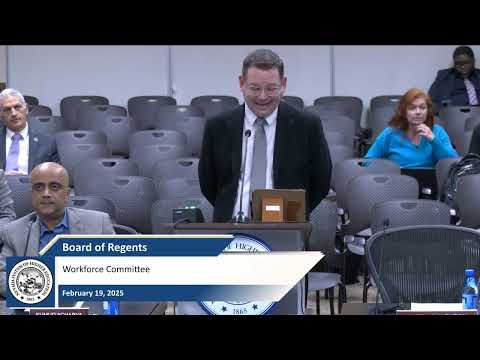
The Desert Research Institute (DRI) told the NSHE Workforce Committee about a wide portfolio of K–12 and higher-education workforce programs that aim to build Nevada’s STEM pipeline and connect students to careers.
Vicki Etemezian, DRI vice president for research, said DRI leads research and applied projects that often include workforce or K–12 STEM elements and highlighted a regional Southwest Sustainability Innovation Engine (SSIE) partnership led by ASU, DRI, UNLV and the University of Utah. Etemezian said SSIE has received $15,000,000 to date and could access up to an additional $145,000,000 if future benchmarks are met.
Megan Collins, assistant research scientist and strategic-plan implementation lead, described the Research Immersion Internship Program launched in 2021. Collins said the program places students from community colleges and other institutions in mentored teams working on real research projects; DRI has provided 62 longer internships and reported that a large majority of participants are first-generation college students and that participants reported large gains in confidence and problem-solving.
Emily McDonald Williams, director of DRI’s STEM Education Program, described the Green Box curriculum kits — grade-specific, standards-aligned STEM kits that include all materials and ship free to classrooms. She said Green Boxes reached more than 30,000 students in Nevada in 2024 and that educator professional-development sessions accompanied the kits to help teachers implement the activities. Williams also outlined programs including the Chief Science Officers chapter, an 8-week paid STEM program (STEMforce) for youth experiencing or at risk of homelessness that concludes with paid internships, and a partnership placing undergraduate education majors and STEM majors in paid classroom internships.
AJ Long, director of Nevada Robotics at DRI, described statewide teacher training, drone competitions and a robots-and-drones lending library. Long said Nevada Robotics trains educators through a multi-session model (METRICS), supports drone competitions and maintains lending libraries in Reno, Las Vegas and Great Basin College, and reported distributing 12,000 books and reaching tens of thousands of families and students through programs and events.
DRI leaders and regents discussed funding and stability. Emily McDonald Williams said the STEM Education Program is funded through a mix of federal grants, state grants, foundation support and philanthropic donations, while AJ Long said Nevada Robotics’ work began with funding from Tesla and Nevada Gold Mines and now relies on multiple grants, industry gifts and federal funds. Regents and committee members praised DRI’s work and urged help ensuring funding stability.
Why it matters — DRI’s programs span pre-K through graduate-level training and include hands-on internships and teacher upskilling that can help diversify Nevada’s workforce and expand student pathways into higher-paying STEM careers.