Get Full Government Meeting Transcripts, Videos, & Alerts Forever!
Get email alerts on the County Budget Fy26 topic
No spam. Unsubscribe anytime.
Chesterfield officials present cautious FY26 budget with 1¢ real-estate cut and expanded tax relief
Summary
County staff proposed a fiscally cautious FY26 budget that trims the real‑estate tax rate by one cent to $0.89, forecasts 4.4% general‑fund revenue growth and directs most new dollars to schools, public safety and tax‑relief programs while holding most new spending and hiring for later.
Chesterfield County budget staff presented a proposed fiscal 2026 operating and capital plan that trims the real‑estate tax rate by one cent to $0.89, projects $43.8 million in additional general‑fund revenue (roughly 4.4%) and directs the bulk of new ongoing funding to the school division, public safety annualizations and expanded tax‑relief programs.
The proposal emphasizes restraint in the face of national and local economic uncertainty, reduces planned use of reserves, delays many new hires and limits new initiatives. The board is scheduled to vote on the FY26 budget on April 9, with public hearings and community meetings preceding adoption.
County presenters told the board the national economy has shifted from “slowdown” to pronounced uncertainty over recent weeks, citing indicators such as slipping job openings, rising consumer delinquencies and a rapid change in short‑term GDP forecasts. Budget staff said those signals informed a more conservative revenue forecast and a plan that preserves flexibility into the fiscal year.
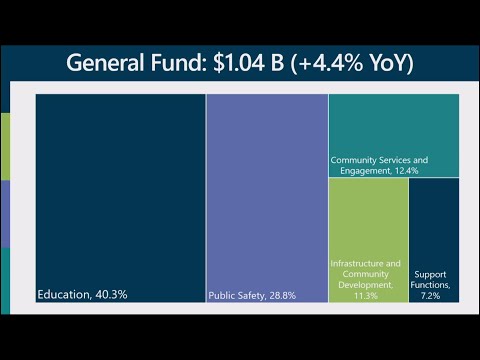
Under the proposal the general fund would increase about 4.4% year over year. The staff said roughly 82% of that increase is absorbed by three items: a net transfer to schools, annualization of public‑safety pay and staffing increases that took effect in January (about $17.1 million), and expanded tax‑relief programs (about $5 million additional for the senior/veteran relief program). The presentation noted the county will annualize a prior 7.2% public‑safety compensation action and carry forward merit and step pay commitments.
The presentation highlights four net new general‑fund positions and a limited list of new initiatives totaling approximately $1.9 million (about 4% of general‑fund growth). Many other departmental requests — about $22.1 million in operating needs and roughly 175 full‑time position requests — were left unfunded and are proposed as an unfunded list.
Staff framed the budget with several policy choices meant to preserve optionality: a smaller one‑time use of reserves than in typical cycles, limited new ongoing spending, and a preference to “add back” programs later if economic conditions improve rather than promise increases that might need to be reduced. The packet and presentation materials are posted online, and staff said audit‑finance committee and board updates will continue throughout the summer and fall.
On major capital planning, the combined county and utility budget totals shown to the board were about $2.4 billion across funds (an accounting view that includes utilities and excludes some school and county CIP line items). Staff emphasized the county’s mix of cash and debt financing (roughly two‑thirds cash, one‑third debt across the five‑year CIP) and said the county’s debt metrics remain conservative: debt service per capita and debt as a share of revenue sit toward the low end of peer localities, and about 65–70% of current debt is scheduled to be paid off within 10 years.
The five‑year CIP makes major investments in roads and local transportation (including revenue‑sharing matches and roundabout and pedestrian safety projects), school facility capacity and renewal, major maintenance (including HVAC and turf replacements), and a focused parks and recreation maintenance line for aging facilities. Staff highlighted a new facility‑condition assessment line for school athletic surfaces and courts and proposed $4.2 million for identified tennis‑court repairs (James River, Thomas Dale and Matoaca facilities listed for FY26 funding), plus multi‑year plans for turf replacement.
Budget staff also reviewed prior years’ investments and outcomes: increased transfers to schools (noted as about $87 million cumulative), roughly $500 million invested in school capacity and renewal, and several years of targeted investments in public safety pay and staffing. They said those investments are part of repairing a decade‑long underinvestment and are a reason recent budget growth has been larger than long‑run averages.
On tax policy and relief, staff described continued emphasis on property tax relief measures introduced in recent years: a one‑time 5% credit on the first half of the real estate tax bill (already adopted for the coming tax year), the one‑cent reduction proposed in this plan, vehicle registration fee reductions, and an ongoing expansion of senior and veteran relief eligibility and thresholds. Staff explained the state Personal Property Tax Relief allocation (PPTRA) is a fixed annual dollar amount (historically $41 million for Chesterfield) that has not grown with county population, which limits the county’s per‑vehicle relief without additional local funding. In recent years the county has supplemented that state allocation with local funds (presenters said the county effectively deferred or supplemented about $10–$20 million in some years to keep bills lower during temporary spikes in vehicle values).
Staff emphasized that certain program details — including the final personal‑property relief percentage and the senior/veteran relief eligibility thresholds — can be finalized after the board adopts the FY26 budget in April; the presenters said the commissioner of revenue needs time to implement and advertise any relief decisions, and that some decisions could be made as late as late summer.
Staff said federal direct ongoing funding to the county is limited (most federal flows appear through social‑services pass‑throughs and one‑time grants), and that county exposure to federal budget cuts is modest compared with some Northern Virginia localities. The presentation noted indirect statewide economic effects from potential federal cuts are a concern for the state budget and could have second‑order effects on local revenues.
The presentation closed with next steps and public outreach: a series of community meetings beginning the next night, a public hearing on the 26th, adoption on April 9, and follow‑up budget updates to the board and audit‑finance committee throughout the summer if economic conditions warrant further adjustments.
Ending: The board received the presentation and asked clarifying questions; staff committed to continuing updates and to return to the board or audit‑finance committee with additional analysis and refined relief percentages before implementing final taxpayer relief decisions.