IU 20 director outlines 2025–26 operating budget; no district increase requested
Loading...
Summary
Dr. Wolfell presented Colonial Intermediate Unit 20's 2025–26 general operating budget to the Saucon Valley School Board, saying the IU seeks a 4.1% increase in its core operating budget (about $173,000) but is not asking member districts for additional funding this year.
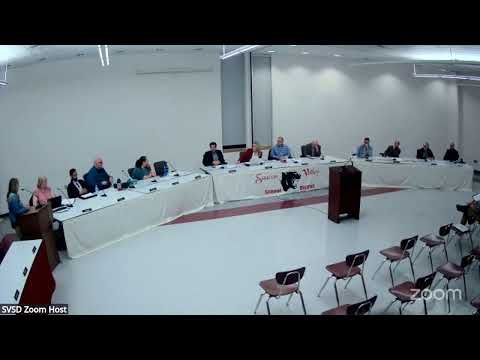
Dr. Wolfell, executive director of Colonial Intermediate Unit 20 (IU 20), presented the IU's 2025–26 general operating budget at the Saucon Valley School District board meeting on March 11. He said the IU is proposing a 4.1% increase in its general operating budget — about $173,000 — but is not asking Saucon Valley or other member districts for additional core operating funds.
The general operating budget, Wolfell said, is a small portion of IU 20's overall revenue (he described it as roughly 1.5% of the IU's revenue) and supports core operations that require district support. "CI 20 provides more services face to face to children than any other IU in the commonwealth of PA," Wolfell said, describing the IU's footprint and services.
Wolfell told the board that the proposed increase is driven by salary and benefit increases (including medical premiums and Social Security), but that the IU expects to offset much of the cost through investment income and increased state support (the "state system of support" funds from the Pennsylvania Department of Education). He said the IU's chief financial officer has realized stronger investment returns and that state program funding growth has helped balance the budget without asking districts for more core support.
The presentation summarized IU 20 programs and recent growth: early intervention for children ages 3–5 (the IU projects it will have served more than 2,500 children this school year), efforts to recruit and train special-education staff, and a set of educator pipeline programs. Wolfell described a "developing future special educators" program for high school students, a paraeducator-to-teacher pathway in partnership with East Stroudsburg University, and accelerated special-education certification work with regional universities. He also highlighted community partnerships aimed at preparing students with disabilities for competitive employment, citing work with local employers and a student-run cafe at the IU.
On behavioral health, Wolfell said IU 20 has provided services for more than 20 years, including a school-based partial hospitalization program, and that the IU offers supports across tiers (professional development, technical assistance, contracted specialized instruction). He also listed other services the IU provides to districts: early childhood outreach with PBS 39, driver's education, a print shop, and technology services (the IU recently switched providers to double bandwidth and lower cost). Wolfell said cybersecurity is a continued priority.
Board members asked whether contracting rates for district-requested services would increase. Wolfell said the IU is still finalizing service prices but suggested a conservative estimate of roughly 3% for contracted services while noting the IU is working to keep any increases lower. When asked why early intervention referrals have risen, Wolfell attributed part of the growth to the IU's role as the Local Education Agency for early intervention (Child Find responsibilities) and to greater awareness among families and pediatricians that leads to more referrals.
Wolfell said the IU will complete its internal approval steps after receiving proportionate district votes and then submit the budget to Harrisburg. He invited districts to contact IU staff about literacy events, early-childhood partnerships, or contracting for services.
The board did not take a formal vote on IU 20's budget at the meeting; Wolfell described next steps for IU board and state review.