Get Full Government Meeting Transcripts, Videos, & Alerts Forever!
Get email alerts on the Property Reassessment topic
No spam. Unsubscribe anytime.
Carroll County residents press board over property reassessment as appraiser outlines state rules
Summary
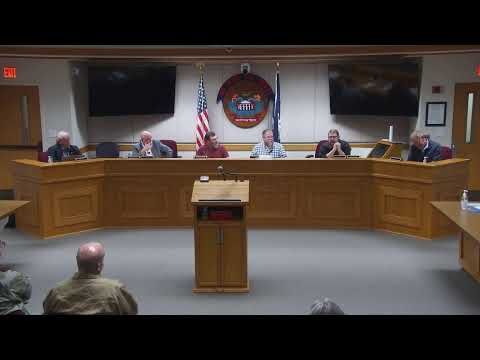
At a Carroll County Board of Supervisors meeting, the county's reassessment team explained why a general reassessment was required under Virginia law while dozens of residents urged relief or clarification after large increases on property notices.
At the Carroll County Board of Supervisors meeting, county officials and private appraisers reviewed the state-mandated property reassessment process while a steady stream of residents voiced concern about steep valuation increases and potential tax impacts.
Wade Marion, Commissioner of the Revenue, opened the presentation by citing the Code of Virginia requirement for periodic reassessments and the penalties for noncompliance, including potential withholding of state distributions. Marion read excerpts of Virginia law (Code of Va. § 58.1-32-52 and related sections) to explain why the county must complete a reassessment on schedule.
Gary Eanes, an appraiser with Walter Eanes Appraisal Group, told the board the reassessment team used only in-county sales and neighborhood-level comparisons and said the county's pre-reassessment sales-to-assessment ratio reported by the state was about 59%. "Carroll County right now, you're at 59%," Eanes said, adding that state review looks for ratios between 70% and 130% in the year a reassessment is effective.
Eanes gave examples from county sales to illustrate gaps between current assessments and recent sales, and described the county's appeal process: property owners may submit appeals to the reassessment team, then to the local board of equalization, and ultimately to circuit court if they remain dissatisfied. He said hearings underway would likely take about four weeks to process, and that after hearings conclude the state will run a ratio study.
Residents used the meeting's public-comment period to describe the reassessment's immediate effects and to urge county action. Roy Hancock said, "I'm not happy with the assessment... I'm on a fixed income," and warned that higher tax bills could force older residents to sell. Marla Thompson said her elderly parents in Fancy Gap received a 246% increase tied chiefly to a 445-square-foot tiny home that she said "doesn't even have a bedroom" and that the assessor had not inspected the property.
Other speakers reported large percentage increases on houses that had not been altered, questioned whether assessors conducted door-to-door inspections, and asked for more time to file appeals. Kevin Carrier said an assessor did not leave a door notice at his property and that his home's assessed value rose by about 80% despite no additions. Dave Wickham said his assessment rose 65% and that the assessor acknowledged a prior misassignment of an outbuilding.
Some residents suggested policy responses. Adrienne Childress described a phased discount for early tax payments used in other localities and urged protections for longtime elderly residents, while several speakers urged the board to consider tax-rate adjustments rather than leaving reassessment-driven increases to homeowners.
Board members said they were listening and discussed options for appeals and timing. The reassessment team reported they had extended the deadline once (to the night of the meeting) and the county attorney said staff could ask reassessment personnel whether they could accept additional appeals through the end of the week. The board noted that owners who miss the initial appeal process may still petition the local board of equalization 30 days after the last reassessment notice.
Why it matters: The reassessment can change assessed values used to calculate property taxes; the board must set the tax rate separately. While reassessment reflects market sales and is required by state law, overnight increases in assessed values can produce sharp financial pressure on fixed-income residents and raise public demand for policy responses from the board.
The board did not vote on a countywide reassessment policy at this meeting but acknowledged multiple constituent concerns and discussed limited administrative extensions and outreach steps. The assessor's office and Marion encouraged property owners to file appeals and to contact the Commissioner's office for help.