Get Full Government Meeting Transcripts, Videos, & Alerts Forever!
Get email alerts on the Bess Battery Storage topic
No spam. Unsubscribe anytime.
Residents press supervisors for moratorium, town halls after Moss Landing battery fire; county staff report testing underway
Summary
Dozens of residents urged the Santa Cruz County Board of Supervisors on March 11 to impose a moratorium and hold town halls on proposed lithium-ion battery energy storage projects after fires at Moss Landing raised questions about air, soil and long-term health impacts.
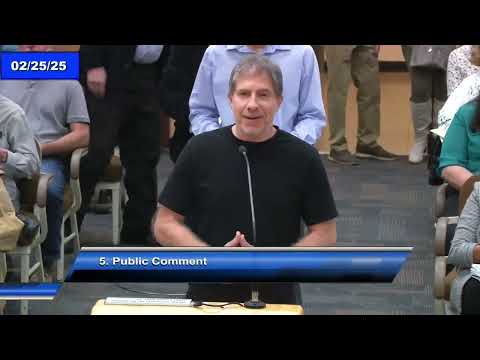
Lively public comment at the March 11 Santa Cruz County Board of Supervisors meeting focused on proposed lithium-ion battery energy storage projects planned for South County and on community concerns following multiple fires at the Moss Landing facility.
What speakers asked for: Dozens of residents, community groups and business owners urged an immediate moratorium on siting grid-scale Battery Energy Storage Systems (BESS) in the county, requested town halls, asked for independent soil and air sampling and called for a technical advisory committee free of industry influence. Many remarks focused on the Seahawk project at 90 Minto Road in Watsonville, saying residents learned of permitting late, criticized outreach as insufficient and said South County — already facing industrial projects and environmental stressors — should not be the default siting area.
County response and testing: In response to questions about environmental testing after the Moss Landing blaze, County OR3 director David Reed summarized sampling the county has done: two rounds of agricultural organic-matter testing, surface and deep soil testing and water-quality sampling. Reed said results “showed levels far below what we saw in Monterey County” and below thresholds identified by county experts. He said documents and a press release with the results were posted on the county website and could be shared in additional locations on request.
Policy asks and board remarks: Residents suggested the board send a letter supporting Assembly Bill AB303 (mentioned by speakers) and called for the county to adopt its own urgency ordinance or technical review. Several residents asked supervisors to recuse themselves from BESS decisions if they had conflicts. Supervisor Koenig said the county would pursue town halls and consider technical advisory input and pledged to make county testing data more accessible.
Ending: The meeting did not include a vote on BESS permitting; the public comments, however, signaled deep community concern and asked elected officials to press for tighter review, more public outreach, and independent testing before the Seahawk and similar projects advance.