Get Full Government Meeting Transcripts, Videos, & Alerts Forever!
Get email alerts on the Municipal Governance topic
No spam. Unsubscribe anytime.
Johnson City Council schedules vacant‑property registration, redraws Anniston Main Street district boundaries; adopts resolution, moves to executive session
Summary
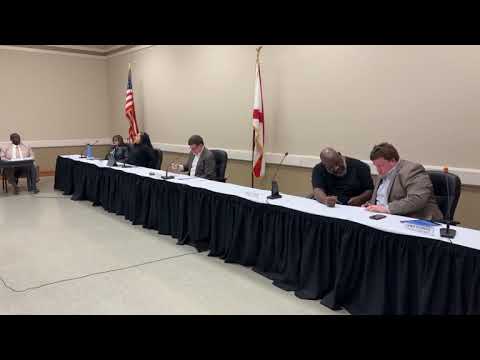
Johnson City Council members adopted a resolution and set two ordinances for first reading — one to require registration of vacant commercial properties and one to redefine the territorial limits of the Anniston Main Street District — and then voted to convene in executive session, the council said at a meeting (date not specified).
Johnson City Council members adopted a resolution and set two ordinances for first reading — one to require registration of vacant commercial properties and one to redefine the territorial limits of the Anniston Main Street District — and then voted to convene in executive session, the council said at a meeting (date not specified).
The council approved a resolution that had been discussed at a previous meeting; the meeting record does not specify the resolution’s title or text. Council members recorded affirmative votes during roll calls that appear in the meeting transcript.
The council placed two ordinances on first reading and scheduled them for final consideration at its second March meeting on March 18. The first, described in the meeting as an ordinance “relative to registration of, vacant properties,” was presented as targeting commercial vacant properties. The mayor cited meeting chapter 34, part 6, section 34.52, subsection 1(a) of the code as the provision the ordinance will amend, as stated in the meeting record. Councilors moved to read that ordinance by title only and to hold a public hearing when the item returns on March 18.
The second ordinance on first reading would redefine the territorial boundaries of the Anniston Main Street District. The council referenced chapter 2, part 11, division 8, section 2.72 of the city ordinances while describing the change. Council members moved to read that ordinance by title only and scheduled it for the same March 18 meeting and associated public hearing.
Procedural votes during the meeting included adoption of the agenda and the consent agenda; roll call votes recorded in the transcript show affirmative responses from council members listed in the record. Following public comments, a council member moved that the body adjourn into executive session to discuss “the general reputation and character or physical condition, professional competence with mental health of individuals,” and “preliminary negotiations involving matters of trade or commerce in which a government body is in competition with private individuals or entities or other government bodies,” language the council used when announcing the reasons for the closed session. The council voted in favor of entering executive session and did not return to discuss those matters in public.
During public comment, a speaker identified only as Sarah thanked a Mr. Burrow (also referenced elsewhere in the record as Burrows) for agreeing to serve on the development authority and said she had heard “nothing but fabulous comments about him.” A commenter urged support for the fire department and urged residents to observe local no‑burn restrictions because of wildfires in other states. Another speaker urged residents to report illegal dumping to local authorities and to their council representative, naming Calvin Roberts by reference.
The council did not take final adoption votes on either ordinance at this meeting; both were set for further consideration and public hearings on March 18. The resolution noted above was adopted by roll call, but the meeting transcript does not include the resolution’s full title, text, or numbered identifier.
The meeting then adjourned into executive session; the council stated it would not return to public session to discuss the matters covered in that closed session.