Get Full Government Meeting Transcripts, Videos, & Alerts Forever!
Get email alerts on the Energy Grid Irp topic
No spam. Unsubscribe anytime.
Minnesota Power tells county board it plans to phase out coal and reach 90% renewables by 2035
Summary
Minnesota Power briefed the St. Louis County Board on a March 1 integrated resource plan that aims to retire Boswell coal units by 2030 and 2035, add renewables and storage, and use natural gas as a bridge; the company said the plan will enter a year‑long regulatory review.
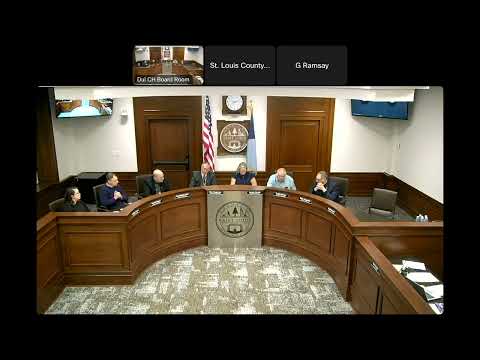
Jennifer Katie, vice president of regulatory and legislative affairs for Minnesota Power, told the St. Louis County Board that the utility filed its 15‑year integrated resource plan (IRP) on March 1 and aims to reach about 90 percent renewable generation by 2035 while retiring its remaining coal units at the Boswell Energy Center.
"The number one goal for Minnesota Power is to maintain reliability," Katie said in explaining the company’s approach, adding that the IRP must balance reliability, state regulatory requirements and customer costs. She said Boswell Unit 3 is scheduled to cease coal operations in 2030 and Unit 4 in 2035, and that the company is proposing roughly 1,000 megawatts of new natural gas capacity to replace those baseload units while investing in wind, storage and customer programs.
Why it matters: Minnesota Power serves mining and industrial customers across the Iron Range and operates legacy coal and hydro facilities in the region; the board sought local detail because changes at Boswell and in regional imports affect local jobs, grid reliability and rates.
What the company said: Katie described a portfolio approach. Minnesota Power is already about 60 percent renewable on its system and proposes to add wind, energy storage and customer programs to reduce demand. The company also expects demand growth driven by industrial development and electrification. Katie said natural gas is proposed to fill reliability gaps during the transition but noted that many units could later be refueled to run on biomass, depending on state policy.
On rates: Katie said the IRP includes a five‑year rate projection and that the company estimates roughly a 2 percent increase per year over the near term tied to the transition. "It’s complicated," she said, and the Minnesota Public Utilities Commission (PUC) will evaluate least‑cost options under state law.
On cross‑border imports: Commissioners asked about electricity from Manitoba Hydro and the effect of recently discussed Canadian tariffs or political actions. Katie said Manitoba hydro currently accounts for about 18 percent of Minnesota Power’s supply and that short‑term tariff developments should not affect reliability; the company is monitoring cost impacts and engaging federal and Canadian partners.
On ownership and capital: Katie described the pending acquisition of Minnesota Power's parent, ALLETE, by long‑term infrastructure investors (announced in 2024). She said the transaction would keep the utility’s headquarters and workforce in place and provide stable private capital; the deal requires multiple regulatory approvals and a separate public comment process.
Board reaction: Commissioners welcomed the commitment to increased renewables but pressed on costs, system diversity and opportunities to pair renewable development with community ownership and industrial strategies such as green‑steel production. Commissioner Nelson asked about expected customer impacts; Katie summarized the five‑year rate view. Commissioners also noted biomass and hydro resources in the region, including Hibbard Energy Center’s biomass operations, and discussed federal and state funding prospects for grid modernization.
Next steps: The IRP is entering a year‑long public and regulatory review at the Minnesota PUC; Minnesota Power said formal comment periods and public hearings will be scheduled and that the company will continue stakeholder engagement.
Ending: County officials said they will continue to follow the IRP process and related permitting and rate proceedings because of their implications for local reliability, employers and ratepayers.