Get Full Government Meeting Transcripts, Videos, & Alerts Forever!
Get email alerts on the Land Use Moratorium topic
No spam. Unsubscribe anytime.
County commissioners approve 180-day moratorium on major subdivision plat reviews after contentious hearing
Summary
After a night of public comment that split rural landowners, farmers and developers, the Coffee County Commission approved a 180-day moratorium on planning commission plat reviews intended to give the county time to consider zoning-code changes.
Coffee County commissioners voted to impose a 180-day moratorium on planning-commission review of major subdivision plats, a pause backers said would give the planning commission “time to review and update” the county’s zoning rules. The measure passed after more than three hours of public comment and extended debate among commissioners.
Supporters of the moratorium argued it would protect farmland, reduce conflicts between agricultural and residential uses, and allow the planning commission time to revise technical standards such as minimum lot sizes, right-of-way widths and fire-flow requirements. Nicholas Northcutt, a surveyor who said he represents landowners and developers, urged caution about sweeping changes, telling commissioners that new restrictions would “limit what people can do with their land and deprive them of the full value of their property.” Several other speakers said a pause was needed to study infrastructure impacts.
Opponents warned the moratorium could send a negative signal to retailers and industry recruiters and constrict housing availability. Commissioner Seaborn, who has worked in municipal economic development, said the county should avoid appearing “interested in slowing or stopping growth,” arguing such a perception could hurt efforts to attract retail and industry to the region.
Mayor Hunt and other commissioners emphasized the moratorium is narrowly written. The resolution restricts only planning-commission plat review and does not prevent property owners from submitting applications or pursuing other approvals; the planning commission may end the moratorium earlier if it completes its work. The county attorney’s office prepared the draft resolution and the planning commission recommended the pause.
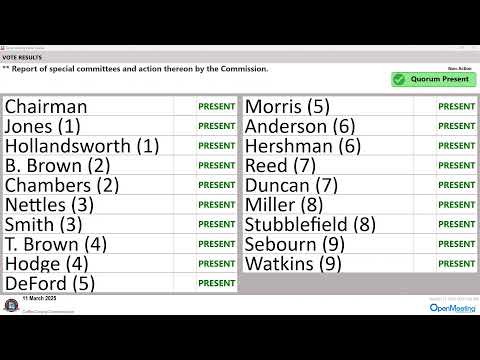
Commissioners debated shorter timeframes and alternatives. A motion to postpone consideration of the moratorium for 90 days failed, 7–11; the main motion for a 180-day moratorium then passed by recorded tally. The chair announced the final result as 10 yes, 8 no and no abstentions. Commissioners and the planning commission repeatedly told the public they could hold special meetings and work more than once a month to speed revisions during the pause.
What the moratorium does, supporters said, is create a predictable window for careful review rather than ad hoc changes made while plats are pending before the planning commission. Opponents said the same objectives could be achieved without a countywide pause if the planning commission met more frequently. The planning commission is scheduled to meet and may bring recommended code changes back to the full commission for final action, which will require public hearings and a legislative vote.