Get Full Government Meeting Transcripts, Videos, & Alerts Forever!
Get email alerts on the Attorney Client Privilege And Representation topic
No spam. Unsubscribe anytime.
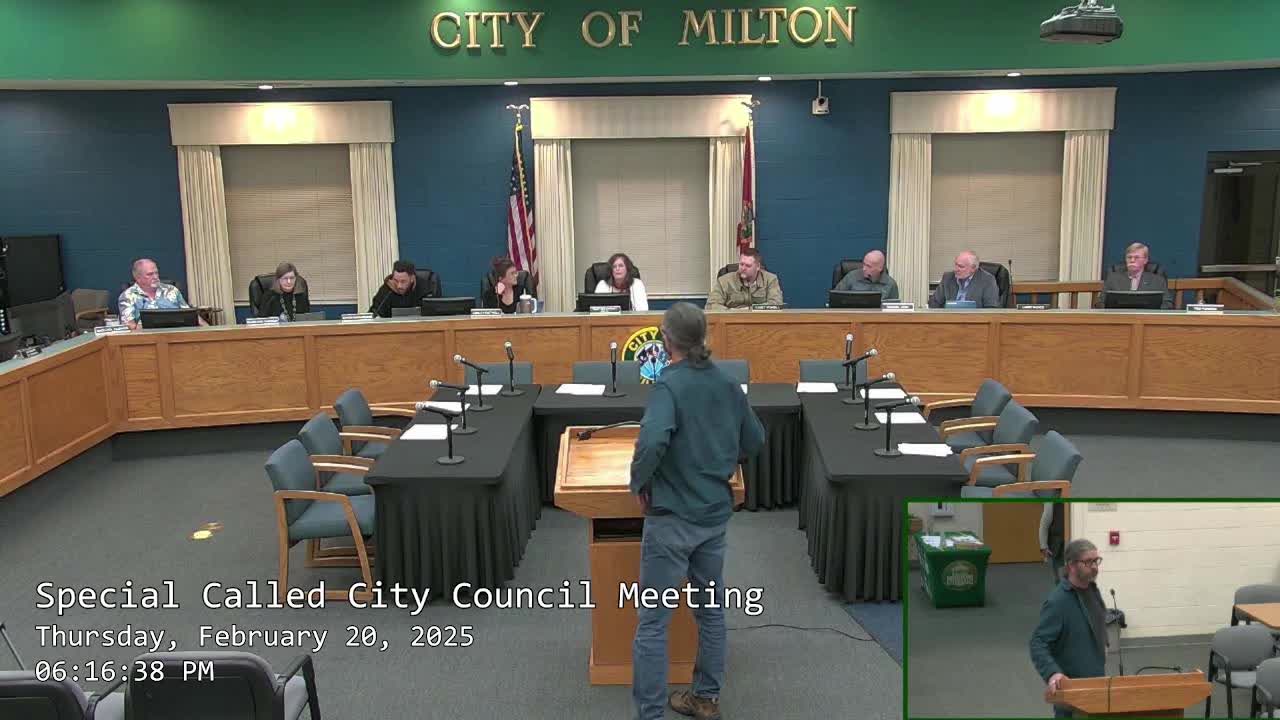
Milton council rejects waiver of attorney‑client privilege, moves to secure interim counsel
Summary
Milton City Council on Feb. 20 rejected a motion to waive attorney‑client privilege for a pending public‑records lawsuit involving Mayor Heather Lindsay and moved to secure interim legal counsel while the city solicits applicants.
Milton City Council on Feb. 20 rejected a motion to waive attorney‑client privilege for a pending public‑records lawsuit involving Mayor Heather Lindsay and moved to secure interim legal counsel while the city solicits applicants.
The vote was 3 in favor and 5 opposed on a motion to waive privilege for the specific case and to release transcripts from a recent Shade meeting, council members said. The council then discussed options for short‑term legal coverage and confirmed a request for qualifications was posted and would remain open for 30 days.
Why it matters: The dispute centers on a judge’s ruling that certain records are public and on the council’s recent decision to dismiss or withdraw court action related to those records. The outcome affects whether the council can discuss the litigation openly and whether the city will be without general counsel for day‑to‑day legal review while it transitions representation.
Public speakers at the meeting accused Mayor Heather Lindsay of withholding records. “The mayor for almost a year now, Heather Lindsay has refused to provide the people with the public records that she is required to by Florida statute,” Howard Steele said during the public comment period.
City attorney Alex Andrade told the council that until the court relieves his law firm of the obligation to represent the city in the litigation, “no one but me, unfortunately, can file anything on behalf of the city until the court relieves me of the obligation of representing you and admits another attorney to represent you.” Andrade said the firm would dismiss the case once the mayor complied with the court order.
Councilman Powell moved to waive attorney‑client privilege as it related to the case, specifically naming transcripts from the Shade meeting; Councilman Hawthorne seconded the motion. Council members who opposed the waiver said the meeting was called to discuss representation and next steps rather than to litigate the merits of the case. “We are here to talk about the attorney that should be leaving and the ones that should be coming in,” Council member David Farrow said during debate.
Attorney John Adams, introduced by city staff as counsel from GrayRobinson, attended at the city’s request but said he had not been engaged to advise on the litigation and therefore was not prepared to offer legal recommendations that night. “My name is John Adams. I'm an attorney with Grey Robinson,” Adams told the council, and later said the firm would consider tasks assigned by the city under its engagement letter.
Council members and staff discussed a request for qualifications that had been posted: it was advertised that day and begins a 30‑day submission period, staff said. Mayor Pro Tem told council members she had had preliminary conversations with GrayRobinson about serving as general counsel on an interim basis and that GrayRobinson had indicated willingness to assist until a permanent successor is selected, a period she estimated at about two to three months.
Several members of the public raised questions about what records have been produced and the costs to the city. Howard Steele asked how the city would recover “the over $70,000 in cost to the taxpayers” that he said resulted from the litigation. Speakers also disputed how many records the court ordered produced—Steele referred to about 1,500 records, while another public commenter said the judge had asked for 200—illustrating disagreement among public commenters about the filings.
After debate, the motion to waive privilege failed (3–5). The council then took a separate voice vote to adjourn the special meeting; members indicated they would continue discussion about selecting replacement counsel at a later meeting and proceed with the RFQ process already posted on the city website.
The council did not vote that evening to file any documents in the litigation; Andrade reiterated that only the attorney of record may file until the court relieves the firm. Council members said a resolution to withdraw the lawsuit — reflecting the Jan. 11 council vote to dismiss the suit — was drafted and could be considered at a future meeting.
The special meeting concluded without opening the litigation for public discussion, and the council scheduled continued consideration of representation and related administrative steps at a future session.