Get Full Government Meeting Transcripts, Videos, & Alerts Forever!
Get email alerts on the Vaping Regulation topic
No spam. Unsubscribe anytime.
Senate Medical Affairs committee sends vaping bill to Senate after debate over FDA registry and in‑state producers
Summary
The committee voted to report S.287 favorably as amended, adding a requirement that compliance checks and enforcement results be reported to the attorney general. Lawmakers debated whether to rely solely on the FDA approval list or create a South Carolina registry or provisional pathway for in‑state manufacturers pending federal review.
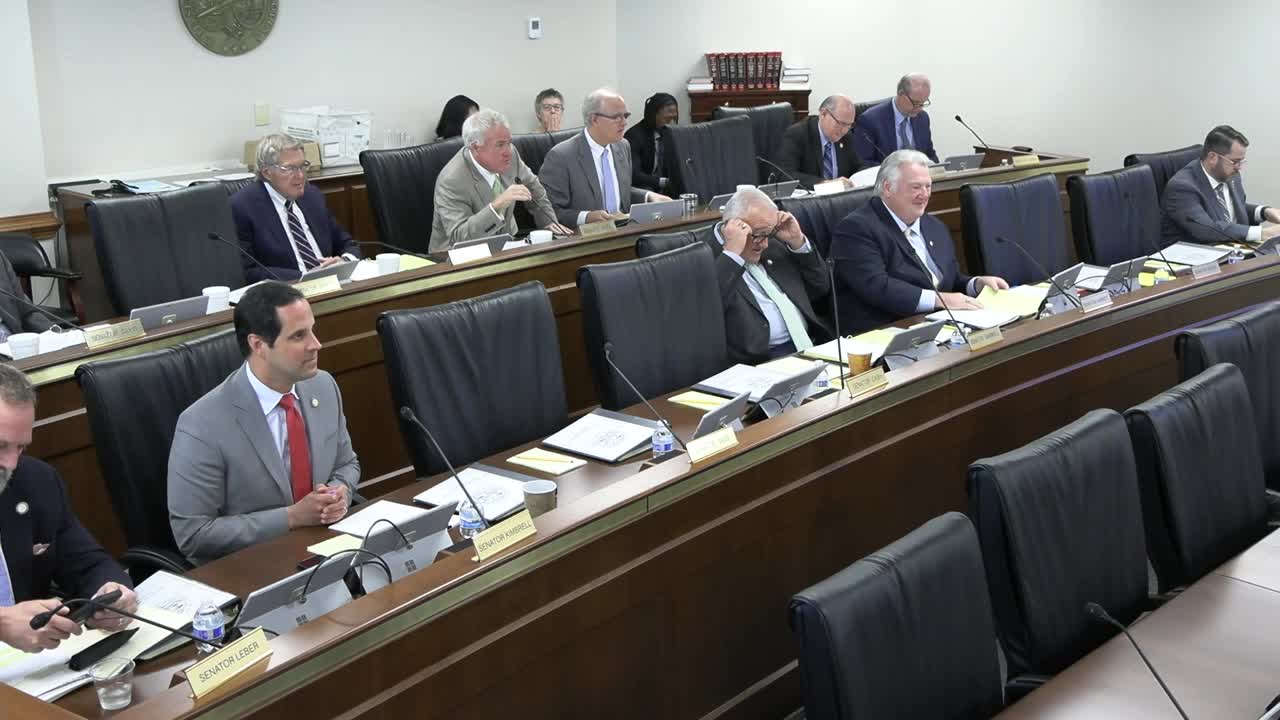
Senate Medical Affairs Committee Chairman Senator Garrett on Oct. 12 said the committee would report S.287, a bill governing ENDS (electronic nicotine delivery system) products, favorably to the Senate after adopting an amendment requested by the attorney general's office.
The amendment requires that “the results of all compliance checks and enforcement actions shall be reported to the attorney general,” an addition staff identified as requested by the attorney general and accepted as part of the committee recommendation.
The bill would make acceptability of ENDS products contingent on their disposition with the U.S. Food and Drug Administration (FDA): products that are FDA‑approved, those pending FDA review, or those subject to an appeal or stay. Committee members debated whether relying on the federal FDA approval list would effectively bar smaller South Carolina manufacturers from selling lower‑nicotine products while larger companies with FDA‑cleared products would dominate the market.
Senator Kimbrell, the bill sponsor and senator from Spartanburg, described the measure as “familiar text” and said the amendment from the attorney general’s office simply organizes enforcement and reporting among multiple agencies. He moved the subcommittee recommendation, which the committee adopted.
Multiple senators urged work on amendments that could preserve in‑state businesses while preventing illicit imports. A senator identified in the record as the senator from Charleston argued that many FDA‑approved products are produced by large national companies and said the bill as written risks creating a de facto monopoly for those firms; she asked that South Carolina consider options to allow in‑state manufacturers with equivalent products to sell while awaiting FDA review. Another senator noted examples of in‑state manufacturers producing lower‑strength products (around 3–6 milligrams of nicotine) and contrasted those with some products discussed in committee that deliver 48–60 milligrams, which committee members said is roughly equivalent to one to two packs of cigarettes.
Lawmakers discussed practical options including: keeping the FDA registry requirement but creating a South Carolina provisional registry or time‑limited allowance for products pending FDA review (one suggestion was a one‑year provisional allowance), and expanding federal border enforcement to keep illicit imports out of state. Committee staff noted the attorney general’s office had not volunteered to create a state FDA‑style approval agency and warned that establishing such a body would require funding and a separate infrastructure.
After discussion, the committee accepted the attorney general’s amendment and voted to report S.287 to the Senate “favorable as amended.” The record shows a voice vote; no roll‑call tally was recorded in the transcript.
Why it matters: S.287 would set the state’s regulatory standard for which vaping products can be sold in South Carolina. Committee members said the bill addresses youth access and illicit imports, but several senators pressed for protections for lawful in‑state manufacturers who lack FDA clearance or face lengthy federal review processes.
Next steps: The bill will go to the full Senate with the committee’s favorable, amended report; committee members indicated they expect to continue working on possible floor amendments to address provisional sales or state processing for in‑state producers.