Get Full Government Meeting Transcripts, Videos, & Alerts Forever!
Get email alerts on the Capital Improvements topic
No spam. Unsubscribe anytime.
City presents 6‑year CIP: Justice campus, fire stations and power upgrades lead funding requests; animal‑shelter purchase tied to geo‑bond
Summary
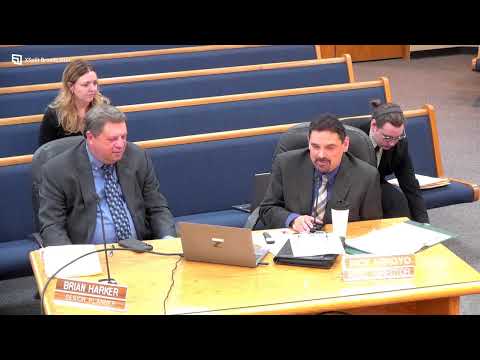
City staff presented the 2025–2031 Capital Improvements Program to the Planning Commission, highlighting a proposed $123 million justice campus, multi‑year fire‑station projects to be bond‑financed, Power & Light upgrades, and a conditional $3 million proposal to acquire the county animal shelter if voters approve a Geo bond.
City staff presented the 2025–2031 Capital Improvements Program (CIP) to the Independence Planning Commission, describing nearly 200 projects across departments, large price increases since earlier estimates on the justice campus, and funding constraints that leave roughly 62% of the listed projects currently unfunded.
Rick Aurora, the city’s CIP presenter, told commissioners the six‑year CIP is a planning document that identifies projects (usually capital items of $100,000 or more), anticipated funding sources and timing, but does not itself appropriate funds. Departments submitted projects across police, fire, power and light, parks and recreation, municipal services, health and human services, and technology services. Annual funding needs noted in the presentation exceed typical years — staff showed about $252 million identified for the next fiscal year and nearly $355 million for the following year of anticipated project costs.
Justice campus and police facilities: Deputy Chief Pearson outlined the large justice campus proposal, which staff now estimate at roughly $123 million. Commissioners asked why the earlier 2017 estimate of about $42 million had increased. Pearson said the project scope expanded — court functions and public‑facing court facilities were added to the plan, detention and technology requirements changed, and construction costs have risen significantly since 2017. Pearson described the project as a campus of connected buildings that would consolidate patrol, detention, courts and specialty units, and reuse some existing headquarters space where possible.
Fire projects and financing: Melissa Cabrera, the city’s finance director, said the city will present financing to council next week for three fire‑station projects and the remodeling of the IUC space to serve police functions; that financing will be by bond issuance and paid from the fire‑sales tax fund and fund balance. Cabrera and commissioners discussed the effect of rising construction costs and the city’s strategy to proceed with bond financing now to avoid higher inflationary costs later. The Station 8 replacement was shown at about $22 million in the CIP; other station projects also increased compared with prior estimates.
Power & Light: Director Joe Hagedeffer described $23.8 million in Power & Light projects this year, including a new substation and distribution feeders to support economic development in the Eastgate/Little Blue Valley area, and replacement of aged transmission transformers (100 MVA units) in multi‑million‑dollar purchases. He said the utility will prepare an integrated resource plan this year to guide future generation and replacement decisions; staff also discussed options for supporting large new customers such as data centers, including dedicated generation and transmission upgrades.
Parks, Geo bond items and animal services: Parks director Morris Heidey highlighted four bond‑funded projects proposed for the April 8 general obligation (Geo) bond ballot under Question 3: Truman Memorial Building repairs, Vail Mansion repairs, historic‑sites maintenance and the Independence Athletic Complex. Christina Heine, director of health and animal services, described a proposal to acquire the county‑owned animal shelter that sits on city land for $3 million if the Geo bond question passes; staff said much of the county’s larger outstanding work (HVAC, roof, fire‑suppression fixes) is being addressed by the county before any transfer and that purchase would enable the city to control maintenance and to contract regionally for shelter services.
Technology and municipal services: IT director Jason Newkirk described upcoming cybersecurity investments — an Arctic Wolf managed detection service, Check Point endpoint and firewall upgrades — and a planned data‑center replacement in the seven‑year cycle. Municipal services deputy director Matt McLaughlin reviewed about 106 departmental projects (57 projects programmed for next year) across water, sanitary, stormwater and streets, and described the Spring Branch consolidated facilities plan to combine several operations into one campus; funding for Spring Branch will come from a mix of enterprise and general funds depending on each component.
Funding and transparency: Finance director Melissa Cabrera said many projects are listed as unfunded pending voter decisions or budget choices; the CIP’s large totals are intended to show needs and to support bond‑rating discussions, but not all projects will be built. Commissioners asked for clearer labeling tying unfunded projects to potential Geo bond funding so the public can see which projects depend on the ballot question.
Staff emphasized the CIP is a dynamic planning document and that council will make the final funding decisions. Commissioners had follow‑up questions planned for the council and departments on project sequencing, demolition/site‑work phasing, and how certain high‑cost items were estimated.