Get Full Government Meeting Transcripts, Videos, & Alerts Forever!
Get email alerts on the Vehicle Pursuits topic
No spam. Unsubscribe anytime.
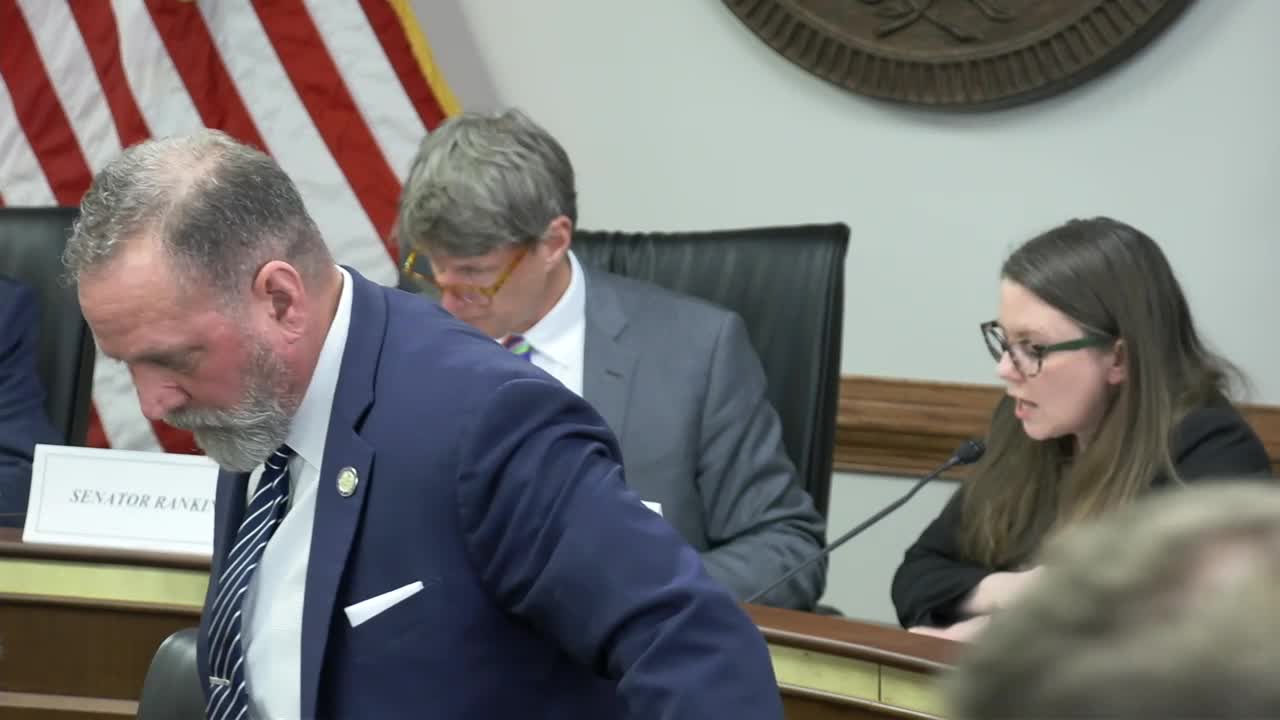
Judiciary panel backs tougher penalties for drivers who flee police in high-speed pursuits
Summary
The Senate Judiciary subcommittee reported S.111 out favorably after adopting an amendment that would increase criminal penalties for drivers who fail to stop for law enforcement during high-speed pursuits.
The Senate Judiciary subcommittee reported S.111 out favorably after adopting an amendment that would increase criminal penalties for drivers who fail to stop for law enforcement during high-speed pursuits.
Maura, committee staff, said S.111 would make failure to stop during a pursuit a felony when the driver "increases speed or takes evasive actions to avoid the pursuing law enforcement vehicle" and described a subcommittee amendment that removed an explicit video-recording requirement. The bill would require a minimum prison term of three years and a maximum of five years on conviction, and suspend the driver's license for one year; the author's amendment would raise maximum penalties for repeat or more serious offenses (including up to 10 years for a second offense, up to 15 years for offenses causing great bodily injury, and up to 30 years where a death results).
The author argued the change was intended to give judges greater penalty discretion and to respond to growing concern from law enforcement that misdemeanor treatment has not deterred dangerous chases. A law-enforcement representative described common pursuit behavior the bill is meant to cover: "You'll see him weaving in and out of traffic, up on sidewalks, through red lights," and said pursuits can include evasive maneuvers even at relatively low speeds.
Committee members questioned why the earlier draft's enhancement for recorded chases was removed. Senator Walker noted most patrol encounters are recorded by dash or body cameras and said the enhancement language was removed after subcommittee discussion. Committee staff and a law-enforcement witness explained that some agencies use dual-purpose cameras (body cams that link to dash systems) and that officers sometimes remove or displace cameras during encounters, so a strict video requirement could create charging problems if footage is unavailable.
The bill would not take effect immediately upon the governor's signature; committee discussion said DMV requested one year for coding the new violation before the law becomes effective.
Committee action was by voice vote: members adopted the subcommittee amendment removing the video requirement and later adopted the author's amendment increasing penalties; the committee then moved S.111 forward with a favorable report by voice vote with no recorded opposition.