Get Full Government Meeting Transcripts, Videos, & Alerts Forever!
Get email alerts on the Dui Law Overhaul topic
No spam. Unsubscribe anytime.
Senate subcommittee advances broad overhaul of DUI law after hours of testimony
Summary
A Senate Judiciary subcommittee reviewed and advanced S.52, a wide-ranging rewrite of South Carolina DUI statutes that alters evidence rules, penalties, ignition interlock requirements and related offenses; committee members said technical amendments will be sent to full committee for further work.
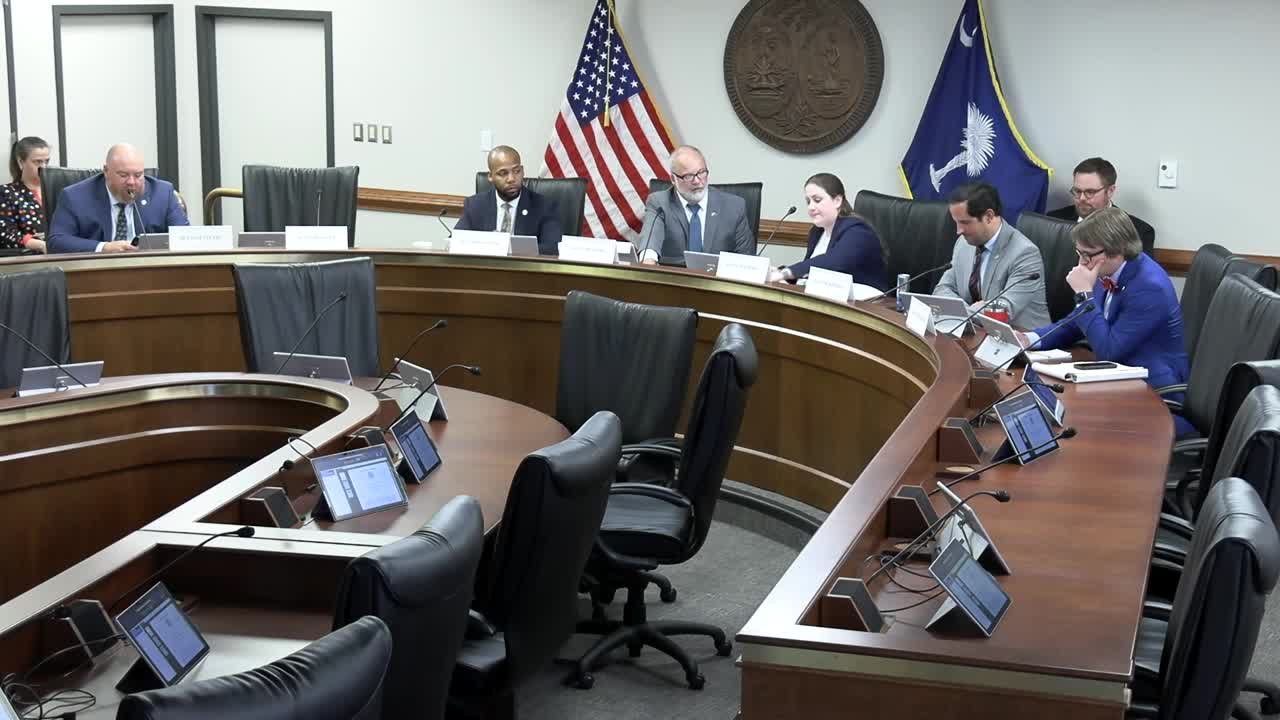
A South Carolina Senate Judiciary subcommittee advanced S.52 on a unanimous voice vote after hearing hours of testimony Tuesday on proposed comprehensive changes to the state’s DUI and DUAC laws.
S.52 would amend existing offenses, create new alcohol-related felonies, expand child endangerment to include reckless vehicular homicide and reckless driving, change when ignition interlock devices must be installed, and alter procedures for collecting intoxication evidence and for recording video at investigations, proponents said.
The bill’s sponsor, Senator Davis, told the subcommittee the measure is intended to close gaps prosecutors and law enforcement say have made certain prosecutions difficult. “There are three ways that you can have blood samples collected constitutionally: implied consent, pursuant to a warrant, or exigent circumstances,” Davis said during the hearing, adding the McNeely decision does not categorically bar implied-consent blood draws.
Traffic safety officials and prosecutors who helped draft the bill described specific, practical effects of the proposed language. Sarah Lee Drowdy, traffic safety resource prosecutor for the State of South Carolina Prosecution Commission, said the bill attempts to address “a dreadfully complicated cobweb of statutes” and urged rejection of an amendment that would insert an explicit warrant requirement into the implied-consent statute. Drowdy also provided ballpark fiscal context: SLED testing kits cost roughly $8 each; hospitals may be reimbursed about $15 per sample when they apply; SLED received roughly 50 reimbursement requests last year and the state averages about 1,400 blood tests associated with DUI prosecutions annually.
Defense and civil-liberties speakers urged caution. Public defender and trial lawyer Jim Huff said he supports improvements but urged preserving process safeguards. “I’m not someone that wants to trade off the speed of getting a conviction at the cost of due process to our citizens,” Huff said, and recommended keeping the video-recording provisions and the current breath-first approach unless there is a clear reason to depart from it.
Solicitors and prosecutors who testified argued a categorical warrant requirement could lead to litigation and unintended consequences, because the implied-consent statute and warrant procedure are distinct avenues for obtaining samples. Solicitor Barry Barnett said he opposed injecting a warrant requirement into the implied-consent framework and urged the subcommittee to move the bill forward as drafted.
Committee action: members adopted several technical amendments and voted to report the bill out of subcommittee to the full committee for additional work on substantive language. Chair and subcommittee members said they will continue to work with the bill sponsor and stakeholders to refine controversial provisions before the full committee.
Several witnesses and senators emphasized public-safety aims, particularly to detect and prosecute polydrug impairment that a breath test cannot measure. Senator Davis said blood testing is sometimes necessary to identify drugs combined with alcohol and asserted the public-safety interest must be weighed alongside Fourth Amendment protections.
The subcommittee did not adopt a new warrant requirement for implied-consent blood draws and deferred other substantive disagreements to further drafting and full-committee consideration.
Looking ahead: the committee advanced S.52 to the full Judiciary Committee with the understanding senators and staff will continue negotiating language on warrants, video-recording compliance, ignition-interlock timing and property/injury definitions.