Get Full Government Meeting Transcripts, Videos, & Alerts Forever!
Get email alerts on the Family Courts topic
No spam. Unsubscribe anytime.
Chief Justice Kittridge asks legislature for three additional family court judges to relieve caseloads in fast-growing counties
Summary
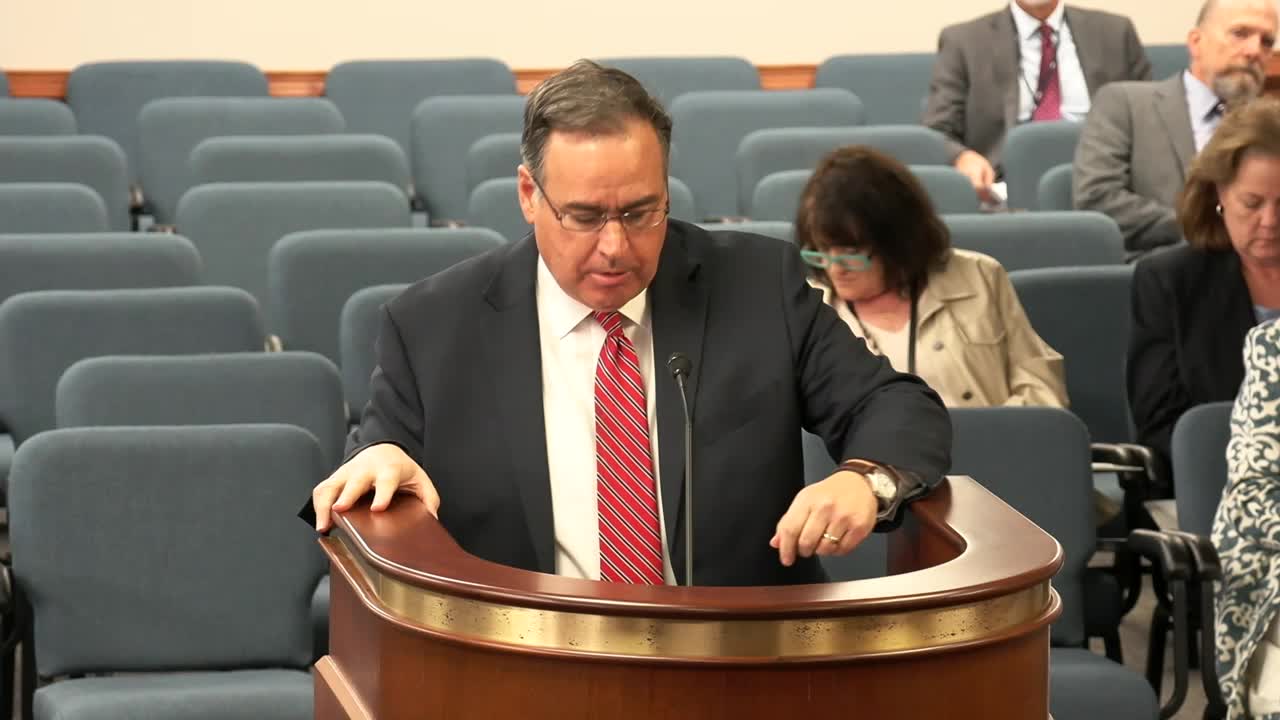
Chief Justice Kittridge told the judiciary subcommittee that South Carolina family courts are "in crisis" and requested three new family court judgeships targeted to the 9th, 11th and 14th circuits (Berkeley, Lexington and Beaufort counties). The committee moved a favorable report on the bill.
Chief Justice Kittridge told the Subcommittee on Judiciary that he has requested three additional family court judgeships to address sharply rising caseloads in three circuits and counties.
"The family courts are in crisis. I've made a request for 3 additional family court judgeships," Kittridge said, identifying the ninth, the eleventh and the fourteenth circuits and naming Berkeley, Lexington and Beaufort counties as the intended places of service. He told the panel population growth and rising workloads at the Department of Social Services and the Department of Juvenile Justice have increased demands on family court dockets.
Kittridge said Berkeley County’s population rose from about 43,000 (historical baseline) to an estimated 265,000; Lexington from about 216,000 to more than 314,000; and Beaufort from roughly 120,000 to about 216,000. He added that the public side of family court dockets — including DSS and DJJ matters — consumes time that reduces available slots for private domestic-relations matters. "There are statutorily mandated hearings that must occur within certain prescribed deadlines," Kittridge said, and the public-docket workload is reducing time to resolve private cases quickly.
The chief justice described particular operational pressures: federally guided oversight requirements for children in DSS custody, thousands of DSS hearings (he estimated a minimum of about 15,000 DSS hearings in 2024 statewide), and DJJ hearings that include statutorily required seven-day detention hearings for juveniles. Kittridge said those time-sensitive matters can stretch family court calendars so private cases wait 18 months to two years, undermining the intent of the family-court 365-day rule.
Senator Fernandez, who said he lives in Berkeley County, told Kittridge he was "100% in support of this bill" and asked why only one new judge was proposed for his county. Kittridge answered that the three-seat request is a measured first step and that further requests could follow after the state gathers better workload data. Senator Teder, who practices juvenile defense, also voiced support and urged attention to diversion programs for juveniles.
Family court practitioners testified in support. Miss West, a Lexington-based family court practitioner with about 21 years practicing in family court, told the subcommittee that multi-day merits hearings are becoming more common and the time to schedule those trials can be a year or more, which raises costs and incentivizes parties to retain temporary rulings. "Adding more judges will allow those cases to move more efficiently," West said, and she flagged delays in enforcement hearings and show-cause proceedings as a significant problem.
Committee action: Senator Taylor moved for a favorable report on the bill tied to these judgeship requests; the motion was seconded and the committee approved the favorable report by voice vote.
Why it matters: Committee members and the chief justice tied population growth, higher DSS/DJJ workloads and procedural limits on family court calendars to delays that affect children and families. The request seeks to add judicial capacity targeted to circuits where population and docket pressures have increased.
What the bill would do and next steps: The proposal would add three family court judgeships assigned by circuit (the bill and the committee packet identify the ninth, eleventh and fourteenth circuits). The subcommittee issued a favorable report; the bill will continue through the legislature for further consideration and appropriation of any judicial positions and related resource needs (space, clerks, reporters) by counties as required.
Ending: Committee members emphasized monitoring data and workload after initial additions. Kittridge said the judiciary will gather more precise docket data to inform potential future requests for additional judgeships.