Get Full Government Meeting Transcripts, Videos, & Alerts Forever!
Get email alerts on the Higher Education topic
No spam. Unsubscribe anytime.
South Carolina State reports 35% enrollment growth, presses for $100 million-plus in campus projects
Summary
President Alex Conyers told the House Education and Public Works Committee that South Carolina State University has grown enrollment 35% since 2019, earned Carnegie R2 research status and is seeking major capital funding and housing expansion to sustain growth and retention.
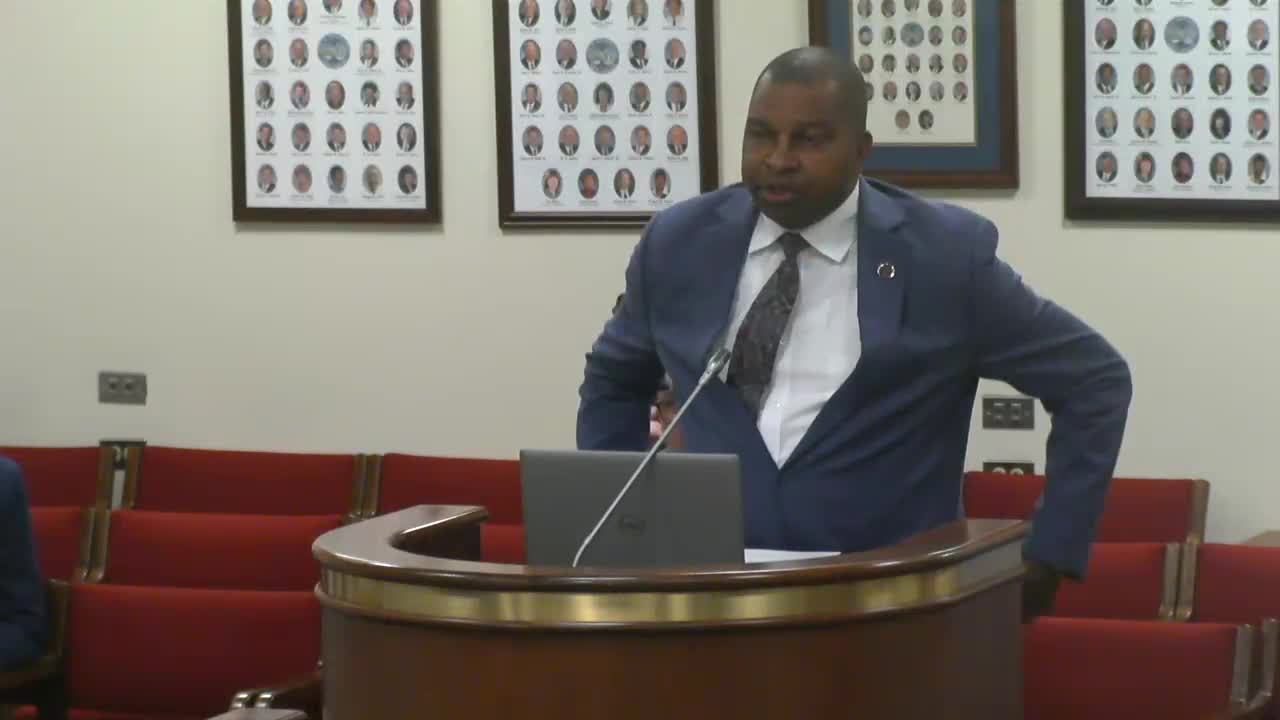
President Alex Conyers of South Carolina State University told the South Carolina House Education and Public Works Committee that the university’s enrollment has risen 35% since 2019 and the school was recently designated a Carnegie R2 research institution, but aging buildings and limited student housing are constraining further growth.
Conyers, who introduced himself as president of South Carolina State University, said “the university is in great shape” and highlighted gains in fundraising, research funding and freshman class size while asking lawmakers to support several capital projects. He told the committee the R2 designation “will significantly enhance our opportunities to compete for grants and research opportunities.”
The recognition and enrollment gains matter because they increase the university’s ability to win competitive research grants and expand programs, Conyers said. But the university’s physical condition and housing shortage limit how many students it can admit and retain, a constraint that also affects faculty recruitment and student affordability.
Conyers said that since 2019 South Carolina State’s enrollment has grown 35 percent and that for the last three freshman classes the university had to cap incoming students because housing capacity was insufficient. “For the past 3 years, we've topped over a thousand students in all of those 3 freshman classes,” he said.
He listed capital and renovation requests the university has included in its appropriation ask: a $54,000,000 replacement for Turner Hall, $30,000,000 for library replacement, a $15,000,000 Truth Hall dorm renovation, and a $20,000,000 student center expansion. Separately Conyers said the university is seeking $65,000,000 to replace its convocation center and $40,000,000 for a health and wellness facility; he also described a $15,000,000 renovation of Nance Hall as an alternative to an earlier $30,000,000 new building proposal for the College of Agriculture.
Conyers said the General Assembly recently provided $4,000,000 for scholarships that have helped retention and that alumni giving and research funding have risen: alumni giving increased during reunion events and research grant funding climbed roughly 35 percent from the previous year. He noted private investment is beginning to add off-campus housing adjacent to campus and said the university has a loan pending to build a 500-bed dorm; he estimated the university could return to about 5,000 students by 2028 if housing and program growth continue.
Conyers described programmatic strengths, including being the only South Carolina school with a nuclear engineering program and the university’s history producing military officers and NFL players. He listed partnerships with Clemson University, Savannah River National Laboratory partnerships, Duke Energy, Dominion Energy and the South Carolina Department of Commerce’s Nexus effort.
On federal and state grants, Conyers told the committee that some programs affecting students have recently been paused or altered. He said a USDA scholars program that covers full tuition for a small number of students was briefly paused and then reopened; he also said a separate NextGen agriculture-related grant that provided $5,000 annually to 40 students has been discontinued. “We have 40 students on that scholarship, and that grant has been paused. That grant actually has been pulled, discontinued,” he said.
Committee members who are alumni and former students praised the presentation and urged colleagues to visit the Orangeburg campus. Representative Grant, identifying himself as a 2011 graduate, said the presentation illustrated what the university could do “if we had more” resources. Representative Gillum asked whether the state’s tuition mitigation funds make a meaningful difference; Conyers replied, “It does. It makes an impact for us,” and said the mitigation prevents the university from having to raise tuition that students could not afford.
Conyers and committee members discussed retention as the central challenge: he said South Carolina State “has never had a recruiting issue. Our issue has always been retention,” and that economic pressures — not academics — often drive students to stop out. He described a capital campaign to raise private funds for athletics and other projects the state does not fund.
The committee’s chair closed the university presentation by thanking the delegation from Orangeburg and moved to the next scheduled presenters.