Get Full Government Meeting Transcripts, Videos, & Alerts Forever!
State superintendent asks for Rap Back and legal funding, proposes cutting videorecorded summative assessment
Summary
State Superintendent Paul Kraft told the House Education Committee the SBOE needs $2.25 million annually from the GRF to cover Rap Back costs, urged elimination of the resident‑educator summative video assessment to save roughly $1 million a year, and requested direct GRF funding for assistant attorneys general to support administrative adjudications.
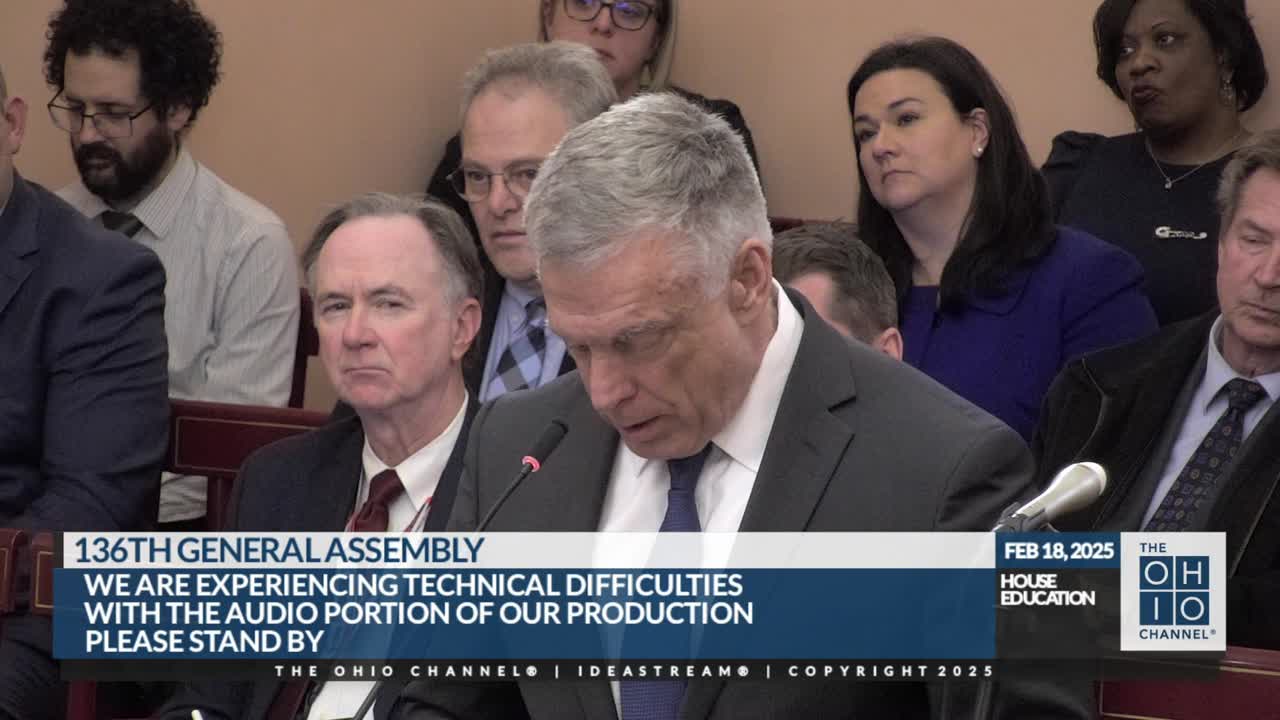
State Superintendent Paul Kraft told the Ohio House Education Committee that the State Board of Education (SBOE) is seeking direct General Revenue Fund support to steady the agency’s teacher‑licensure operations and background‑check system.
Kraft asked lawmakers to direct roughly $2,250,000 annually from the GRF to cover Rap Back enrollment and processing costs that currently draw on the teacher licensure fund. He also asked the legislature to eliminate the resident‑educator summative assessment (the 20‑minute RESA video), a change the SBOE estimates would save a little more than $1,000,000 per year, and requested direct GRF funding for assistant attorneys general to support administrative adjudications ($512,510 in FY 2026 and $527,886 in FY 2027 as submitted to the committee).
The requests come as the SBOE describes a steady depletion of the teacher licensure fund and a large increase in misconduct referrals and Rap Back enrollments. Kraft said the board has cut travel, hiring and meeting costs and has begun LeanOhio efficiency reviews, but that “these cuts do not solve our funding crisis.”
Why it matters: the board’s licensure office administers credentialing for educators statewide, operates the Rap Back criminal‑history alert system that notifies districts when certain personnel generate new criminal records, and oversees the Office of Professional Conduct (OPC) that investigates alleged misconduct. The state support sought would pay for expanded Rap Back participation and for legal representation in administrative cases; the proposed RESA elimination would remove the external video assessment component of the resident‑educator pathway.
Key details and context
- Rap Back enrollment and alerts: the SBOE said Rap Back enrollment rose to 456,344 registrants as of Feb. 1, 2025. Rap Back provides state‑level criminal‑history alerts to districts when enrolled individuals are arrested, plead guilty or are convicted. Kraft told the committee that the administration’s budget includes GRF funding that would cover part of the board’s Rap Back costs.
- Volume of referrals and case workload: Kraft told lawmakers that referrals to the professional‑conduct office rose from 13,160 in 2019 to 22,066 in 2023, a 68% increase over four years. The SBOE is using LeanOhio engagements and IT automation to speed intake and case management; Kraft said the board’s goal is to reduce case investigation timelines while preserving due‑process protections.
- Re…
Already have an account? Log in
Subscribe to keep reading
Unlock the rest of this article — and every article on Citizen Portal.
- Unlimited articles
- AI-powered breakdowns of topics, speakers, decisions, and budgets
- Instant alerts when your location has a new meeting
- Follow topics and more locations
- 1,000 AI Insights / month, plus AI Chat