Get Full Government Meeting Transcripts, Videos, & Alerts Forever!
Get email alerts on the Education Funding topic
No spam. Unsubscribe anytime.
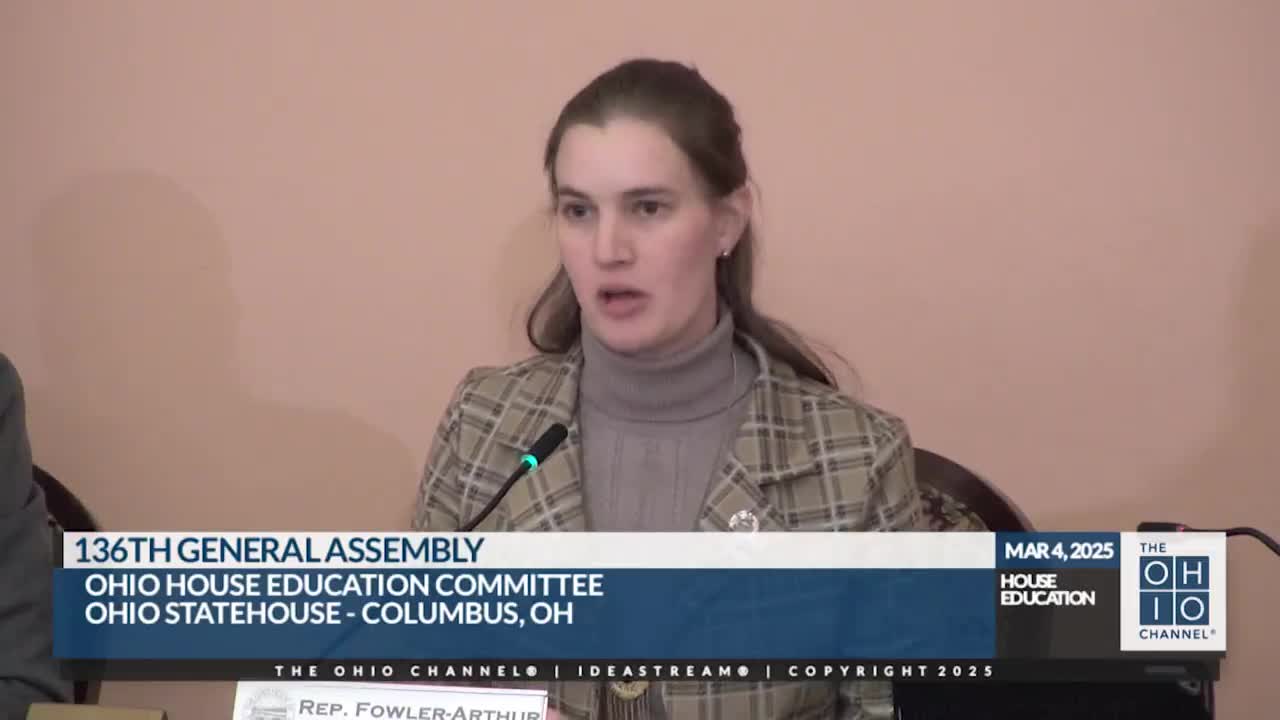
House Education Committee hears wide-ranging testimony on House Bill 96 funding, school programs and supports
Summary
The House Education Committee heard hours of public testimony on House Bill 96, with educators, superintendents, parents and students urging lawmakers to complete the phase-in of the Fair School Funding Plan and to update the formula’s cost inputs so state aid keeps pace with inflation, special education and local needs.
The House Education Committee took public testimony on House Bill 96, the state operating budget for K–12 proposals, during a long hearing that drew superintendents, school board members, teachers, parents, students and nonprofit leaders. Witnesses urged the committee to complete the phase-in of the Fair School Funding Plan and to update the formula’s base cost inputs so state aid keeps pace with inflation, property valuation changes and students’ needs.
School leaders emphasized that the governor’s proposed phase-in would leave many districts with lower state funding. Paul Imhoff, with the Buckeye Association of School Administrators, told the committee, “House Bill 96 does include many policy provisions that will positively impact Ohio,” but he warned the bill “uses outdated data to determine a district's base cost” and cited Legislative Service Commission simulations predicting hundreds of districts would lose funding in the next two years. Dr. Angela Chapman, superintendent and CEO of Columbus City Schools, said Columbus “is set to lose over $45,000,000 over the biennium,” and that local levy dollars would be spent replacing state aid earmarked for classroom programs.
Several witnesses pressed for restoring or expanding targeted supports the budget would change or omit. Teachers and gifted-education advocates warned the draft plan removes ongoing gifted professional-development funds. Beth Wilson Fish, a longtime gifted specialist, said the state’s 2018 gifted cost study assumed short-term professional development that in practice must be ongoing: “general education teachers who provide gifted services must receive professional development,” she told lawmakers.
Special education also drew repeated attention. Advocates and specialized-school leaders described the gap between current categorical weights and actual student needs. Eldrick Carr, head of Marburn Academy, and attorney Renee Murphy urged the committee to adopt recommendations from the 2022 special-education cost study and to increase John Peterson special-needs scholarship amounts; Murphy said some disability categories are “in the wrong funding amount” and that local programs frequently cannot afford needed aides and specialized services.
Witnesses also pressed for broader changes in who gets certain supplemental dollars. Marie Hannah of Ohio Connections Academy and Rosemary Rooker of the Grads Coalition asked the panel to make Disadvantaged Pupil Impact Aid (DPIA) available to eligible students enrolled in public e‑schools and dropout-prevention/recovery programs. Hannah noted online schools “do not receive that vital funding” and said the state’s high-dosage tutoring investments are currently being charged to DPIA budgets that virtual schools do not receive.
Career and technical education (CTE) and workforce-readiness proposals drew support and requests for more consistent state funding. Nick Gross of Find Your Grind asked the committee for $4 million over two years to expand career-exploration programming statewide. Becky Binn, representing comprehensive district CTE programs, urged the committee to set a state-share floor for CTE funding so compacts and comprehensives are not underfunded for equipment and supplies.
Several speakers recommended continuing targeted line items the governor proposed. Paul Imhoff and others praised literacy, principal apprenticeship and school bus safety proposals in the budget, but warned that cuts to the formula inputs would offset those gains. Superintendent Christopher Edison asked the committee to increase the base cost to reflect rising transportation and insurance expenses, saying “insurance has increased, I'm guessing, probably 20%.”
Parents and students testified on day-to-day impacts. Students from Hunger Free Schools Ohio asked lawmakers to fund universal school meals, saying free breakfast and lunch reduce stigma and improve attendance and focus. “Universal school meals would mean every student gets the food that they need, no questions asked,” sophomore Maddie Whetstone told the committee. Testimony from educators and food-security groups reinforced that school meals ease learning barriers and reduce chronic absenteeism.
Other program-specific requests included: - Adult education: Goodwill Easter Seals asked the committee to fund an Excel Center adult high-school pilot for Ohio adults without a diploma; a Notre Dame study cited by proponents found long-term earnings gains for graduates of the model. - Exams and early college: The College Board requested continued funding for exam fee reductions for low-income students (AP, CLEP) and asked the committee to recognize CLEP alongside AP and CCP for college- and career-ready credit. - High-dosage tutoring and digital safety: Sean Akbar (Tutor by Teachers) and Todd Schmidt (Gaggle) presented research showing high-dosage tutoring and automated safety-monitoring can accelerate learning and detect imminent self-harm; Schmidt said his company’s tool helped districts identify student emergencies. - Innovation and career-readiness tools: Several vendors described technology pilots and classroom tools — Prisms (VR math) reported measurable gains in algebra benchmarks; Merlin Mind described voice-enabled classroom tools intended to reduce teachers’ tech burden; Junior Achievement and Tallo-style workforce platforms asked for funds to scale programming that links students to employers. - Athletics and inclusion: Adaptive Sports Ohio and student athlete Zane Hamuda described how wheelchair basketball programs help students with disabilities participate in school sports; the organization asked for continuing support to expand district participation.
The hearing also surfaced recurring process issues: transportation funding and logistics; how property-valuation changes feed into the local share; and how to balance investments in school safety, mental-health supports and local levy stability. Several witnesses called for updated, regularly refreshed base cost inputs and urged the committee not to cut the formula’s phase-in while local property values and costs rise.
No formal committee votes were recorded during the public testimony session. Lawmakers did ask for follow-up data and written testimony from multiple presenters; written statements were submitted for the record.
Committee staff will collect the written testimony and budget analyses submitted by witnesses and incorporate numeric follow-ups into the fiscal review of House Bill 96.