Get Full Government Meeting Transcripts, Videos, & Alerts Forever!
Get email alerts on the Higher Ed K12 Intersection topic
No spam. Unsubscribe anytime.
Sponsors propose CCP reforms to lower district costs, share textbook expenses
Summary
House Bill 62 would change how online College Credit Plus (CCP) courses are billed, create a textbook cost‑sharing program and prioritize local CCP participation, sponsors told the House Education Committee.
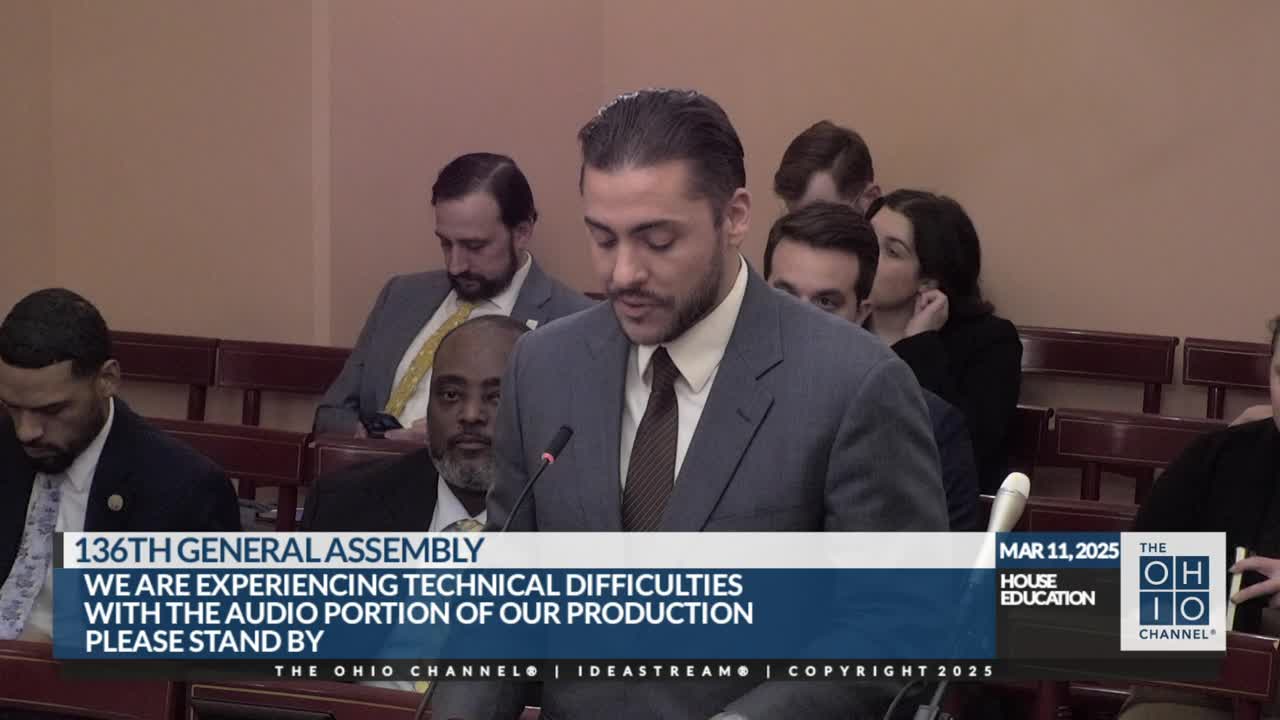
Columbus — Representatives Pizzoli and Bird presented House Bill 62 to the House Education Committee as a package of reforms intended to make the College Credit Plus program more sustainable for K‑12 districts.
Sponsors said the bill would: adjust billing so online CCP courses are billed at a lower tier (the second tier) when students take courses at school and use school facilities; require colleges to share textbook costs and encourage free and open educational resources; prioritize local CCP enrollment when qualified local high school teachers can provide equivalent instruction; and require universities to notify schools when a student stops attending a CCP course so schools and parents can respond quickly.
Representatives argued the changes would save districts money, prevent wasted tuition on abandoned courses and encourage use of locally offered CCP options. Sponsors said some small and rural districts have spent significant sums on CCP costs — testimony referenced districts spending over $130,000 a year on CCP in two small districts — and that textbook costs can be a recurring burden for students and schools.
Committee members asked whether the bill covers electronic textbooks and how the text would apply to private colleges. Sponsors said those details were not defined in the introduced language and they would follow up with clarifying amendments and work with stakeholders to define acceptable open‑source materials and cost responsibilities.
No formal committee action was taken; sponsors said they would work with members on definitions and funding questions.