Get Full Government Meeting Transcripts, Videos, & Alerts Forever!
Get email alerts on the Public Works Procurement topic
No spam. Unsubscribe anytime.
Committee approves bill to let public projects solicit multiple lighting‑agency price schedules; architects and contractors dispute effect
Summary
House Bill 1560, which would require public projects to allow pricing from multiple lighting agencies at the design stage to increase competition for fixtures, cleared committee after proponents said the change would create transparency and savings; industry witnesses warned of unintended costs and administrative burdens.
Representative McGrew (as identified in the hearing) presented House Bill 1560 to the State Agencies & Governmental Affairs Committee as legislation to increase competition and transparency in pricing for lighting fixtures on public construction projects. McGrew said the bill would allow designers to solicit pricing from multiple lighting agencies during the design phase so general contractors and subcontractors could see competing fixture prices.
Todd Welch, identified as president of AIA Arkansas, backed the bill and said the measure would increase competition because fixture packages are commonly closed around a single lighting representative. “If we open that to three different bids … then the lowest bid out of the three will be the low — there’s a better chance of getting a lower price,” Welch said, explaining his view that competition among lighting representatives can reduce costs without undercutting quality.
Opponents including Joshua Maddox, testifying for the Association of General Contractors and other industry groups, argued the bill could steer business, change design incentives and create administrative burden. Maddox told the committee asking for multiple pre‑bid fixture price packages could bias specifications and narrow design choices; he said the bill risks prioritizing first cost over life‑cycle performance.
Contractors and subcontractors warned of duplication of effort and lost buying‑power. Courtney Little, speaking for contractor interests, said requiring multiple agencies to prepare pricing schedules would multiply the work of suppliers and could raise costs by undermining bulk purchasing efficiencies and by adding time and expense to prebid budgeting. That argument was echoed by other subcontractors who told the panel the added cost of multiple prebid packages could outweigh potential savings.
Proponents replied that modern electronic workflows make it simple for multiple agencies to provide price comparisons and that the bill explicitly allows architects and engineers to require a specific fixture when design needs demand it. Representative McGrew said the bill does not force a purchase of the lowest bid; it would only make prices transparent earlier in the design process.
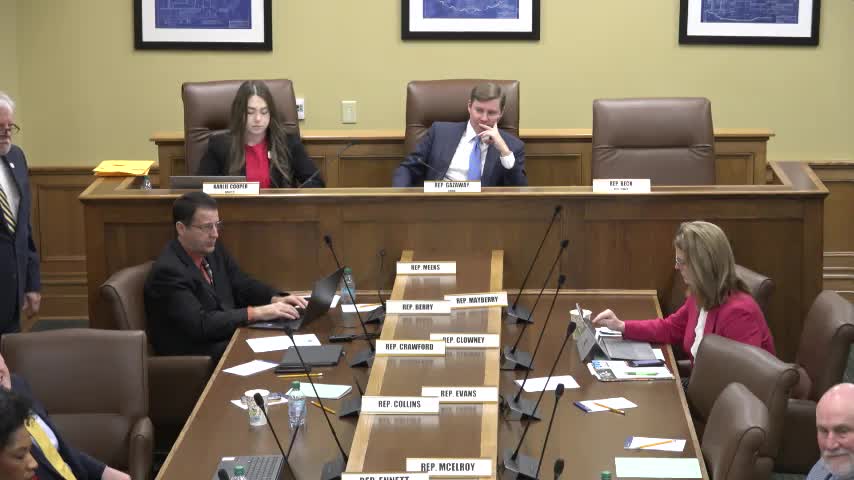
After question and answer, the committee moved to a voice vote and the chair announced “The ayes have it. Congratulations. You passed your bill.”
Why it matters: the bill targets a narrow procurement step on public projects — the lighting fixture schedule — and supporters framed the measure as a way to encourage competition and save taxpayer dollars. Opponents warned the change could increase administrative and procurement costs and unintentionally limit designers’ ability to choose fixtures for performance or aesthetic reasons.
Actions: Representative McGrew moved that HB1560 do pass; the committee approved the bill by voice vote and the chair announced the bill had passed out of committee.