Get Full Government Meeting Transcripts, Videos, & Alerts Forever!
Get email alerts on the Child Online Privacy And Safety topic
No spam. Unsubscribe anytime.
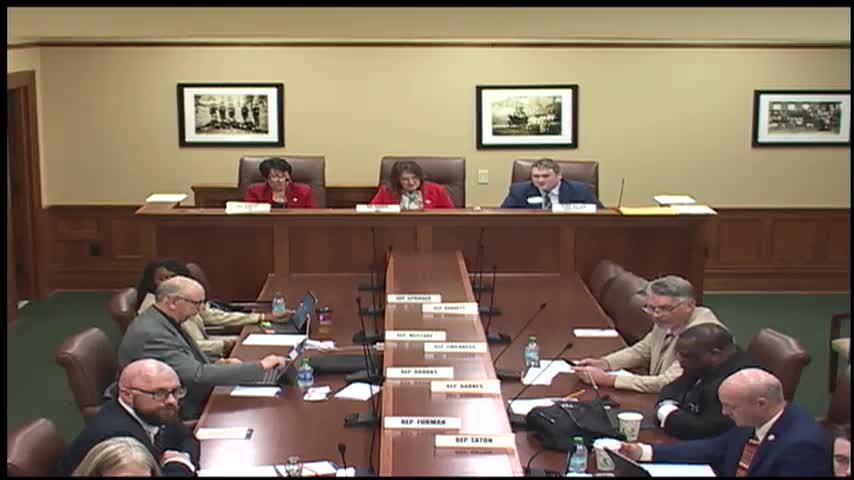
Committee advances bills to expand online privacy and require safety safeguards for minors
Summary
The committee approved House Bill 1717 to extend COPPA-like data protections to older minors and House Bill 1726 to require platform duty of care, an online safety council and algorithm transparency; both bills include enforcement powers for the state attorney general and were passed with amendments.
The House Aging, Children and Youth, Legislative & Military Affairs Committee voted to advance two related measures aimed at protecting children’s personal data and online safety: House Bill 1717, which extends data protections, and House Bill 1726, which creates platform duties of care and an online safety council.
Representative Zach Gramlich, state representative for District 50, introduced both bills and described HB1717 as an Arkansas-level extension of federal protections. "COPPA already exists... But we're gonna be trying to raise that in Arkansas today to extend those protections to students 13 to students and children 13 [to] 17," Gramlich said. Dr. Megan Repp, vice president of the Arkansas Chapter of the American Academy of Pediatrics, testified in favor of the bills, citing research on youth device use: "Research shows that children as young as 2 years old are using a mobile device on a daily basis... 97 percent of teens are using the Internet daily, and almost half say they use it almost constantly."
House Bill 1717 (described by witnesses as a state-level "COPPA 2") would make it unlawful for operators to collect, use, retain or disclose a minor’s personal information for targeted advertising except under narrow circumstances; it would require notice of data collection and purpose, verifiable consent mechanisms, parental access to data and deletion rights, and reasonable security practices. Gramlich told the committee the bill gives the attorney general enforcement authority; he said operators would have a compliance window, noting that the bill "gives them 1 year from the time this bill takes effect, which will be, this summer. So it'll be next summer that everyone's gotta be online and in board following these regulations."
House Bill 1726 (described as state-level COSA, Kids Online Safety Act) would require platforms to take "reasonable measures to avoid heightened risk of harm to minors" — harm defined broadly to include anxiety, depression, eating disorders, addiction-like behaviors, self-harm, predatory marketing and other harms. The bill would require default protective settings for known minors, easy parental tools to manage privacy and time limits, prohibitions on certain targeted advertising to known minors (for drugs, tobacco, gambling and alcohol), easier reporting and a requirement that platforms respond quickly to imminent threats. The bill also directs creation of an online kid-safety council to advise on risk and best practices, and it imposes disclosure and control requirements for personalized recommendation systems and opaque algorithms; Gramlich said an operator must make an "input transparent" option available and provide notice for opaque algorithms.
Committee members asked detailed questions about enforcement and coordination with federal proposals. Representative Barnes and Representative McClure asked about the attorney general's enforcement role; Gramlich and witnesses explained the AG may bring civil actions under state law and the bills include notice-and-cure provisions. Representative Duke asked about federal alignment; Gramlich said the state bills mirror stalled federal proposals and would be superseded by federal law if enacted. Representative Henley asked about the lack of an emergency clause; Gramlich said the compliance timeframe was one reason for delaying immediate effect.
The committee adopted a technical amendment to HB1717 to add a Senate co-sponsor and minor wording changes. A separate amendment to HB1726 clarified what "targeted towards minors" means; both amendments were adopted by voice vote. Both bills were then advanced out of committee on motions to "do pass" by voice vote.
Supporters emphasized mental-health and safety concerns linked to platform design and algorithms; opponents and some members raised enforcement, council appointment, and age-verification questions. Testimony included a parent and Scouting America representative asking how the bills would apply to automated AI chat platforms; Gramlich responded that operators of those services would be covered if they collect or maintain personal information and meet the operator definitions in the bills.