Get Full Government Meeting Transcripts, Videos, & Alerts Forever!
Get email alerts on the Custody First Responders topic
No spam. Unsubscribe anytime.
Committee approves bill barring courts from weighing first-responders’ work schedules in custody cases
Summary
The House Aging, Children and Youth, Legislative & Military Affairs Committee passed House Bill 1704 as amended to prevent courts from treating first-responders’ irregular shifts as a reason to deny custody or parental rights.
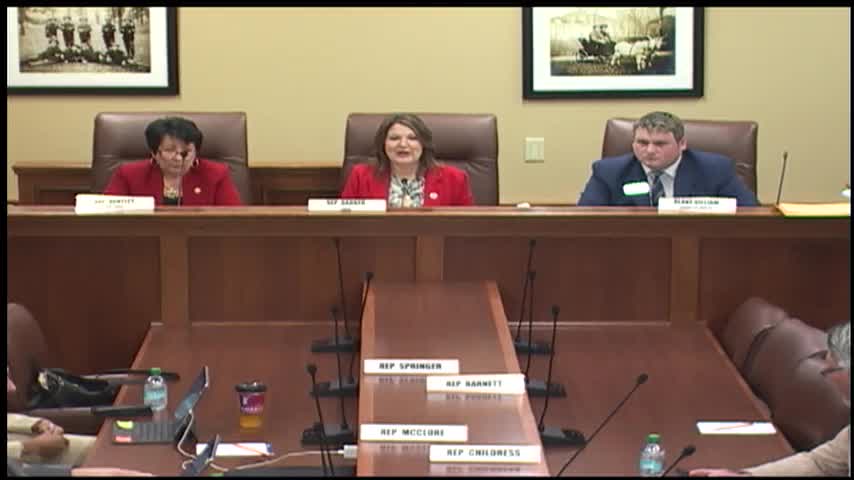
At a committee hearing, members of the House Aging, Children and Youth, Legislative & Military Affairs Committee passed House Bill 1704, which prohibits courts from considering a parent’s first-responder work schedule when making custody decisions.
Representative Wade Andrews, state representative for District 98, told the committee that some courts have treated shiftwork as evidence that first responders cannot be suitable parents. "There has been some courts that have made examinations that a first responder can't be a good parent because of a work schedule," Andrews said. "This bill fixes that and says the court cannot, take the work schedule of a parent who's first responder into account."
Matthew Stallings of the Arkansas Professional Firefighters spoke in support, asking that first responders not be penalized for schedules tied to public service. Gina Indelicato, representing herself and Arkansas Advocates for Parental Equality, also testified in support during the public-comment period.
The committee first adopted an amendment that added Senator Clark as a co-sponsor and corrected grammatical errors. The amendment was adopted by voice vote. Representative Andrews closed in support and the bill passed the committee as amended by voice vote.
The measure, as presented to the committee, focuses narrowly on preventing courts from using first-responder shift patterns as a negative factor in custody determinations; it does not change other custody standards or procedures stated on the record.