Get Full Government Meeting Transcripts, Videos, & Alerts Forever!
Get email alerts on the Public Safety Funding topic
No spam. Unsubscribe anytime.
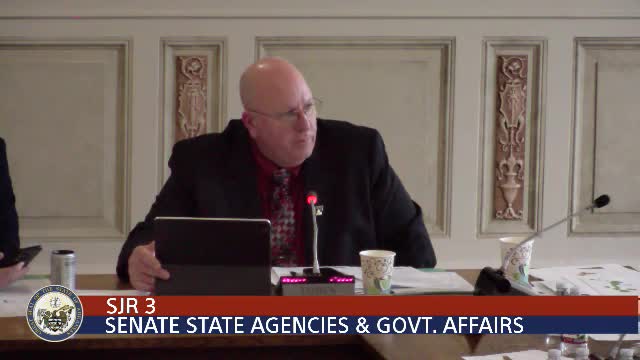
Senator calls for public‑safety fund to hire officers and reduce crime rather than rely solely on large prison build‑outs
Summary
Senator King outlined a public‑safety funding approach (related to SJR 6 and legislative bills) to address high crime, overcrowding and incarceration rates. He argued for dedicating revenue—potentially from medical‑marijuana and gaming proceeds—to hire hundreds of officers and support probation/parole instead of relying only on a single large new
Senator King addressed proposals to respond to rising crime and prison overcrowding, urging the committee to focus on reducing crime through sustained public‑safety investment rather than solely funding a single large prison construction project.
King said Arkansas faces “a three‑headed monster” of high crime, overcrowding and a high incarceration rate. He reviewed prior criminal‑justice reforms he described as intended to cut costs that he said had the unintended effect of increasing prison populations and violent crime. King told members that corrections spending as a share of the state budget had not kept pace with other pressures and argued that the state should invest in on‑the‑ground public‑safety personnel and partnerships with counties: “The best thing you can do is if you reduce your violent crime rate and reduced people stealing out of you … you stop the arrest,” he said.
King described a plan to create a public‑safety fund (he said he has a separate bill, SB 143) that would dedicate $100 million to hire state police officers, support county partnerships, and bolster probation and parole capacity. He said proceeds from medical marijuana and casino gaming could be earmarked to the fund to reduce pressure on general revenue. King warned that mega‑prison projects in other states have run well over initial estimates and said a preventive, staffing‑focused approach would be more cost‑effective.
Committee members asked questions about timing, legal structure and whether the revenue streams from medical marijuana and gaming could be reallocated; King said some proceeds could be directed to the fund and that he had a companion bill to appropriate immediate funds as well. No formal committee action on prison financing or the public‑safety fund occurred during the hearing.