Get Full Government Meeting Transcripts, Videos, & Alerts Forever!
Get email alerts on the Charter Amendments topic
No spam. Unsubscribe anytime.
Stow City charter reviewers clarify acting-mayor language, expand public-notice options and release legal memo on prayer
Summary
At an April 1 Stow City Charter Review Commission meeting, members reviewed multiple draft charter edits — clarifying the acting-mayor succession, allowing website/social-media notices and discussing vacancies, ward structure and council term limits — and voted to publish a legal memorandum about prayer at meetings.
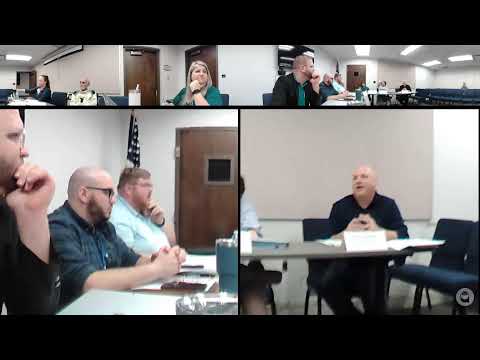
The Stow City Charter Review Commission on April 1 reviewed a package of proposed charter edits and voted to make public a legal memorandum on prayer at municipal meetings.
Drew, the city attorney, opened the substantive discussion by walking the commission through the proposed redrafts and legal research behind them. "Every member of the commission should have a stack of papers in front of them," Drew said as he summarized the items. He told commissioners the office had researched special-election timing, vacancy rules and state law that bear on several charter provisions.
The commission spent the meeting focused on language clarifications and process issues rather than new policy proposals. Key items reviewed included clarifying the acting-mayor succession clause, updating the public-notice requirement to permit website posting and “any other social media platform utilized by the city for notice purposes,” and additional language to limit physical posting to “not less than 3 public places in the municipality.” Drew said the change is intended to broaden notice tools while preserving physical posting for residents without internet access.
The commission also discussed the charter’s vacancy and appointment provisions. Members reviewed the current process, under which council fills a vacant seat by majority vote and the mayor appoints if council does not act within 45 days. Commissioners asked the law department to research whether the 45-day period or other aspects of the procedure are governed or affected by Ohio Revised Code provisions, and Drew said he would circulate the relevant ORC sections before the next meeting.
On election timing, Drew summarized state constraints governing special elections and said Stow is not under the fiscal-watch conditions that would make an August special election likely. "I can't imagine a situation where we would have an August special election," he said, describing how vacancies that fall within six months of the regular election are handled under state election cycles.
Commissioners also reviewed the charter’s limits on the council president’s tenure and debated whether to modify the one-year selection cadence or the two-year limit on consecutive service. Some members favored leaving the current one-year selection process in place to encourage rotation and leadership opportunities; others raised concern that an effective leader could be prevented from continuing by the existing restriction. The group agreed to defer final decisions until after further discussion and public input.
A presentation summarized ward structures in similar-size Ohio cities and the state statutory baseline for jurisdictions without charters. The staff analysis showed Stow currently has four wards and three at-large council members, and that comparable cities often have a larger number of wards, which reduces the number of residents represented per ward seat. Commissioners agreed that changing the number of wards would require deeper data work and public engagement and suggested recommending that council consider a separate, focused study rather than rushing a redistricting change through the commission’s current timeline.
The commission also reviewed the charter’s removal provisions. Drew explained that removal of an elected official requires a public hearing, written notice, and five affirmative council votes; the standard lists for removal include conviction of a felony, adjudication of incompetence, gross neglect or misfeasance, failure to take required oath or bond, and three consecutive unexcused absences.
On the question of prayer at meetings, the commission received a legal memorandum prepared by the law department that reviewed controlling case law and applied it to the charter language. Drew said the legal view was that the existing short prayer provision is unlikely to produce liability so long as prayers remain nondiscriminatory and do not establish a governmental “civic religion.” After discussion, a motion to make the memorandum a public document passed. As Drew summarized, "On its face, we're not getting to the point where our case is going to become the new landmark case on this." He cautioned that, while the memorandum narrows the legal risks, any action violating established case law could still be challenged in court.
The commission approved its meeting minutes and confirmed plans for a public town-hall session on charter topics in early April; staff will post draft materials to the city website and social media in advance. Commissioners discussed the format (presentation followed by public comment), outreach to council members and other local elected officials, and multiple reminders over the weeks leading to the event to increase turnout.
The meeting included several procedural votes. The commission approved the minutes at the start of the meeting and later voted to make the law department’s legal memorandum on prayer public. Both motions passed by voice vote with no individual tallies recorded in the transcript. The meeting concluded after scheduling future work sessions on finance, public service, public safety and law departments.
The commission directed staff to circulate relevant Ohio Revised Code citations on vacancy and election timing, to post materials for the planned town hall, and to continue refining draft charter language for future public hearings.