Get Full Government Meeting Transcripts, Videos, & Alerts Forever!
Get email alerts on the Energy Procurement topic
No spam. Unsubscribe anytime.
Live Oak council approves rolling natural gas hedging directive, gives city manager authority
Summary
The City of Live Oak City Council approved a rolling hedging directive allowing the city manager to authorize futures contracts or call options to stabilize natural gas costs, with layered hedges covering up to 75% of year‑one usage and a strike price tied to the city—s budgeted rate.
The City of Live Oak City Council voted to authorize a rolling hedging directive that allows the city manager to approve futures contracts or call options to stabilize natural gas costs for city accounts.
City staff said the directive would permit staggered, layered hedges: up to 75% of average daily usage for the first 12 months, 50% for months 13–24 and 25% for months 25–36. The strike price for options or futures would be set to match or be below the city—s budgeted price per therm, with transportation/basis differentials deducted as appropriate.
The presentation explained the difference between futures contracts and call options, and why a mix may be appropriate. The presenter (energy consultant) said a futures contract locks in a price while a call option sets a ceiling: "you would never pay more than that," the presenter said, adding that the call option costs a premium but preserves upside when market prices fall. The presenter also illustrated premium examples, noting a call option near the one‑year futures price (about $4.33 per therm at the time of the presentation) would add roughly a 7% premium in one scenario.
Joanne Luther, the city—s finance director, said savings from hedging would flow to ratepayers because the city—s customer billing separates maintenance costs from the monthly gas commodity price. "So what this does is it achieves a stable price. So this is just a tool in your toolbox," Luther said, adding that the city—s budgeted strike price is based on historical curves used during the annual budget process.
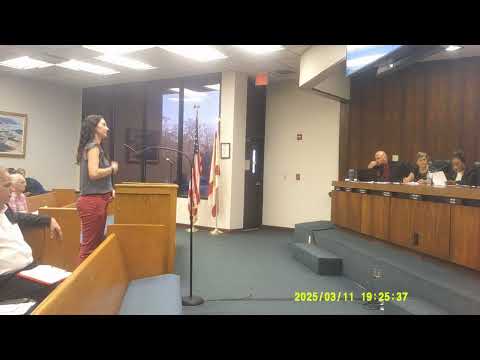
Councilmembers discussed the need for timely authority so staff could act between council meetings if market windows opened. The motion, made by a councilmember who moved to "give the city manager the ability to approve the rolling hedging directive," was seconded and approved by voice vote; the minutes record the motion and that the ayes carried.
City staff said the directive is voluntary and can be terminated; existing hedges would remain in place while no new hedges would be added if the council chose to end the program. Staff also cited a past industry event (an explosion at the Freeport LNG facility) as an example of a market disruption that produced rapid price swings and created opportunitites for timely hedging.
The council recorded the approval as a directive under the city—s gas management services; staff said any execution of a hedge would be contingent on the technical parameters in the record and that the city manager would be contacted before staff executed transactions.
Votes at a glance
- Motion to give the city manager authority to approve the rolling hedging directive (allowing futures or call options; quantities: 75% year 1, 50% year 2, 25% year 3; strike price = budgeted price per therm): motion made and seconded; approved by voice vote. (Detailed roll‑call not specified in transcript.)