Get Full Government Meeting Transcripts, Videos, & Alerts Forever!
Get email alerts on the Public Health Tobacco Regulation topic
No spam. Unsubscribe anytime.
Health officials urge tougher tobacco retailer license penalties, proximity limits to curb youth vaping
Summary
Clark County Combined Health District officials presented data to the Springfield City Commission showing high youth access to nicotine products and urged the commission to support enhancements to the city's 2021 tobacco retailer license, including higher penalties and proximity limits near youth-serving sites.
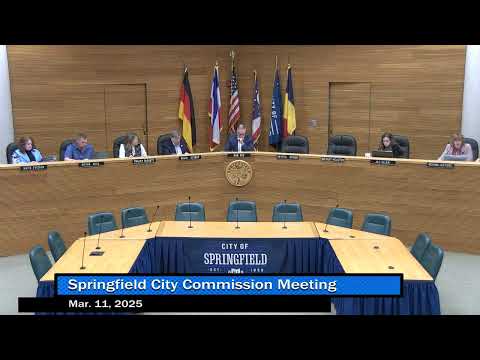
Leah Baylor, a health planner with the Clark County Combined Health District, told the Springfield City Commission that the district recommends tightening the city’s tobacco retailer license to reduce youth access to nicotine products.
Baylor summarized local survey and enforcement data and asked commissioners to back enhancements to Springfield’s Tobacco Retailer License (TRL) ordinance. She said the TRL, adopted in October 2021 and implemented in January 2022, already requires retailers to buy a $150 annual license and covers e-cigarettes. "This tobacco retailer license is really important. It can protect youth from early exposure to addictive nicotine," she said.
The health planner said the district’s 2023 youth risk behavioral survey of nearly 4,000 Clark County middle- and high-school students found that 16 percent had tried a cigarette and 28 percent had tried an electronic vapor product; 13 percent used an electronic vapor product in the past 30 days and 5.9 percent had used one 20 or more times in the past 30 days. Baylor also presented compliance-check results showing store failure rates dropped from 35 percent in an initial year of checks (84 stores checked, 29 failed) to 8 percent (86 stores checked, 7 failed) after fines were enforced.
Proposed enhancements Baylor outlined include increasing a specified penalty to $1,000 for a second violation within two years, adding third- and fourth-tier penalties, and adding density and proximity restrictions that would limit licenses near youth-serving organizations. She said policy changes and stiffer fines are intended to act as a deterrent and that the health district pairs enforcement with retailer education.
Commissioners and the mayor asked clarifying questions about the fines, signage, enforcement patterns and the composition of confiscated products. Commissioner John Estrop asked whether the seven stores that failed in 2023 had also failed in 2022; Baylor said she did not have that exact breakdown on hand but offered to provide it later. Mayor Rue and other commissioners noted concerns about storefront signage and how product design and flavors make devices appealing to children.
Baylor showed a bin of confiscated vaping devices seized from a single high school over six to eight months and described evolving product designs, including devices with LED displays and gamified features. "These are really addictive, easily concealable products that are very colorful. They have really fun flavors, and our youth are just kind of like moth to the flame with these products right now," she said.
Chris Cook, the district health commissioner, introduced Baylor and framed the presentation as a call to action. At the end of the presentation he summarized the request: "The call to action is please support the tobacco retailer license enhancements."
No formal ordinance amendment or vote on specific TRL changes occurred at the meeting; the presentation concluded as the commission moved toward the formal agenda. Health department staff offered to return with more detailed enforcement data and recommended language for potential ordinance updates.
Why it matters: City policy changes to licensing, penalties and zoning/proximity could change retailer behavior and, according to district data, appear linked to reduced unlawful underage sales in compliance checks. The health district asked the commission for support to pursue stronger local controls to limit youth access to nicotine products.
Looking ahead: The health district said it will provide follow-up data (including whether repeat offenders failed in multiple years) and recommended draft language for penalties and proximity rules for the commission and city staff to consider in coming weeks.