Get Full Government Meeting Transcripts, Videos, & Alerts Forever!
Get email alerts on the Utilities topic
No spam. Unsubscribe anytime.
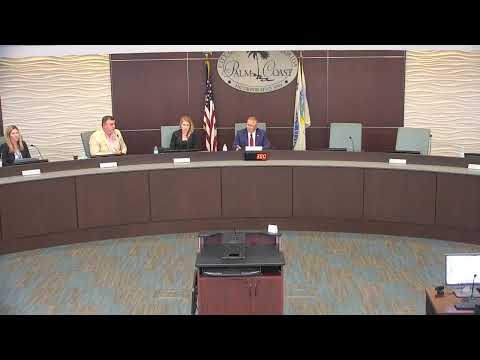
Palm Coast council seeks middle ground on utilities fixes, asks staff to model $269M bond and rate impacts
Summary
Faced with a consent-decree-driven utilities upgrade and public calls for a building moratorium, Palm Coast council members asked staff and consultants to return a narrower bond option and run rate-impact scenarios, while also hearing strong and varied public comment for and against a moratorium.
Palm Coast council members on Tuesday directed staff and the city’s consultants to model a scaled bond option and rate scenario for the city’s utilities program and to return with analysis at an upcoming meeting, while also hearing a wide range of public comment about construction moratoria, development impact and community impacts.
The council is working under a consent decree and state-imposed timelines requiring upgrades to wastewater and related systems. Vice Mayor Panieri asked council to “direct staff and our consultant to work those numbers at that $269,000,000 bond price point” as a lower-cost, near-term borrowing option that would address immediate compliance requirements while leaving later projects for future consideration.
Why it matters: The city’s utilities program is central to plans to repair aging infrastructure, increase treatment capacity and reduce infiltration that has led to regulatory violations. Council debate focused on balancing the need to move quickly to avoid fines and system failures against protecting households and small businesses from steep near-term rate increases.
Public input: The workshop drew lengthy public comment. Supporters of a construction moratorium — citing flooding and wastewater capacity concerns — urged the council to pause new approvals; Neftali De Jesus said a moratorium “can function as a regulatory taking” and raised legal concerns. By contrast, a number of construction-industry speakers warned that broad moratoria would put small businesses and tradespeople out of work and harm the local economy; local contractor Tony Amaral described the industry’s broad local economic footprint and cautioned against a blanket halt.
Council discussion: Several council members said they opposed a full, immediate moratorium that would freeze already‑platted lots and would harm jobs and city revenue. Others argued the city must prioritize capital projects and consider phased approaches. Councilman Miller urged caution on borrowing too much at once and proposed a middle path — move with the first, smaller bond to address regulatory needs and ask the consultant to show that option’s rate impacts and what would later be required if a second bond were needed.
Staff response and next steps: City staff recommended that the council identify the critical projects for an initial bond and allow the finance and engineering teams to certify the capital plan to lenders. City Manager’s Office staff confirmed they would run the requested analysis and return materials at the next business meeting; the manager said staff will bring a prioritized set of projects tied to the first bond request and the expected rate profile for customers.
Quotations: Public commenter Candy Stevens, citing localized flooding and elevation issues, told council “I agree with the moratorium.” Developer Paul McDonald urged council to consider the broad economic effects of halting construction. Vice Mayor Panieri’s request to model the $269 million bond was a central decision point for workshop direction: “I would ask for consensus from this council to direct staff and our consultant to work those numbers at that $269,000,000 bond price point.”
Ending: Councilors asked staff to return a refined financial plan that shows the projects funded by the lower bond, the rate and impact-fee implications, and the timing and risks of any later borrowing so the council can weigh options before taking ordinance-level rate action.